
Personal Branding Photos That Tell Your Story
Key Takeaways
- Personal branding photos should reflect your authentic self, not just a polished image.
- Consistent, recognizable images can support a cohesive professional presentation across platforms without guaranteeing trust or credibility.
- Show your work in action with relatable settings and props that connect to your business.
- Preparation is key: define how you want clients to perceive you and choose meaningful locations.
- Personal branding photos can give you a broader library of portraits, working images, and environmental photographs for different professional uses.
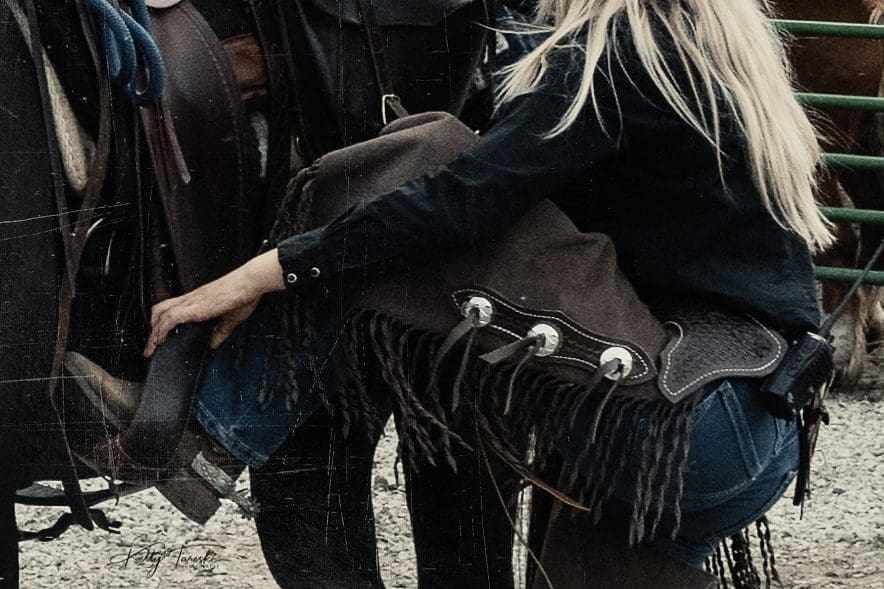
Personal branding photography goes beyond a single headshot by creating a library of images that can show the person, work, environment, tools, products, and different parts of a professional story.
At Kelly Tareski Photography, I plan branding sessions around how the images will actually be used across websites, profiles, social media, press materials, and marketing. For current service information, see Branding and Headshot Photography in Spokane.
What Sets Personal Branding Photos Apart
A headshot and a personal branding session serve different purposes. A headshot usually centers on a recognizable portrait, while branding photography can add environmental portraits, working images, details, products, tools, and other scenes. The photographs do not need to communicate an entire business instantly; they should give you useful visual material that supports the written story of what you do.
Use Details That Are Relevant to Your Work
Wear clothing that fits how you want to be represented, choose locations with a reason to be in the story, and include activities or tools that actually relate to the work. A lawyer does not need one prescribed studio look, and a creative entrepreneur does not need one prescribed environmental look. The session should be built around the person and business rather than a profession-wide template.
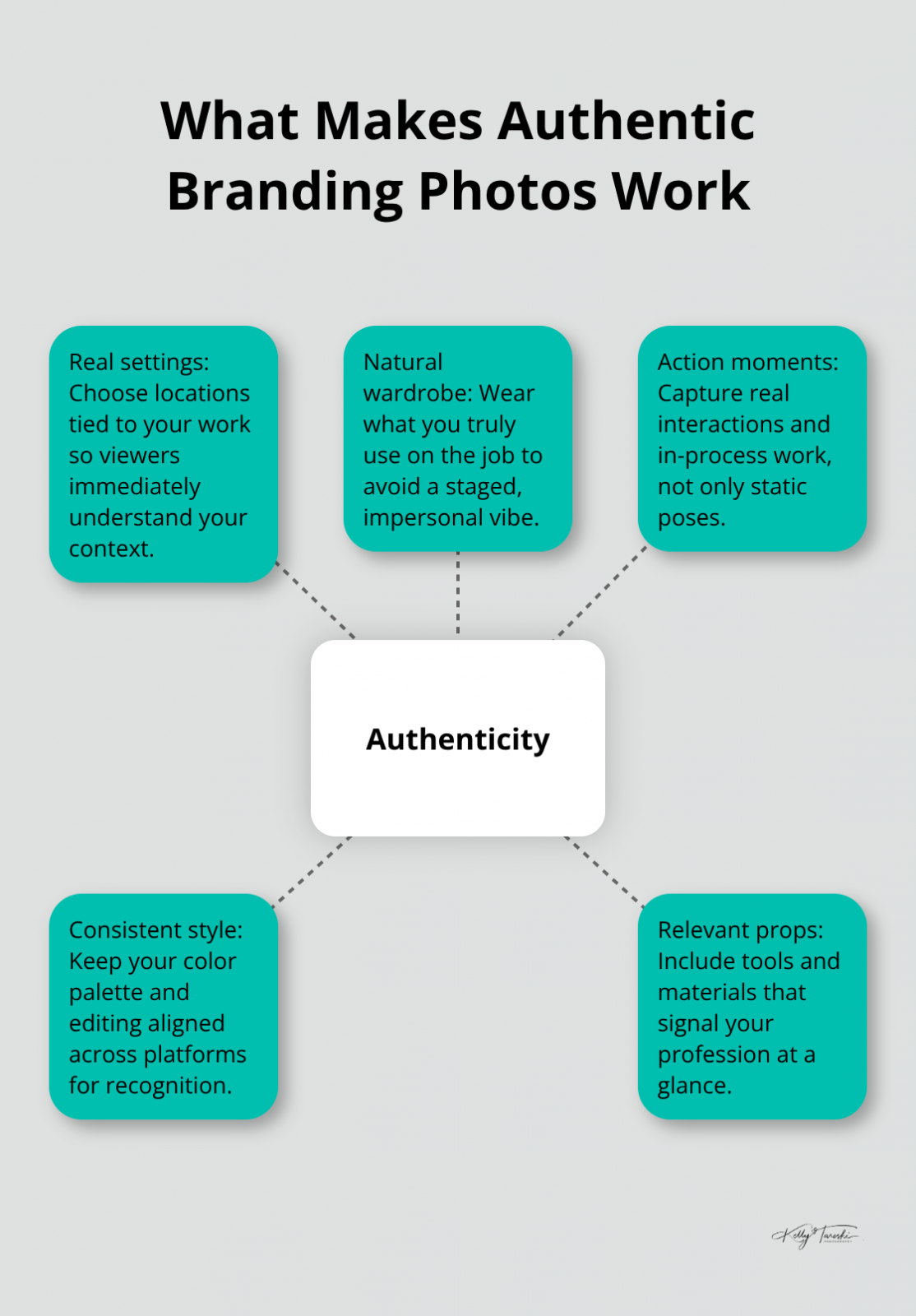
Structured portraits and more candid-looking working images can both be useful. Choose the mix based on the places where the photographs will be used.
Use Consistency Where It Helps Recognition
Using related visual choices across a website, LinkedIn, social media, and other materials can make a brand library feel cohesive. Consistency does not require identical lighting, backgrounds, outfits, or photographs everywhere. A useful library can include different looks as long as each image has a clear purpose.
Choose locations because they add useful context to the image library, whether that is an actual workspace, studio, client setting, outdoor location, or another environment connected to the visual plan. Brand colors can be incorporated when useful, but wardrobe does not need to follow a fixed two- or three-color formula. The goal is a coordinated library with enough variety for different placements, crops, and uses.
Use Working Images When They Add Useful Context
Working images can be useful when they show a real part of the business, such as a workspace, product, tool, process, client-facing environment, or activity. They are not required for every brand session, and staged work scenes should still make sense for how the final photographs will be used.
Mix direct portraits, environmental images, details, products, tools, and working scenes according to the image list you actually need. A photograph does not have to explain the entire business without words. Its job is to add useful visual context that works with the written information, services, portfolio, or marketing around it.
Preparing for Your Branding Session
Before the session, identify the main uses for the photographs and a few visual qualities you want the library to have, such as formal, approachable, energetic, minimal, technical, creative, or editorial. Share those priorities with the photographer along with the audiences and platforms that matter most. The planning should guide useful visual choices without assuming one look communicates a value such as trust or authority to every viewer.
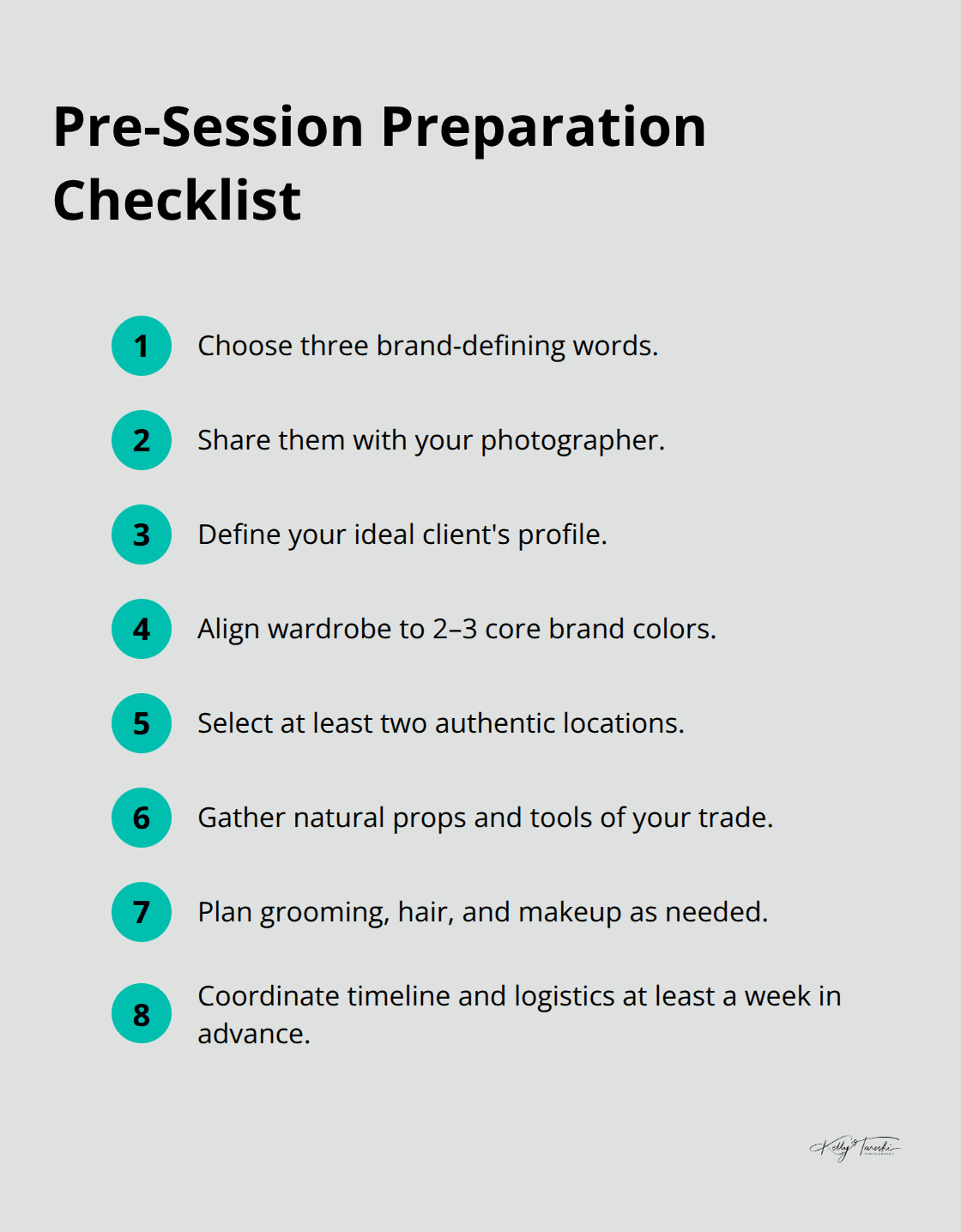
When the photographer understands the intended audience and use, they can adjust crop, background, wardrobe, lighting, level of formality, and the mix of portrait versus working images. Those decisions should be based on the actual brand and materials you need rather than stereotypes about company size or industry.
Location choices anchor your brand in reality
Choose locations for what they contribute to the image library. Your actual workspace may be useful, but a studio, client location, outdoor setting, rented space, or simpler background can also work. You do not need two locations or an industry-specific environment for every branding session. Consider privacy, access, visual context, brand style, and where the final photographs will appear.
Wardrobe Strategy Can Support Visual Consistency
Wardrobe can reference brand colors when that is useful, but it does not need to follow a fixed two- or three-color formula. Bring the number of outfit options that fits the session length and image plan. Include clothing that represents the levels of formality and visual styles you actually need, and coordinate it with the planned backgrounds rather than following a universal branding wardrobe rule.
Use Props and Preparation When They Serve the Plan
Bring props, products, client materials, or tools when they have a real purpose in the image list. Discuss wardrobe and location ideas early enough for the photographer to coordinate backgrounds, lighting, access, and setup. The amount of advance planning depends on the complexity of the session. Clear preparation can make the shoot more efficient and help produce a library that matches the uses you identified before the session.
How Branding Photos Support Professional Communication
Personal branding photos can help explain who you are, what you do, and the environments or tools connected to your work. They should support the rest of your website, profile, services, credentials, case studies, and written messaging rather than being treated as proof of competence or a predictor of whether someone will hire you.
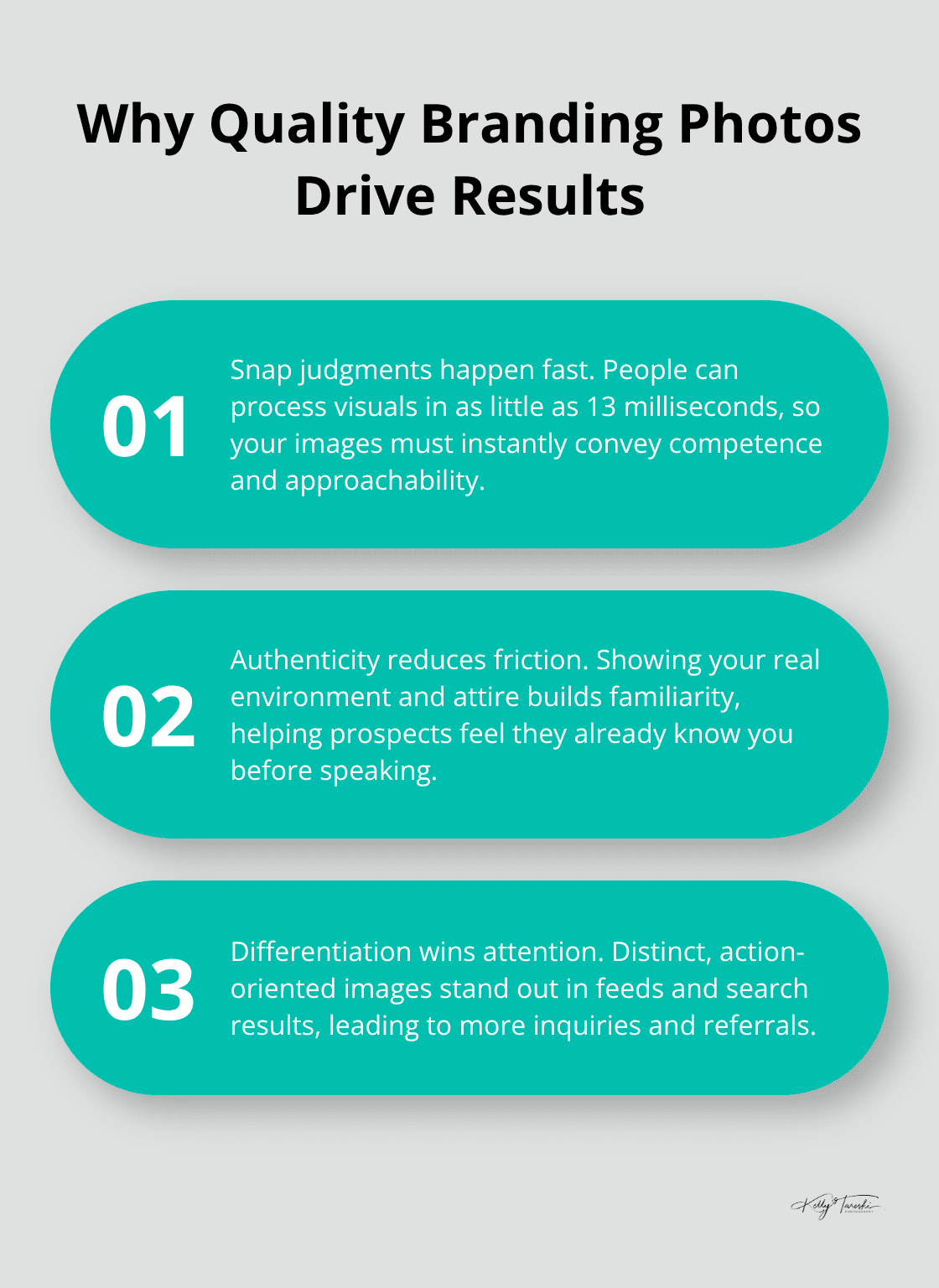
Branding photography can give prospective clients more visual context about the person and business before a conversation. That context may include portraits, workspace images, products, tools, or working scenes, but the photographs do not establish trust or determine whether someone considers the service worth their time or money.
Use Specific Visuals Instead of Generic Scenes
Personal branding photos can become more specific to the business when they include relevant environments, products, tools, processes, or working details. A studio portrait can still be useful, and an environmental image is not automatically more established, credible, or effective. The useful goal is a library with enough specificity and variety to support the actual business rather than relying only on generic stock-like scenes.
Build a More Specific Visual Story
People may encounter your business across a website, LinkedIn, social media, press materials, or other touchpoints. A related image library can help those materials feel like they belong to the same business while still showing different settings and purposes. Build consistency through intentional choices rather than assuming repeated exposure creates confidence or a predictable sales response.
Final Thoughts
Personal branding photos can create a flexible library for websites, email signatures, social media, press materials, presentations, and other professional uses. The practical value is having multiple intentional images available for different contexts rather than relying on one generic portrait for everything.
Branding photographs can show personality, work environments, tools, products, and different levels of formality, but they cannot communicate expertise or trustworthiness instantly. Use the images alongside accurate written information, credentials, case studies, portfolio work, and clear descriptions of the services you provide.
Personal branding photography does not guarantee inquiries, referrals, conversion rates, or how a prospective client will judge the business. At Kelly Tareski Photography, I plan branding sessions around the image library you actually need, including portraits, environmental images, working photographs, and other scenes that fit your professional use.
Education Most Searched Articles
- Kelly Tareski Photography Homepage
- How to Choose Background Colors to Complement Skin Tones
- Choosing the Best Lens for Stunning Senior Portraits
- 5 Tips Using the Nikon Z7ii Camera for Portrait Photography
- Exploring Spokane Through a Lens: Must-Visit Photo Locations
- How to Choose the Best Lenses for Senior Portraits
- When to Use a Neutral Background in Photography
- Top Posing Ideas for Solo Portraits: Looking Confident and Natural
- The Economy and Photography
- How the Economy Impacts Photography
- How to Weather Economic Slumps as a Photographer
- Finding Creative Ways to Promote Your Photography on a Budget
- Free and Low-Cost Resources for Photographers