

Creating Dramatic Photos with Shadow Play: Tips and Techniques
Creating Dramatic Photos with Shadow Play: Tips and Techniques. At Kelly Tareski Photography, we believe that mastering shadow play is essential for creating captivating and dramatic images.
Shadows can transform ordinary scenes into extraordinary visual stories, adding depth, mystery, and emotion to your photographs.
In this guide, we’ll explore the art of shadow manipulation, sharing our favorite techniques and tips to help you elevate your photography skills.
Whether you’re a beginner or a seasoned pro looking to enhance your photography education, these shadow play techniques will open up new creative possibilities for your work.
Understanding Shadow Play in Photography
The Power of Light and Dark
Shadow play transforms ordinary scenes into extraordinary visual narratives. This technique involves the deliberate use of light and dark areas to create depth, contrast, and mood in an image. Photographers who master shadow play can elevate their work to new artistic heights.
Emotional Impact of Shadows
Shadows significantly influence the emotional tone of a photograph. Dark, elongated shadows often evoke a sense of mystery or foreboding, while soft, diffused shadows create a more serene or romantic atmosphere. In portrait photography, the strategic placement of shadows can accentuate facial features, adding depth and character to the subject.
Compositional Role of Shadows
Shadows guide the viewer’s eye through an image. They create leading lines, frame subjects, or add visual interest to negative space. Shadows can be used creatively to enhance composition. For example, in landscape photography, long shadows cast by trees or buildings add a sense of scale and dimension to a scene (this technique is particularly effective during golden hour).
Types of Shadows
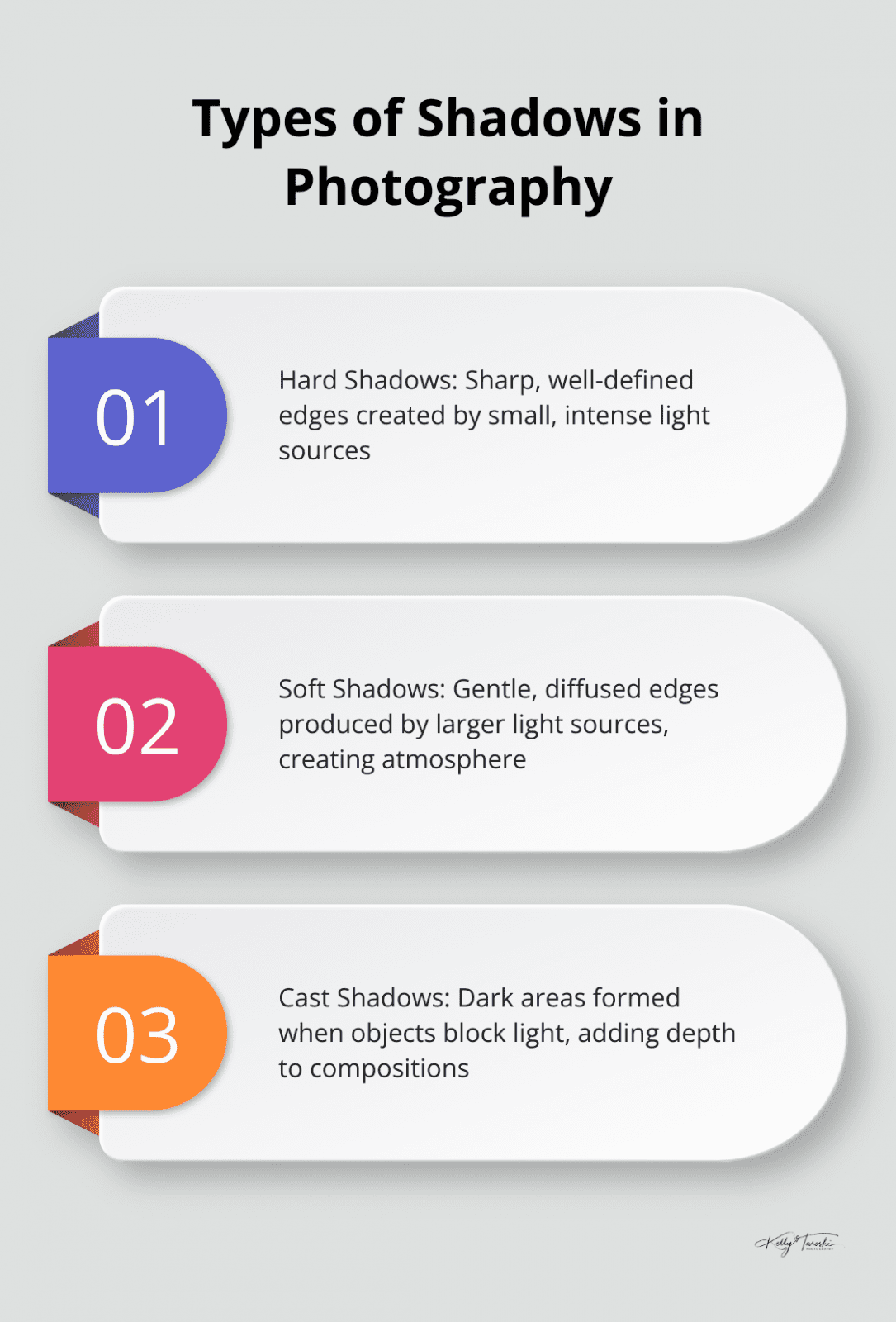
Hard Shadows
Hard shadows have sharp, well-defined edges. Small, intense light sources like the midday sun or a bare flash typically create these shadows. They add drama and contrast to an image but can be challenging to work with due to their intensity.
Soft Shadows
Soft shadows convey emotion and create atmosphere. Larger, diffused light sources such as overcast skies or softboxes often produce these shadows. Soft shadows are generally more flattering in portrait photography and can create a gentle, dreamy atmosphere in various genres.
Cast Shadows
Cast shadows occur when an object blocks light, creating a dark area on another surface. Photographers can use these creatively to add depth or create interesting shapes within a composition. For instance, a photographer might use the cast shadow of a person to create a unique silhouette on a nearby wall (this technique works particularly well in street photography).
Understanding these different types of shadows and their effects allows photographers to harness their power to create more compelling and emotionally resonant images. The next section will explore specific techniques for creating dramatic shadows in your photography.
How to Create Dramatic Shadows
Harnessing Natural Light
The sun serves as your most powerful tool for creating dramatic shadows. Early morning and late afternoon, known as the golden hours, offer the best natural light for shadow play. During these times, starting or ending within 1-2 hours of sunset or sunrise, the sun’s low angle casts long, dramatic shadows that add depth and dimension to your photos.
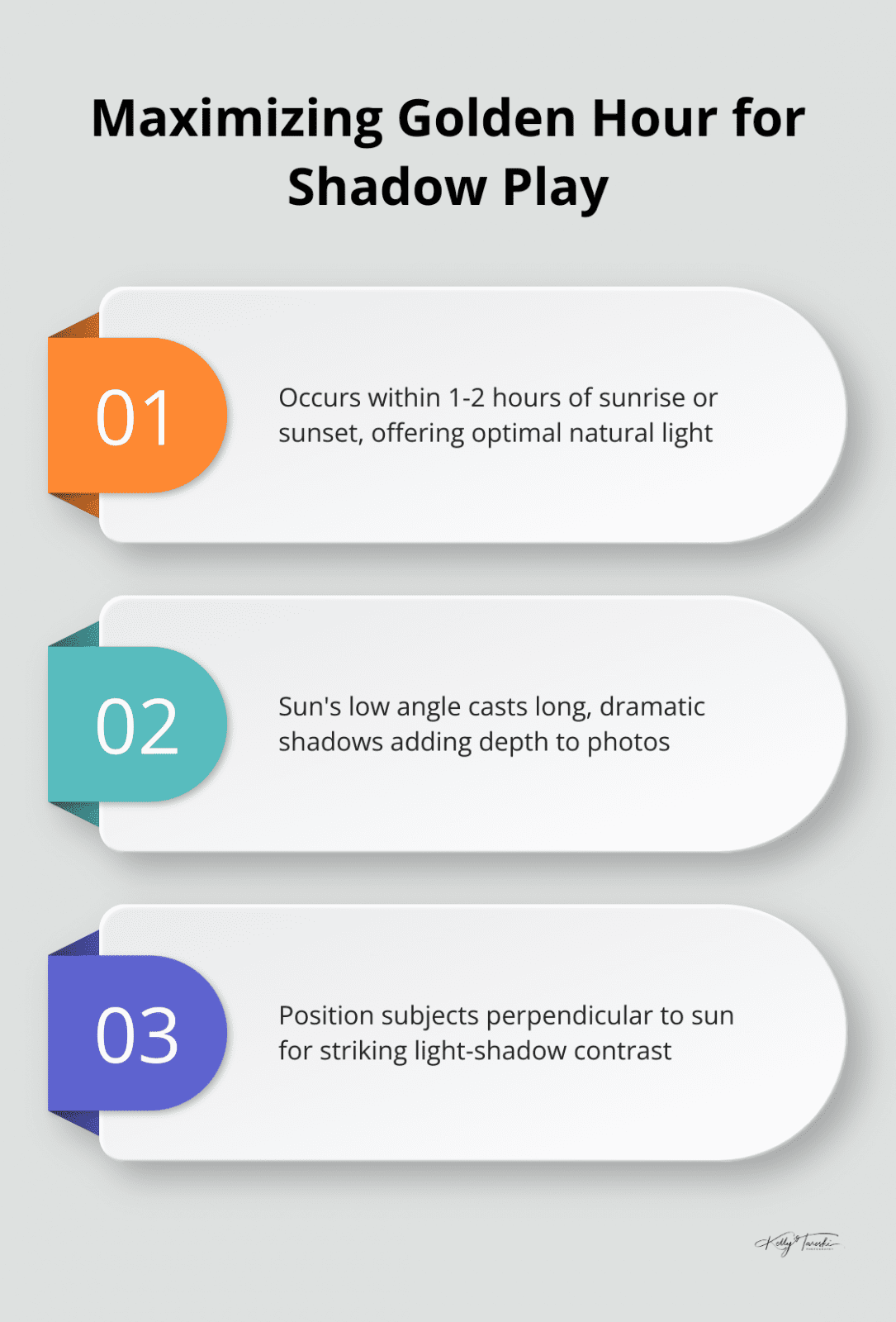
Position your subject perpendicular to the sun to maximize the effect. This creates a striking contrast between the lit and shadowed sides of your subject. For portraits, try backlighting your subject and expose for the highlights. This technique creates a rim of light around your subject while keeping their face in shadow, resulting in a mysterious and dramatic effect.
Artificial Lighting Techniques
When natural light isn’t available or doesn’t provide the desired effect, artificial lighting becomes essential. A single, strong light source can create hard shadows reminiscent of film noir aesthetics. Place your main light just above eye level of your model and tilt it at a 45-degree angle for classic Rembrandt lighting, which creates a small triangle of light on the shadowed side of the face.
For more control, use multiple lights. A key light creates the primary shadows, while a fill light softens them. Experiment with the intensity and distance of your fill light to achieve the perfect balance of light and shadow.
Strategic Subject Positioning
The placement of your subject in relation to the light source is critical for effective shadow play. To create elongated shadows, place your subject far from the background and close to the light source. This creates a larger-than-life shadow that can dominate the composition.
In architectural photography, wait for the sun to cast diagonal shadows across buildings. These angular shadows add depth and interest to otherwise flat facades. For product photography, use a technique called cucoloris (or ‘cookie’) – place an object with an interesting shape between the light source and your subject to cast creative shadow patterns.
Experimenting with Unconventional Techniques
Don’t be afraid to push the boundaries and try unconventional techniques. Use everyday objects (like window blinds or lace curtains) to create unique shadow patterns. Try double exposure techniques to overlay shadows with other scenes, creating imaginative images that challenge perceptions.
Incorporate reflective surfaces, such as water or glass, to capture and manipulate shadows. This adds depth and symmetry to your photographs. You might even discover new creative styles and forms of personal expression through these experiments.
Creating dramatic shadows requires practice and patience. As you develop your skills, you’ll find yourself naturally drawn to interesting light and shadow interplay in your everyday surroundings. This heightened awareness will inspire you to capture compelling images in any setting.
In the next section, we’ll explore the camera settings and equipment that can help you make the most of your shadow play techniques.
Mastering Camera Settings for Shadow Photography
Exposure for Impact
The foundation of shadow photography lies in exposure settings. To emphasize shadows, slightly underexpose your image. Set your camera to spot metering mode and expose for the highlights. This technique ensures proper exposure for bright areas while deepening shadows.
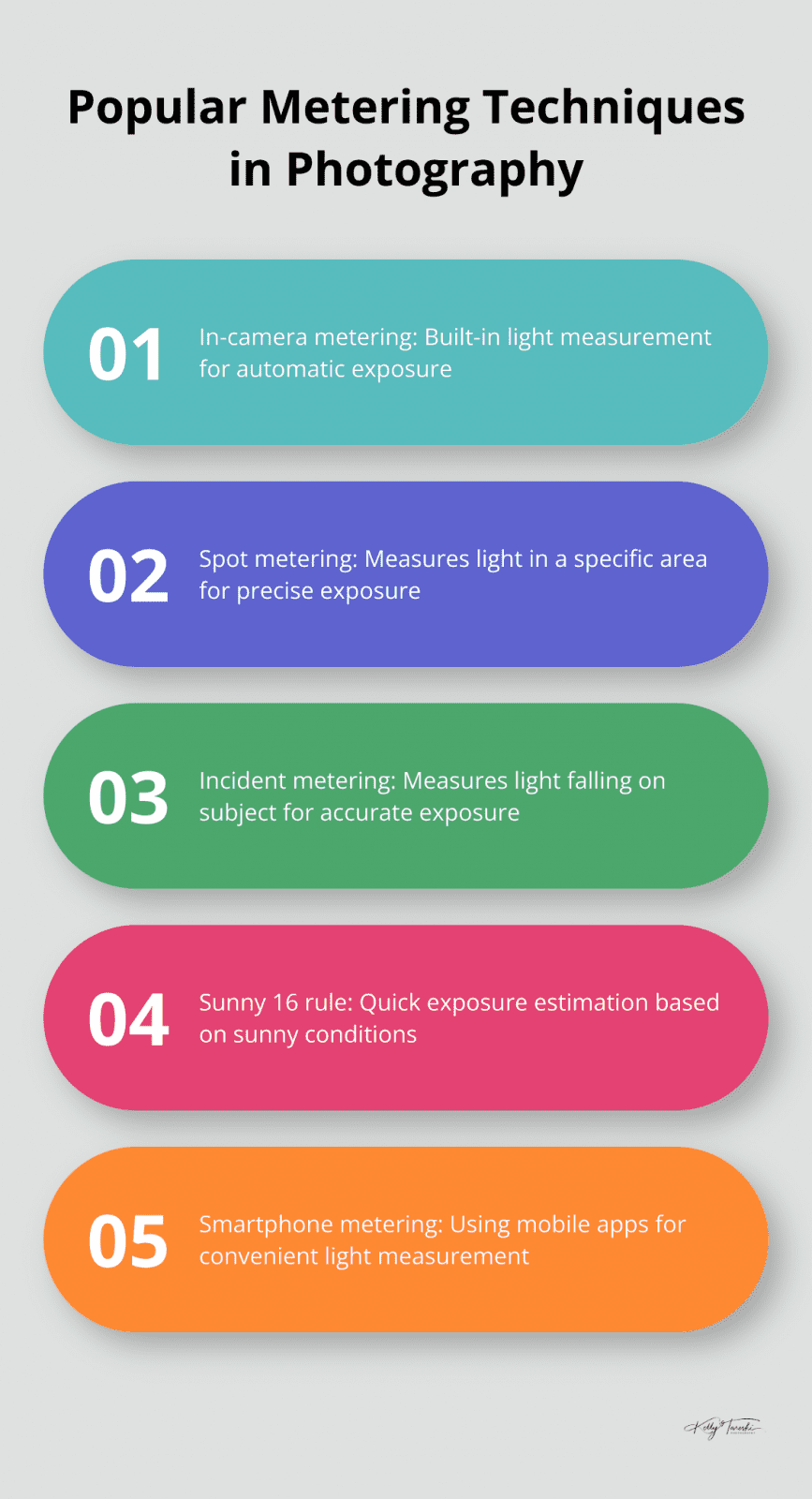
There are many types of meters and metering techniques, like in-camera metering, spot metering, incident metering, the sunny 16 rule, and even smartphone options.
Shoot in RAW format for optimal results. RAW files retain more information, allowing greater flexibility in post-processing to fine-tune shadow details without compromising image quality.
Aperture and Shutter Speed Synergy
Your choice of aperture and shutter speed significantly influences shadow definition. A wider aperture (smaller f-number) creates a shallow depth of field, which can soften shadow edges. A narrower aperture (larger f-number) increases depth of field, resulting in crisper shadow lines.
Use a tripod for low light conditions to maintain sharp images while keeping your ISO low. This approach allows slower shutter speeds without introducing noise, preserving rich blacks in your shadows.
Lens Selection for Shadow Manipulation
The lens you choose can dramatically alter the appearance of shadows in your images. Wide-angle lenses tend to exaggerate shadows, making them appear longer and more dramatic (this effect is particularly useful in landscape and architectural photography).
Telephoto lenses compress perspective, which can intensify the contrast between light and shadow areas. This compression effect excels in creating moody portraits with deep, sculpted shadows.
For maximum versatility, invest in a high-quality zoom lens. The Canon EF 24-70mm f/2.8L II USM captures a wide range of shadow effects across various focal lengths.
Enhancing Shadows with Accessories
Certain accessories can elevate your shadow photography. Neutral density filters help reduce noise in the image, improve dynamic range, and allow for wider apertures or slower shutter speeds in bright conditions.
For portrait sessions, reflectors bounce light back into shadowed areas, creating a perfect balance between light and dark. The 5-in-1 collapsible reflector offers multiple surfaces for different effects.
A good polarizing filter can deepen the contrast in your images, making shadows more pronounced (especially in landscape photography).
Practical Application
Try these techniques in various lighting conditions to develop your unique style in shadow photography. The best way to improve is through consistent practice and experimentation.
Final Thoughts
Shadow play transforms ordinary scenes into extraordinary visual narratives. Photographers add depth, mystery, and emotion to their images through shadow manipulation techniques. We explored various methods, from natural light during golden hours to artificial lighting setups, which create dramatic effects in photography.
At Kelly Tareski Photography, we use shadow play techniques across our services, from senior portraits to boudoir sessions. Our photography education emphasizes the importance of shadows in creating timeless, elegant images that resonate with viewers. We encourage all photographers to experiment with shadows, try different lighting conditions, and explore various camera settings to develop their unique style.
The mastery of shadow photography requires consistent practice and a willingness to push creative boundaries. As you refine your skills, you’ll notice interesting light and shadow interplay in your surroundings (this heightened awareness will inspire you to capture compelling images in any setting). Embrace the power of shadows, and watch your images transform into striking visual stories that captivate and inspire. Creating Dramatic Photos with Shadow Play: Tips and Techniques.
Education Most Searched Articles
- Kelly Tareski Photography Homepage
- How to Choose Background Colors to Complement Skin Tones
- Choosing the Best Lens for Stunning Senior Portraits
- 5 Tips Using the Nikon Z7ii Camera for Portrait Photography
- Exploring Spokane Through a Lens: Must-Visit Photo Locations
- How to Choose the Best Lenses for Senior Portraits
- When to Use a Neutral Background in Photography
- Top Posing Ideas for Solo Portraits: Looking Confident and Natural
- The Economy and Photography
- How the Economy Impacts Photography
- How to Weather Economic Slumps as a Photographer
- Finding Creative Ways to Promote Your Photography on a Budget
- Free and Low-Cost Resources for Photographers