

How Your Personal Brand Image Supports Professional Presentation
Key Takeaways
- Your professional image is one part of how you present your role, work, and current professional identity.
- A current headshot can make your professional profile more recognizable, but it does not guarantee recruiter views or hiring outcomes.
- Related visual choices across professional platforms can make your presentation more cohesive and recognizable.
- Reviewing the visual conventions in your field can help you decide how formal, creative, environmental, or traditional your image should feel.
- Personal-brand photography is one communication asset within a broader professional profile; financial returns and career advancement depend on many factors beyond photography.
Your professional image is one visible part of a larger professional profile. A headshot, website image, speaker portrait, or branding photograph can help people recognize you and understand how you are presenting your current role, but the image does not establish capability, trustworthiness, or career potential by itself.
At Kelly Tareski Photography, I treat professional photography as one part of a larger personal-brand system. A current, intentional image can support how you present your role and work, but career opportunities and business growth depend on far more than photography.
How Visual Presentation Fits Into a Professional Profile
Your professional image contributes to how you present yourself online, but it does not determine whether an employer or client sees you as competent or trustworthy. A current headshot can provide a consistent visual reference across LinkedIn, websites, speaker materials, directories, and other professional profiles.
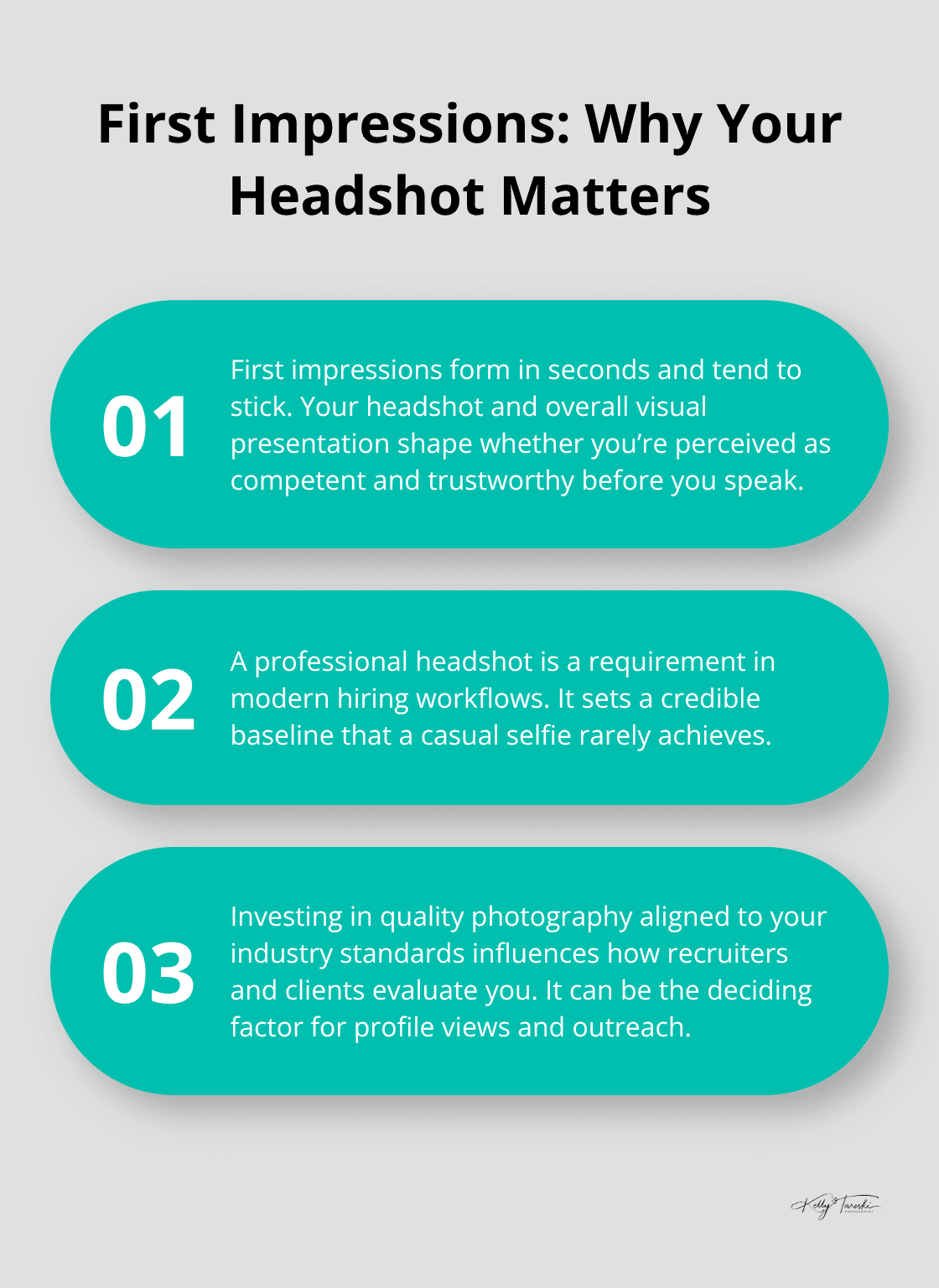
A current professional photograph can make your profile more recognizable and visually consistent, but it should not be treated as a guarantee of profile views, career advancement, or credibility. Use photography to support the rest of your professional information rather than as a substitute for experience, qualifications, or clear communication.
Your Online Presence Sets Professional Expectations
The way you appear across LinkedIn, a professional website, email signature, speaker page, and industry profiles can form part of a larger personal-brand system. Using a current, recognizable image and consistent information can reduce confusion across platforms. The photograph should support the profile rather than substitute for qualifications, experience, or clear written information.
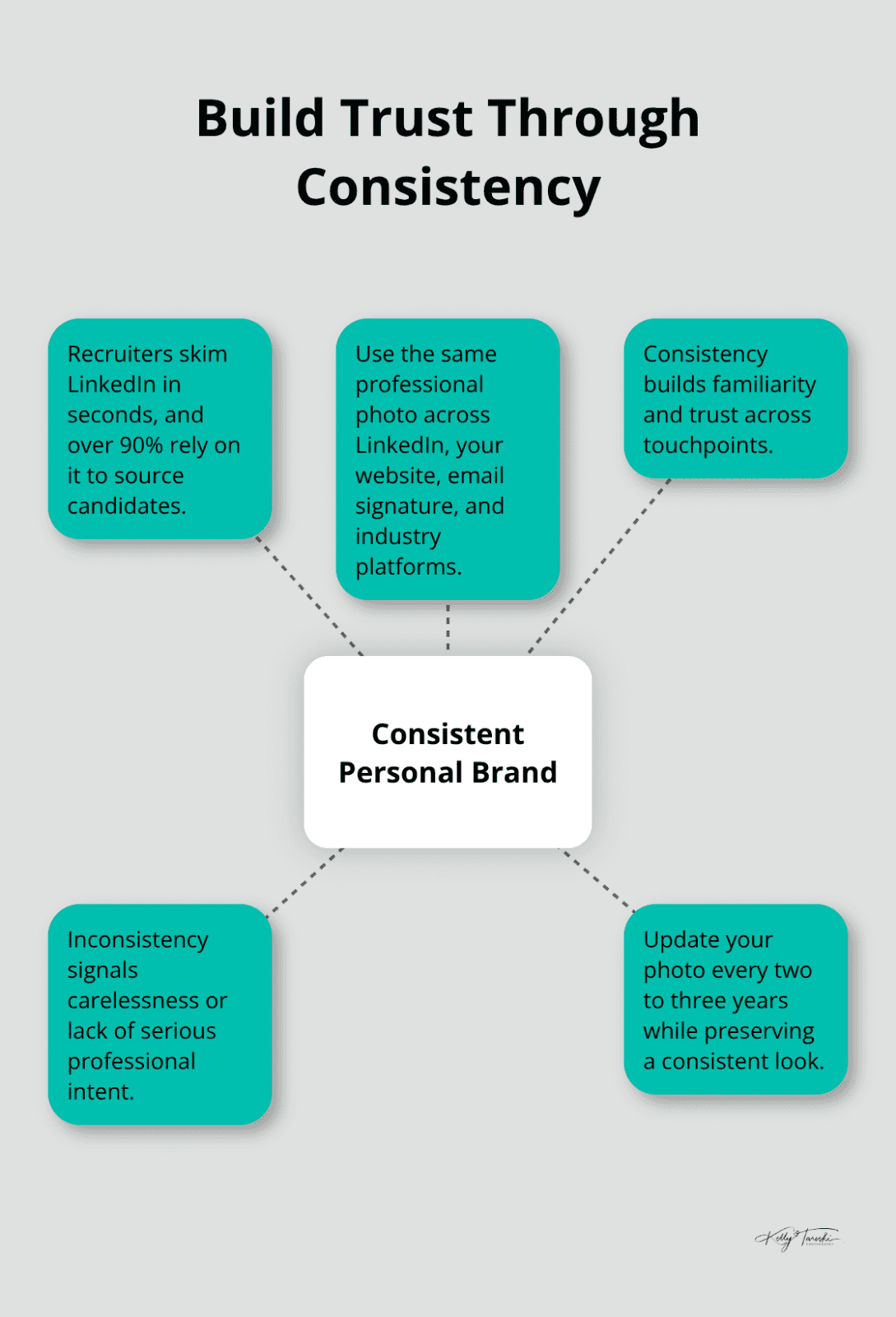
Using recognizable photography and a related visual style across professional channels can reduce confusion and make profiles feel more cohesive. You do not have to use one identical image everywhere, and a different photograph does not signal carelessness. Update your images when your appearance, role, branding, or intended use changes enough that the current material no longer represents you well.
Why Visual Standards Vary by Industry
Different professions and audiences may use different visual conventions, but there is no single headshot style that proves professionalism in a given industry. Review how and where your photograph will be used, then decide how formal, creative, environmental, or traditional you want the image to feel. The goal is to make an intentional choice that fits your role without relying on stereotypes about what a lawyer, financial advisor, executive, or creative professional must look like.
Your professional image is one part of how people encounter your work. The next section looks at how photography can support the rest of a personal-brand system without replacing experience, qualifications, or clear communication.
Strategic Elements of a Strong Personal Brand
Research Your Industry’s Visual Standards
Different industries and workplaces use different visual conventions, but those conventions are not rules. Review how people in your field are commonly photographed, then decide which elements actually fit your role, audience, workplace, and intended use. A technology professional can use a formal studio portrait, and a financial professional can use an environmental or more relaxed image when that presentation fits the person and context.
The useful goal is an intentional image that feels recognizable and appropriate for where it will appear. Industry examples can provide reference points without becoming a template you have to copy.
Choose Photography That Feels Natural
Select a photographer who understands professional branding and can plan images around the places where they will be used. Choose clothing and expression that fit how you want to be represented professionally. You can use one image broadly or a coordinated set for different contexts. Update the photographs when your appearance, role, branding, or intended use changes enough that the current material no longer represents you well.
Demonstrate Your Value Through Concrete Examples
Your unique value proposition is not something you broadcast loudly-it’s something you demonstrate through specific examples and measurable outcomes. Instead of claiming you’re a strategic thinker, share a situation where you identified a market gap and how that led to concrete results. Instead of saying you’re a great leader, describe a team you built and the impact you achieved.
When describing your work, pair visual presentation with specific examples, credentials, portfolio work, and measurable outcomes where relevant. That gives the audience more context than branding language alone.
Build Consistency Across Every Platform
Your professional materials can work together without being identical. LinkedIn, a website bio, an email signature, a speaker page, and other channels may each need a different crop, image, or amount of information. The useful goal is recognizability and clear, current information rather than proving credibility through visual sameness.
Coordinate photography, written messaging, credentials, portfolio work, and other professional materials so each channel accurately represents the role and work you want people to understand.
What Can Personal Branding Photography Contribute to a Professional Profile?
Professional Photography Is a Communication Asset
Personal branding can help organize how you communicate your role, expertise, work, and professional identity, but it does not guarantee employability, career satisfaction, advancement, or financial gain. Treat photography as one communication asset within a broader professional profile rather than as a shortcut to a career outcome.
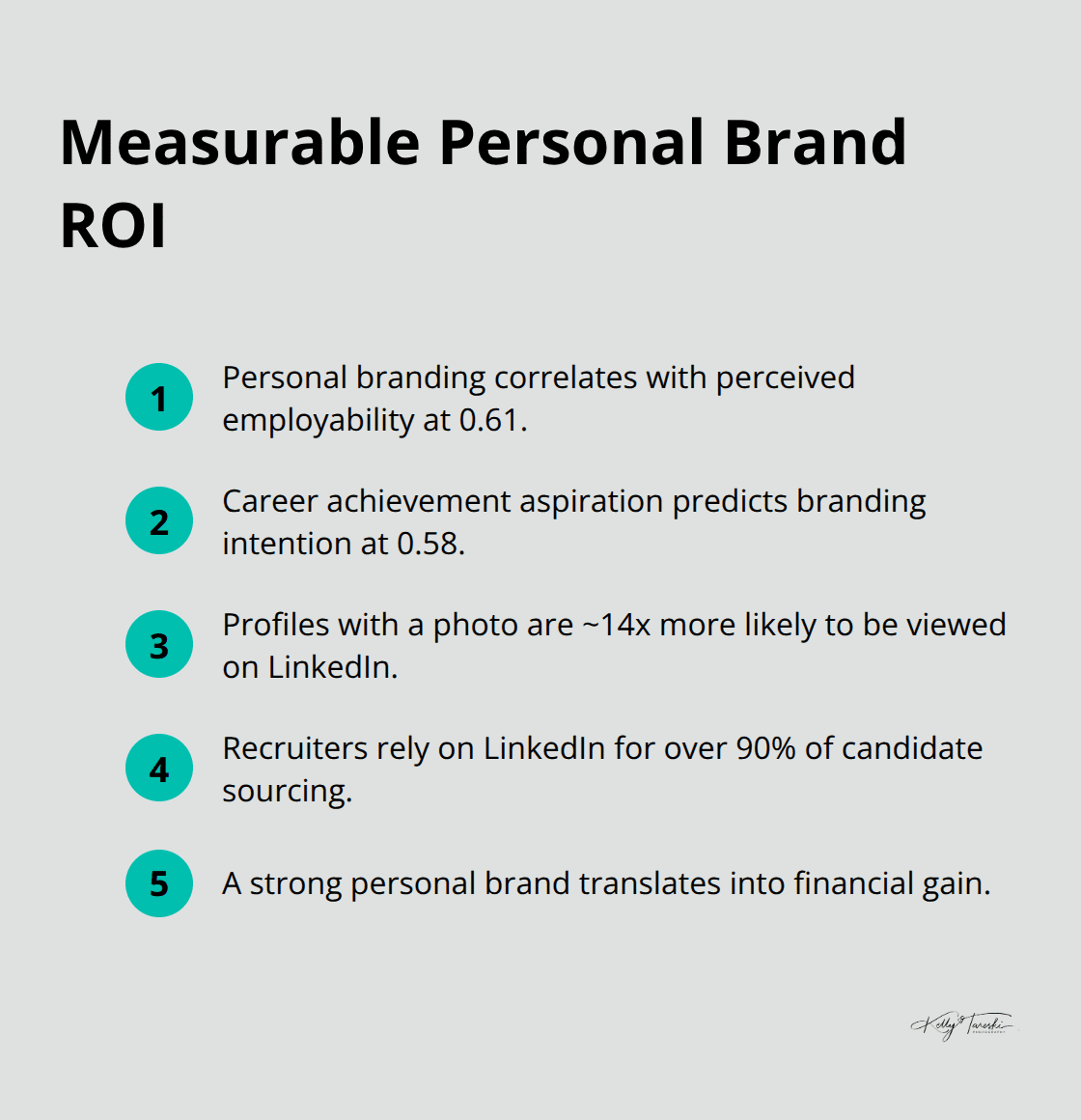
A professional photograph can make a profile more complete and recognizable across LinkedIn and other channels. Some platform guidance encourages using a profile photo, but profile visibility does not translate directly into a job opportunity, recruiter contact, or client decision. Treat the image as part of the profile rather than as a performance guarantee.
Photography Can Support Professional Visibility
A well-maintained professional presence can make it easier for people to recognize your work across channels. That may support networking, speaking, consulting, recruiting, or client conversations, but the results depend on experience, market conditions, relationships, qualifications, and many factors beyond photography.
Photography can also support speaker pages, podcast profiles, trade publications, and other professional placements when those channels are part of your communication strategy. The value is having current images ready for the places where your work is already being presented.
Use Evidence to Support Your Professional Positioning
A personal brand can present expertise through photography, case studies, credentials, writing, portfolio work, and other evidence. A current visual presentation may support that information, but it does not determine prospect quality, conversion rate, or whether a client considers someone reliable.
Keep Professional Materials Current During Career Transitions
During a career transition, update the information and images on the platforms that matter to your field so they accurately represent your current role, experience, and goals. A clear profile can make your professional information easier to understand, but it does not create a guaranteed recruiting advantage.
Differentiation Can Clarify Your Professional Positioning
Clear positioning can help people understand what you do, who you serve, and the expertise you want associated with your name. Photography, written messaging, portfolio work, and professional activity can support that positioning together. The result is clearer communication, not a guaranteed salary increase, client outcome, or career advantage.
Final Thoughts
Professional image development gives you more control over how your visual materials represent your current role and work. It cannot guarantee better prospects, higher compensation, or a competitive advantage, but it can help keep your public-facing materials current, coherent, and recognizable.
Professional photography can support a personal brand by giving you current visual material for the places where people encounter your work. Pair the image with accurate experience, qualifications, portfolio examples, and clear written information rather than expecting the photograph to create recruiter interest, client acquisition, or higher earnings on its own.
At Kelly Tareski Photography, I create professional images that can be adapted to different roles, audiences, and platforms. For current session options, visit Branding and Headshot Photography in Spokane.
Education Most Searched Articles
- Kelly Tareski Photography Homepage
- How to Choose Background Colors to Complement Skin Tones
- Choosing the Best Lens for Stunning Senior Portraits
- 5 Tips Using the Nikon Z7ii Camera for Portrait Photography
- Exploring Spokane Through a Lens: Must-Visit Photo Locations
- How to Choose the Best Lenses for Senior Portraits
- When to Use a Neutral Background in Photography
- Top Posing Ideas for Solo Portraits: Looking Confident and Natural
- The Economy and Photography
- How the Economy Impacts Photography
- How to Weather Economic Slumps as a Photographer
- Finding Creative Ways to Promote Your Photography on a Budget
- Free and Low-Cost Resources for Photographers