

Photography Education Spokane: Practical Lessons for Aspiring Photographers
Spokane gives photographers a useful mix of urban, river, park, open-space, and nearby natural environments for practicing different kinds of photography.
Kelly Tareski Photography is a portrait studio, not a photography school or mentorship program. This article is an editorial guide to local learning options and practical ways to build skills through deliberate practice.
Why Spokane Offers Useful Variety for Photography Practice
The Spokane area provides different backgrounds, light conditions, textures, and subjects without requiring every practice session to look the same. River corridors, downtown architecture, parks, neighborhoods, and nearby natural areas can each support different exercises in composition, movement, reflections, depth, and available light.
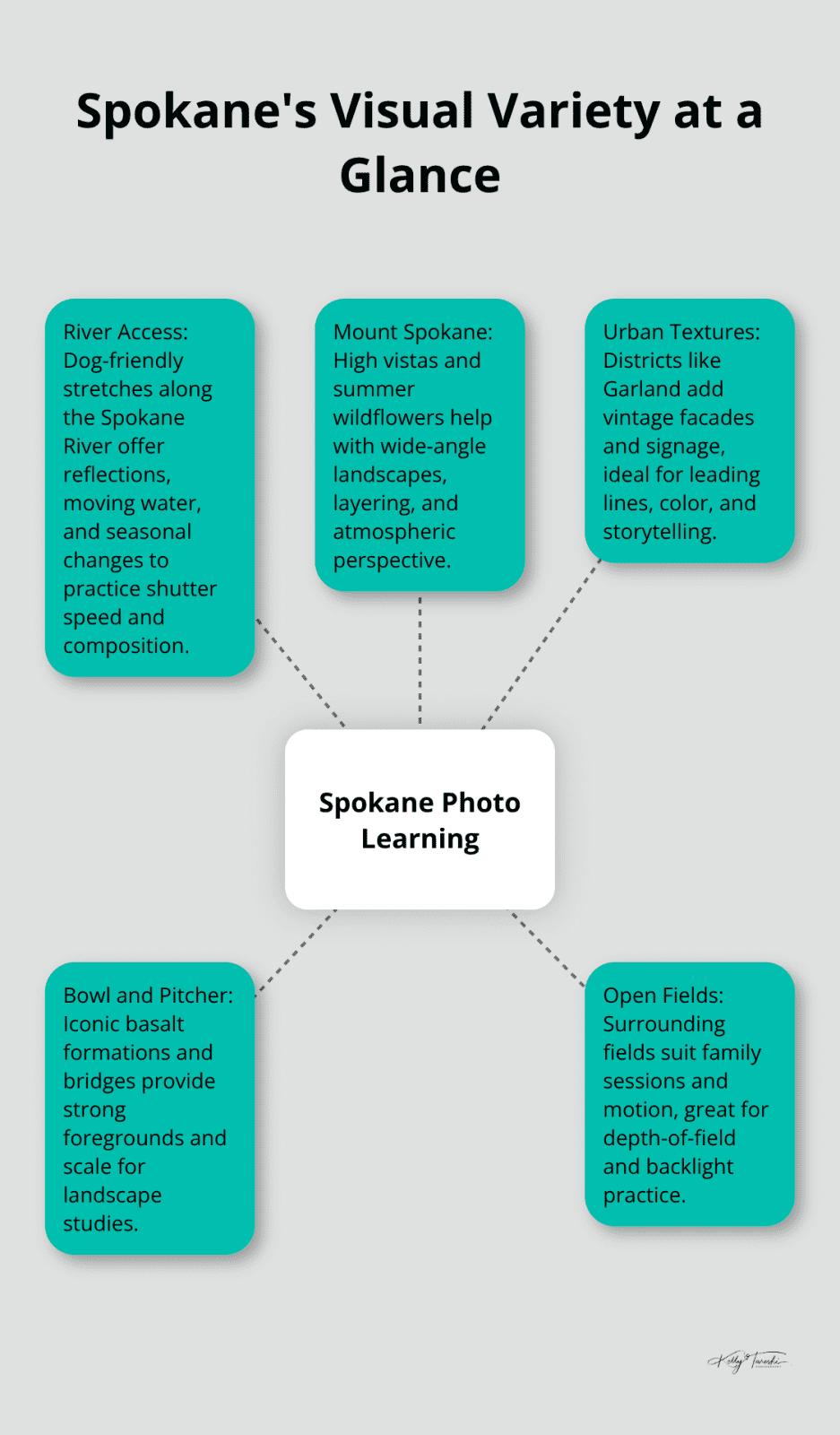
Use local scenery as a practice tool rather than treating one location as automatically better than another. The Spokane photo-location guide can provide ideas, but always confirm current access, rules, permits, weather, and trail or property conditions with the responsible agency or owner before planning a session.
Use Local Clubs and Critique Opportunities
Camera clubs and critique groups can provide feedback, assignments, competitions, and community. The Spokane Camera Club is a long-running local organization; schedules, locations, membership details, and events can change, so check its current information directly before attending.
Practice Across Different Types of Settings
Practice in places where photography is permitted, from controlled indoor environments to public outdoor settings. Compare how light, background, subject distance, and movement change from one environment to another. Do not assume that private studios, private property, or restricted locations are available for practice without permission. The guide to how location affects photography style explains why the same subject can look very different in another setting.
Use Instruction and Feedback Deliberately
Feedback can help identify problems you may not notice on your own, whether it comes from a class, club critique, workshop, trusted peer, or experienced photographer. Choose instruction based on the specific skill you want to improve, and verify current availability, pricing, and terms directly with the provider.
Core Skills That Actually Matter in Photography
Composition and Lighting Form Your Foundation
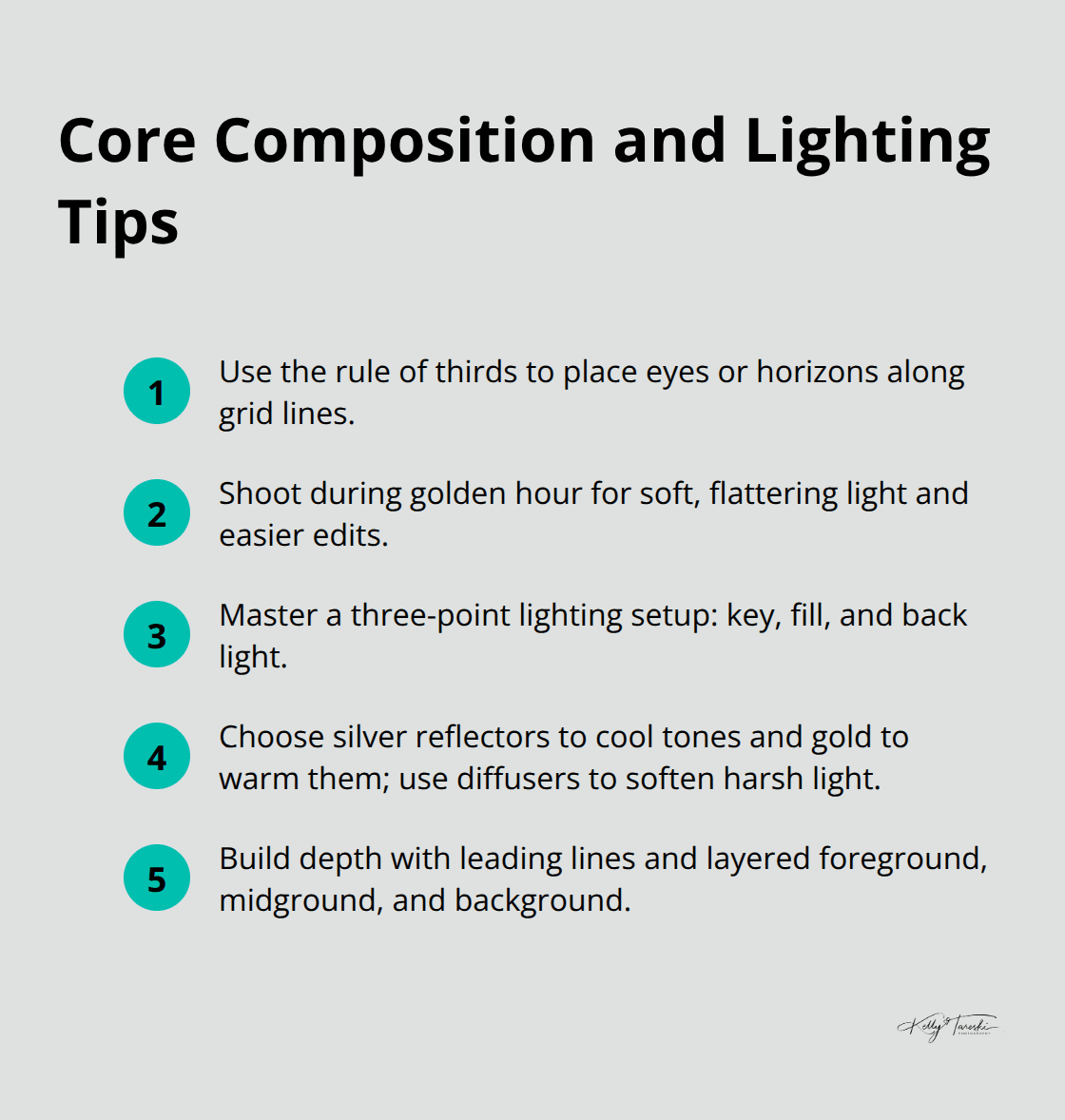
Composition and lighting determine whether your images work. The rule of thirds positions subjects on grid lines or intersections rather than dead center, which immediately strengthens most photos. Position eyes along the top third in portraits and horizons on the bottom third in landscapes. Golden hour shooting-roughly the first hour after sunrise and the last hour before sunset-delivers soft, flattering light that requires minimal correction in post-processing. Indoors, a three-point lighting setup uses a key light as your main source, a fill light to reduce shadows, and a back light to separate your subject from the background. Silver reflectors cool tones while gold reflectors warm them, and diffusers soften harsh light.
Leading lines guide viewers’ eyes through your frame using streets, rivers, doorways, or foreground elements. Depth comes from layering foreground, middle ground, and background elements rather than flattening everything into a single plane. These techniques transform your images from accidental snapshots into intentional work.
Camera Settings Control Your Capture
Camera settings control what your composition and lighting actually capture. Start in auto mode, then progress to aperture priority to control depth of field, shutter priority to freeze or blur motion, and finally manual mode where you command aperture, shutter speed, and ISO simultaneously. Aperture, shutter speed, and ISO are the three key elements of exposure that determine how your images look. Aperture (f-stops like f/2.8 or f/16) controls how much light enters and how shallow or deep your focus appears. Shutter speed (1/1000th of a second or 2 seconds) determines motion blur and light exposure. ISO (100 to 6400 or higher) amplifies light but adds grain.
Spend at least 30 minutes daily practicing these three settings in different lighting conditions. A 365-day project-one intentional photo per day for a year-forces consistent practice and reveals patterns in what works. Keep a photography journal documenting your settings, lighting observations, and what failed so you build intuition rather than guessing.
Study Masters to Develop Your Eye
Storytelling emerges when you shoot with intention rather than hoping composition happens accidentally. Study how Steve McCurry uses vibrant color and strong composition in National Geographic travel photography, or how Ansel Adams mastered tonal range and depth in landscape work. Analyze why certain photos from masters like Annie Leibovitz work emotionally, then adapt those principles to your own subjects in Spokane’s varied environments. This practice of learning from established photographers accelerates your technical growth and helps you recognize what separates ordinary images from compelling ones.
The next section explores where you can access these learning opportunities right here in Spokane, from community classes to professional mentorship that transforms these skills from theory into practice.
Where to Learn Photography in Spokane
There is no single required path for learning photography. Local clubs, community classes, workshops, online instruction, self-directed practice, and private teaching can all be useful depending on the skill you want to build. Because schedules, instructors, prices, and locations change, verify current details directly with each provider before registering or attending.
Camera Clubs and Critique Groups
The Spokane Camera Club is one local option for photographers interested in meetings, image critique, competitions, and community. Review the club’s current calendar and participation details rather than relying on an old meeting schedule in a blog post.
Community Classes and Workshops
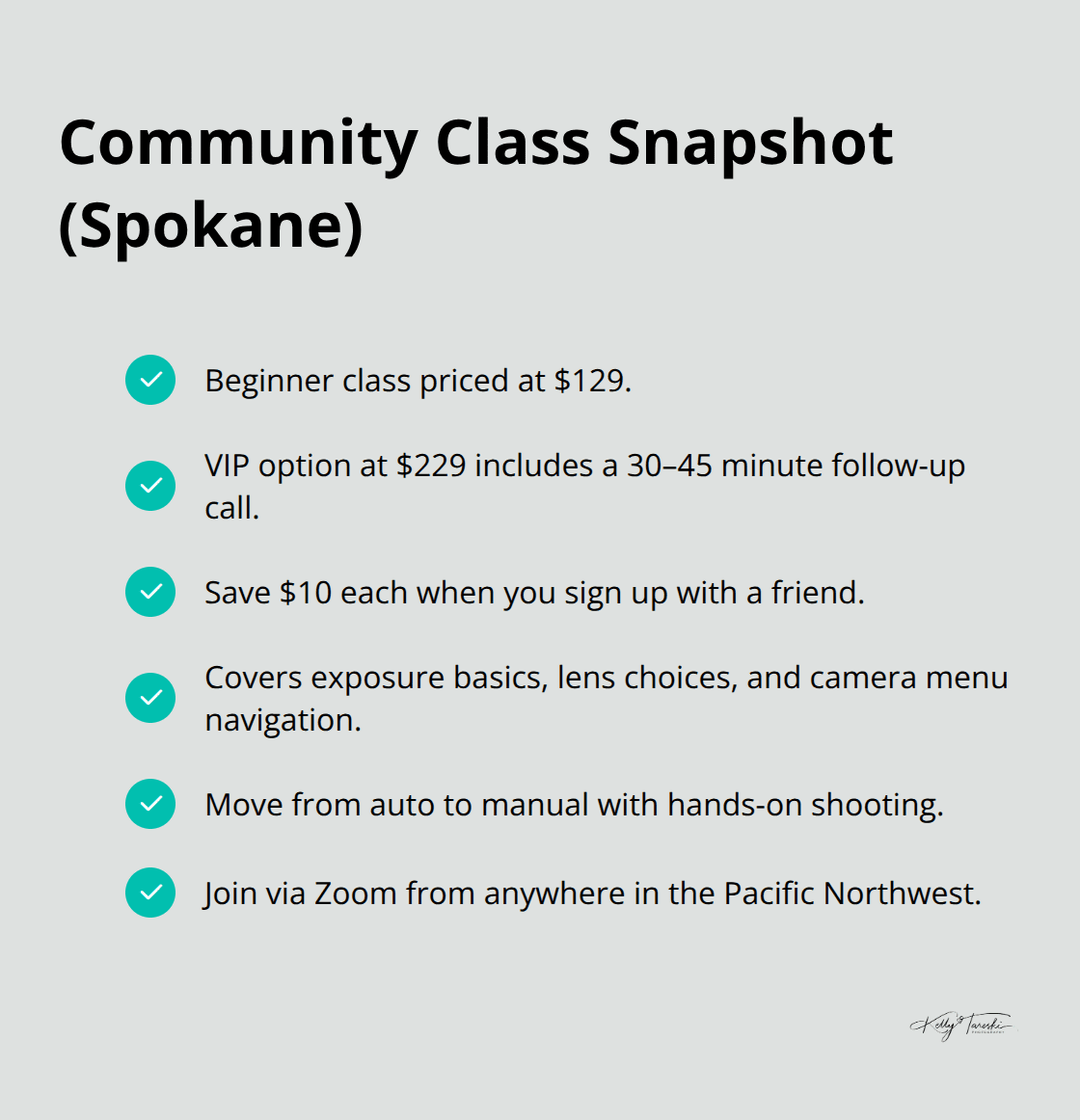
Classes and workshops can provide a structured introduction to exposure, camera controls, composition, lighting, editing, or another focused skill. Compare the current curriculum, instructor experience, format, cost, and required equipment before enrolling. A class is most useful when its subject matches the problem you are actually trying to solve.
Self-Directed Practice and Photo Challenges
You can also create your own monthly or weekly assignments around one skill at a time, such as motion, reflections, silhouettes, color, depth, or available light. Constraints can make practice more intentional because they give you a specific result to review instead of simply taking more photographs without a learning goal.
Private Instruction and Studio Learning
Private instruction, mentorship, and studio access vary by provider. Ask what is actually included, where the instruction takes place, what equipment is available, and whether the teacher’s experience matches the skill you want to learn. Do not assume a portrait studio offers classes, rentals, or mentorship unless that service is specifically advertised.
Final Thoughts
Match the learning method to the skill you want to improve. A camera club may be useful for critique and community, a class may provide structured fundamentals, and self-directed assignments can build repetition between formal learning opportunities.
Keep current information separate from evergreen technique. Meeting schedules, course prices, instructors, access rules, and workshop availability can change, so confirm those details with the organization or provider before making plans.
Kelly Tareski Photography focuses on portrait photography services in Nine Mile Falls near Spokane. For photography education, use current local learning resources and the educational articles on this site as reference material rather than assuming KTP offers classes or mentorship.
Key Takeaways
- Spokane offers varied urban and natural settings that can support deliberate photography practice when current access and rules are confirmed.
- Local clubs, classes, workshops, peers, and experienced photographers can provide feedback, depending on the skill you want to improve.
- Structured classes and self-directed photo challenges can complement regular practice, but current offerings should be verified with each provider.
- Studio access and private instruction vary by provider and should not be assumed unless they are specifically offered.
- Choose learning resources based on the specific technique or problem you want to improve rather than assuming one method is best for everyone.
Education Most Searched Articles
- Kelly Tareski Photography Homepage
- How to Choose Background Colors to Complement Skin Tones
- Choosing the Best Lens for Stunning Senior Portraits
- 5 Tips Using the Nikon Z7ii Camera for Portrait Photography
- Exploring Spokane Through a Lens: Must-Visit Photo Locations
- How to Choose the Best Lenses for Senior Portraits
- When to Use a Neutral Background in Photography
- Top Posing Ideas for Solo Portraits: Looking Confident and Natural
- The Economy and Photography
- How the Economy Impacts Photography
- How to Weather Economic Slumps as a Photographer
- Finding Creative Ways to Promote Your Photography on a Budget
- Free and Low-Cost Resources for Photographers