
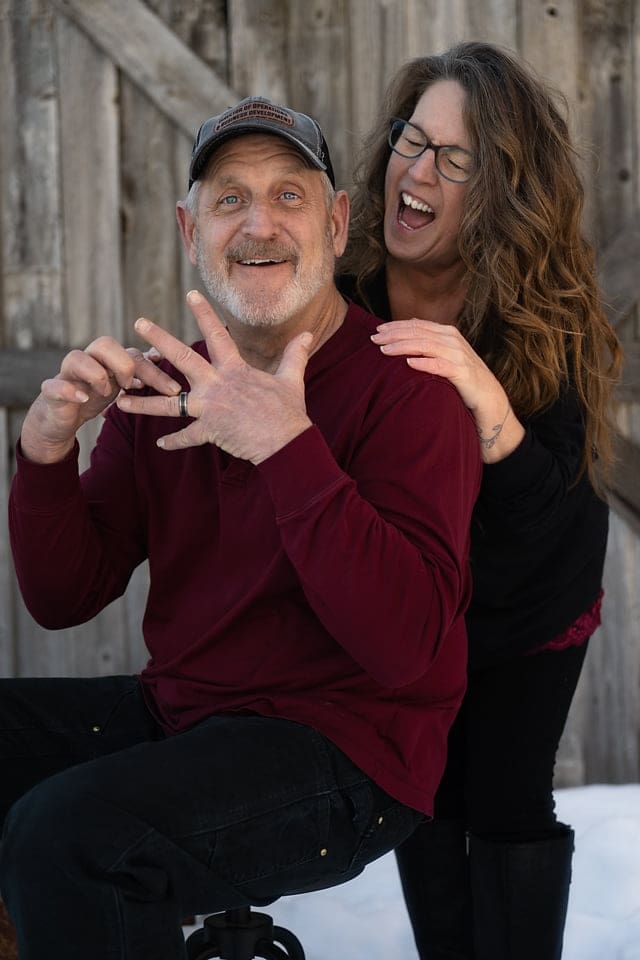
How to Capture Genuine Laughter in Portraits
How to Capture Genuine Laughter in Portraits. Laughter can add energy and variety to a portrait session, but it should not be treated as the only authentic expression or as something a photographer can guarantee.
This photography-education guide covers practical ways to create opportunities for natural reactions while respecting each person’s personality, comfort, and preferred level of interaction.
How to Create a Comfortable Environment for Genuine Laughter
Choose the Right Location
The setting plays a crucial role in putting subjects at ease. A comfortable setting can make it easier for subjects to relax and interact naturally. Choose a location that feels appropriate for the people you are photographing, whether that is outdoors, at home, or in a familiar indoor space.
For those who prefer indoor settings, a variety of backdrops can be tailored to each client’s personality. Whether it’s a cozy living room setup or a stylish studio arrangement, the key is to select a location that resonates with your subjects and makes them feel comfortable.
Master the Art of Conversation
Effective communication is essential for breaking the ice and encouraging natural smiles. Start by asking open-ended questions about your subjects’ interests, hobbies, or recent experiences. This not only helps them relax but also provides valuable insights that you can use to elicit genuine laughter later in the session.
Use this knowledge to your advantage by engaging in light-hearted banter and sharing relatable anecdotes. Your goal should be to create a friendly, conversational atmosphere that feels more like hanging out with a friend than a formal photo shoot.
Incorporate Fun Props and Activities
Props and activities can be powerful tools for encouraging natural smiles and laughter. Try bringing along items that align with your subjects’ interests or personalities. For example, if you’re photographing a music lover, having them hold their favorite instrument can lead to more relaxed and genuine expressions.
Activities that involve movement or interaction between subjects can also yield great results. A simple game of charades or a playful dance-off can quickly break down barriers and lead to spontaneous laughter. Keep these activities light and fun, without putting too much pressure on the subjects to perform.
Reduce Avoidable Session Pressure
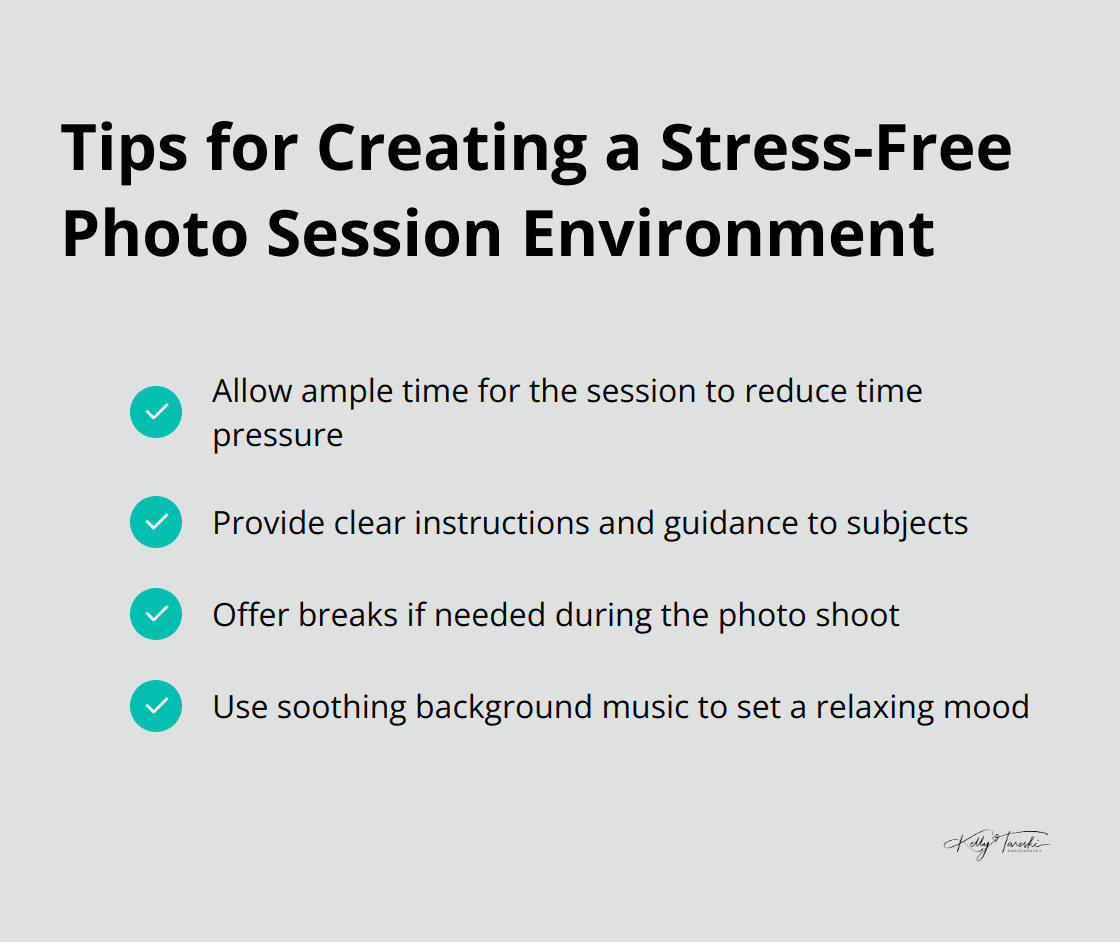
A photographer cannot guarantee a stress-free experience, but clear expectations and a flexible pace can reduce avoidable pressure during the session. Consider the following options:
- Allow ample time for the session (this reduces time pressure)
- Provide clear instructions and guidance
- Offer breaks if needed
- Use music only when the subjects want it and it fits the setting
These choices can make the session easier to navigate, but different people respond differently. Some may laugh easily, while others may prefer quieter expressions or more structured direction.
Now that we’ve covered how to create the perfect setting for laughter, let’s explore specific techniques for eliciting those priceless moments of joy during your portrait sessions.
Ways to Invite Natural Laughter Without Forcing It
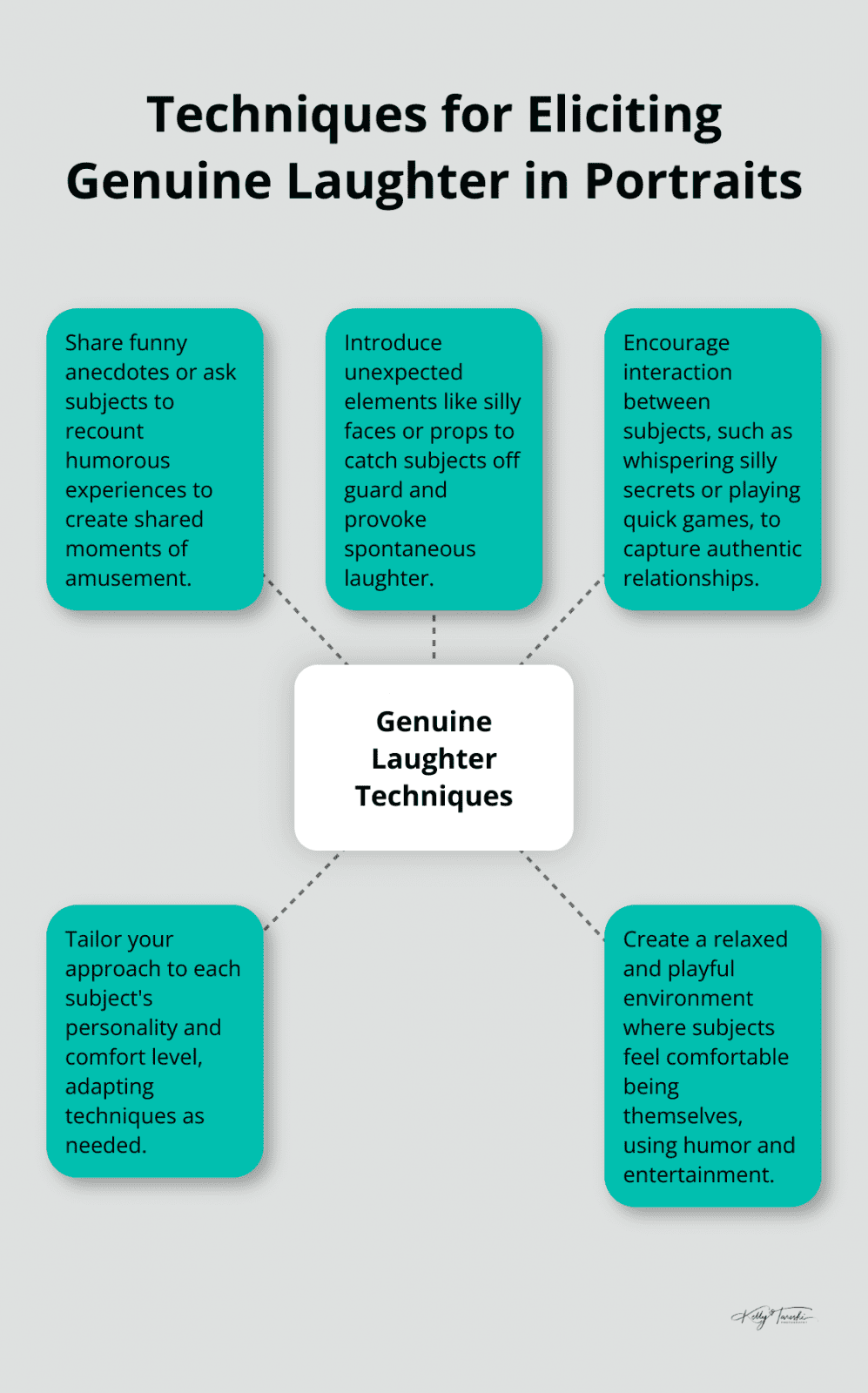
There is no proven prompt that creates genuine laughter for every person. The useful approach is to offer options, watch how people respond, and stop or change direction when a prompt does not fit.
The Power of Storytelling
Conversation can work when the subjects enjoy it. Ask about light topics they are comfortable discussing, shared interests, or a story they already like telling. Avoid assuming that embarrassing memories, relationships, or personal history are appropriate prompts for everyone.
Unexpected Elements for Surprise Laughter
Introducing unexpected elements into the photo shoot can catch subjects off guard and provoke spontaneous laughter. This could be as simple as making a silly face behind the camera or using props in unconventional ways. We once brought out a pair of oversized sunglasses, and the resulting laughter was contagious. The key is to keep these surprises light-hearted and appropriate for your subjects.
Encouraging Interaction Between Subjects
When photographing couples, families, or groups, simple interaction can add variety when everyone is comfortable with it. Conversation, looking at one another, walking, a familiar game, or a light prompt may work. Do not require physical affection, tickling, touching, or personal disclosures to create a reaction.
Tailoring Techniques to Your Subjects
Every individual and group is unique, so it’s important to tailor your approach to each specific situation. Pay attention to your subjects’ personalities and comfort levels. Some may respond well to silly jokes, while others might prefer more subtle humor. Be prepared to adapt your techniques on the fly to ensure the best results.
Creating a Playful Atmosphere
The overall atmosphere can influence how people respond, but not everyone wants a playful session. Humor, music, conversation, quiet direction, or simple movement can each work for different subjects. Choose the approach collaboratively instead of assuming that distraction or entertainment is required for a natural-looking expression.
As you practice these techniques, you’ll develop your own unique methods for sparking joy in your subjects. The next section will explore how to optimize your camera settings and positioning to capture these fleeting moments of laughter perfectly.
How to Optimize Camera Settings for Laughter
Use Burst Mode When It Helps
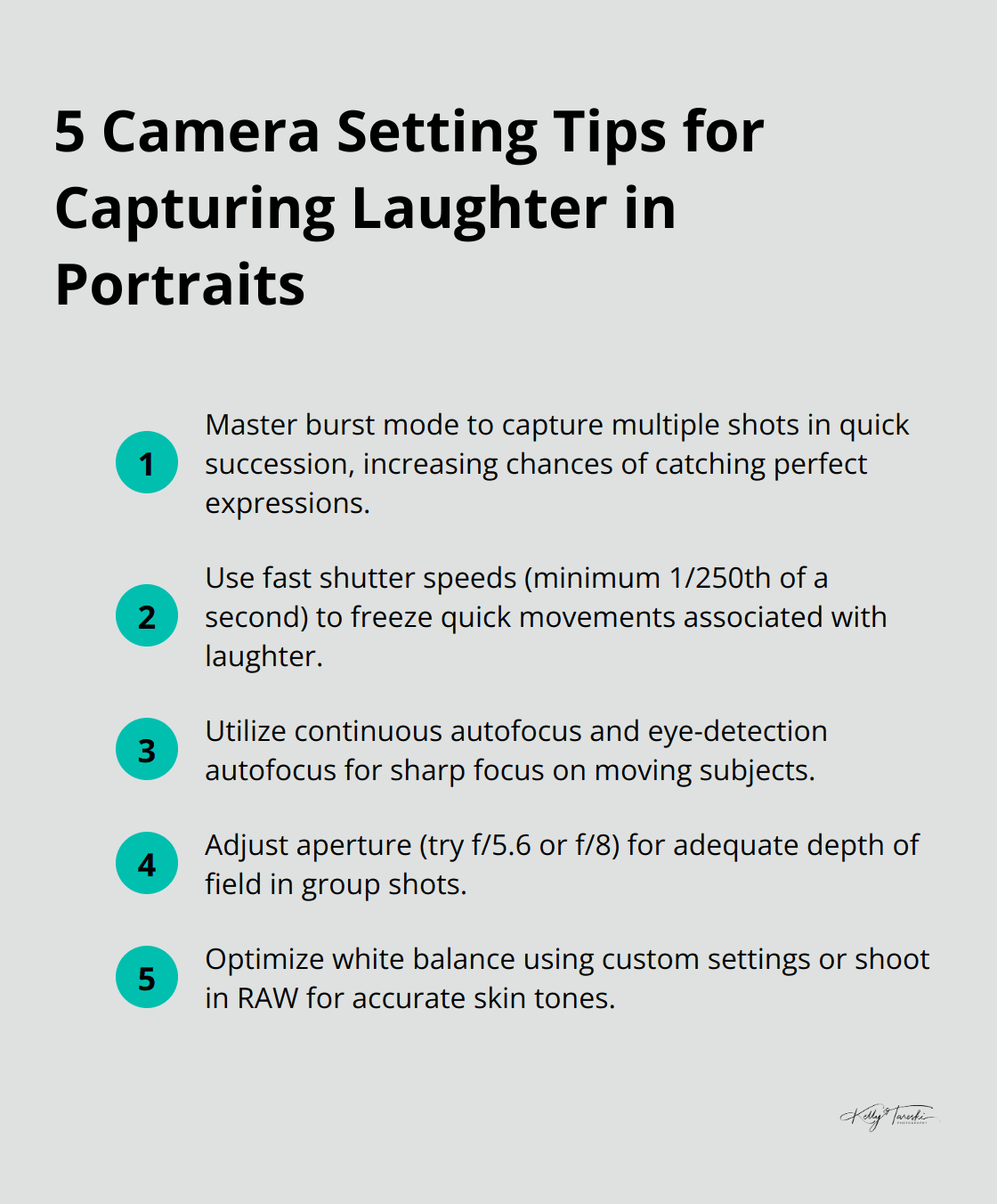
Burst mode is a powerful tool for capturing laughter. This feature takes multiple shots in quick succession, giving you more frames to choose from during fast movement. Use Burst Mode to capture fleeting expressions like a laugh, a gasp, or a subtle smirk, as emotions unfold in real-time and rarely give you a second chance.
Freeze Motion with Fast Shutter Speeds
Laughter can involve quick movement, so choose a shutter speed that fits the amount of motion, focal length, available light, and whether you want movement frozen or allowed to blur slightly. There is no single minimum shutter speed that applies to every portrait.
In lower light, ISO may need to increase to support the shutter speed and aperture you need. Noise performance varies by camera, exposure, file size, and intended output, so use the ISO that gives you a usable file rather than assuming one value is clean on every system.
Nail Focus for Moving Subjects
When subjects are moving, a continuous or tracking autofocus mode may be useful. The exact mode name and performance vary by camera, so choose the focus method that reliably follows the subject on the equipment you are using.
For portraits, use eye-detection autofocus when available. This feature (found on many newer camera models) helps ensure that your subject’s eyes remain tack-sharp even as they move with laughter.
Adjust Aperture for Group Shots
When photographing groups, choose aperture and subject placement together. If people are at different distances from the camera, you may need more depth of field, but the appropriate aperture depends on focal length, camera distance, group depth, sensor format, and the look you want.
Optimize White Balance
White balance affects overall color and skin-tone rendering. Auto, preset, custom, or measured white balance can all work depending on the light, and RAW capture can provide additional flexibility for color adjustment during editing.
Final Thoughts
Genuine laughter can add one type of expression and movement to a portrait gallery, but it does not make quieter or more camera-aware portraits less valuable. At Kelly Tareski Photography, laughter is treated as one possible expression within a broader portrait session rather than a required result. The most useful skill is adaptability: notice how the subject responds, change direction when needed, and avoid forcing a reaction simply because it worked for someone else.
We encourage you to practice these techniques regularly, refining your skills and developing your own unique methods. Photography education is an ongoing process, and experimentation will increase your proficiency at capturing those priceless moments of unrestrained joy. The goal extends beyond taking a picture; it’s about creating an experience that your subjects will cherish.
At Kelly Tareski Photography, we focus on creating timeless, elegant portraits that capture the essence of our subjects. Our approach combines photographic technique with clear communication, posing direction, and attention to how each person wants to be photographed. We invite you to continue growing in your photography journey, knowing that each laugh you capture is a testament to the connections you’ve built and the moments you’ve preserved. How to Capture Genuine Laughter in Portraits.
Education Most Searched Articles
- Kelly Tareski Photography Homepage
- How to Choose Background Colors to Complement Skin Tones
- Choosing the Best Lens for Stunning Senior Portraits
- 5 Tips Using the Nikon Z7ii Camera for Portrait Photography
- Exploring Spokane Through a Lens: Must-Visit Photo Locations
- How to Choose the Best Lenses for Senior Portraits
- When to Use a Neutral Background in Photography
- Top Posing Ideas for Solo Portraits: Looking Confident and Natural
- The Economy and Photography
- How the Economy Impacts Photography
- How to Weather Economic Slumps as a Photographer
- Finding Creative Ways to Promote Your Photography on a Budget
- Free and Low-Cost Resources for Photographers