
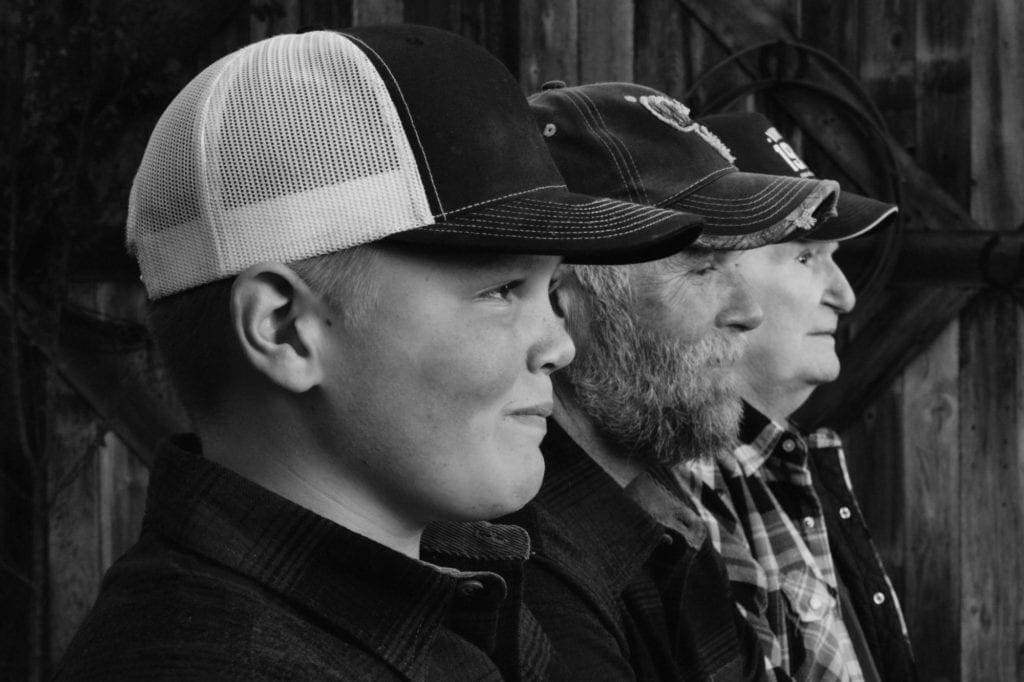
Grandparent and Grandchild Photos: A Comfortable Session Guide
Grandparent and grandchild photos work best when the session is planned around the people: comfortable positions, meaningful groupings, and time to interact without being rushed. Start by deciding which relationships you want photographed, then discuss the setting, timing, and any individual preferences. A quiet conversation can be just as personal as a playful moment.
I am Kelly Tareski, a family photographer in Nine Mile Falls near Spokane. When planning portraits with grandparents, I want to hear from everyone involved rather than assume that age determines someone’s energy, mobility, or preferred style. My family portrait sessions begin with the people and connections you want to remember.
Which grandparent and grandchild groupings should we plan?
A full-family portrait is a useful starting point, but smaller combinations can give each relationship its own space. Discuss the most important photographs before the session rather than trying to remember every pairing once everyone arrives.
- Grandparents with all grandchildren: A shared portrait that brings the generations together.
- One-on-one relationships: A grandparent with an individual grandchild, when those portraits are a priority.
- Three generations: A grandparent, their adult child, and a grandchild in one photograph.
- A portrait of the grandparents: Together or individually, without requiring every image to include the whole family.
These are options, not a required family structure. Tell me which people belong in your story and how you would like them represented. For a larger gathering, the large family group photo guide can help you organize a short priority list.
How do we choose a comfortable time and setting?
Ask each participant what works for them. A morning appointment is not automatically best for every grandparent, just as an evening appointment is not automatically best for every child. Discuss routines, travel, and how much time people would like to spend outdoors.
Share any seating, walking-distance, or access requirements before selecting a background. My indoor studios and outdoor photography settings offer different visual possibilities, but suitability needs to be confirmed for the particular people attending. Do not assume every part of the property has the same access.
Keep useful seating or mobility aids available. Someone should not have to stand, move repeatedly, or give up support for the sake of a pose. A thoughtful arrangement can work with the person rather than asking the person to fit a predetermined photograph.
What helps grandparents and grandchildren interact naturally?
Begin with something familiar: looking at a book, talking about a shared activity, or remembering an occasion they both enjoyed. Let the interaction suit the relationship. There is no need to perform a funny story, demonstrate affection, or recreate a gesture on command.
A family keepsake can offer a starting point when it has genuine meaning. Discuss its size, condition, and handling before bringing it. The guide to meaningful family photo props can help you decide whether an item adds to the portrait or distracts from it.
What should everyone wear?
Choose a shared level of formality and a compatible palette, then allow each person to wear clothing that feels like them. Comfort while seated matters as much as how an outfit looks standing up. Check shoes, sleeves, layers, and anything that might need constant adjustment.
Grandparents do not need to dress like the children, and children do not need miniature versions of adult outfits. A coordinated collection of personal choices can feel more natural than identical clothing.
Should the portraits be in color or black and white?
Choose the treatment that supports the image and how you hope to display it. Color may be important when clothing, an heirloom, or a setting carries part of the story. Black and white can provide a different visual emphasis, but it is not automatically more meaningful because the subject is a grandparent.
Review the black and white family photography guide for the distinction. Discuss editing preferences directly rather than assuming that age-related features should be hidden or removed.
How can we preserve the story behind the portrait?
Record names, relationships, and the occasion while the information is easy to confirm. A caption such as Grandma Jean with Alex and Sam, photographed during their September visit adds context without needing a long family history. Verify the details with the people involved.
A wall portrait can highlight one relationship, while an album can include the wider family. The family album selection guide explains how to give different groupings room without repeating nearly identical photographs.
Questions about grandparent and grandchild photos
Can the whole family be included as well?
Discuss the full group size and your priorities before booking. Smaller relationship portraits and a full-family photograph may fit the same plan, but every possible combination is not automatically included.
Do grandchildren need to sit on a grandparent’s lap?
No. Comfortable side-by-side arrangements can work well. No pose should require someone to lift or support another person beyond what feels appropriate for them.
What if someone prefers a quiet, traditional portrait?
That is a valid preference. A gently directed portrait can be personal without an activity, a joke, or a big smile.
Plan a portrait that respects every generation
Share the people attending, the relationships you want to prioritize, and any practical needs. Review current portrait investment information or contact Kelly Tareski Photography to begin planning.
Education Most Searched Articles
- Kelly Tareski Photography Homepage
- How to Choose Background Colors to Complement Skin Tones
- Choosing the Best Lens for Stunning Senior Portraits
- 5 Tips Using the Nikon Z7ii Camera for Portrait Photography
- Exploring Spokane Through a Lens: Must-Visit Photo Locations
- How to Choose the Best Lenses for Senior Portraits
- When to Use a Neutral Background in Photography
- Top Posing Ideas for Solo Portraits: Looking Confident and Natural
- The Economy and Photography
- How the Economy Impacts Photography
- How to Weather Economic Slumps as a Photographer
- Finding Creative Ways to Promote Your Photography on a Budget
- Free and Low-Cost Resources for Photographers