

Engagement Photos Spokane Inspiration: Curate a Vision for Your Love Story
Key Takeaways
- Engagement-photo inspiration is most useful when it helps you identify the settings, posing, movement, color, and visual mood you want in the final gallery.
- Select locations for visual fit, access, personal meaning when relevant, and how they support the style you want.
- Plan outfits around the setting, weather, movement, and visual direction rather than a required timeless color formula.
- Movement, structured posing, quiet portraits, and camera-aware images can all be used to create variety.
- Preparation and clear communication can make the session plan easier to understand without guaranteeing confidence or a particular emotional experience.
Quick answer: Use engagement-photo inspiration to identify visual preferences, not to copy someone else’s session. Save examples of lighting, color, wardrobe, backgrounds, posing, movement, crop, and overall mood so you can explain what you want the final gallery to look like.
This guide focuses on building that creative direction for a Spokane engagement session. For the broader local overview, see Engagement Photos Spokane.
Understanding Your Engagement Photo Style
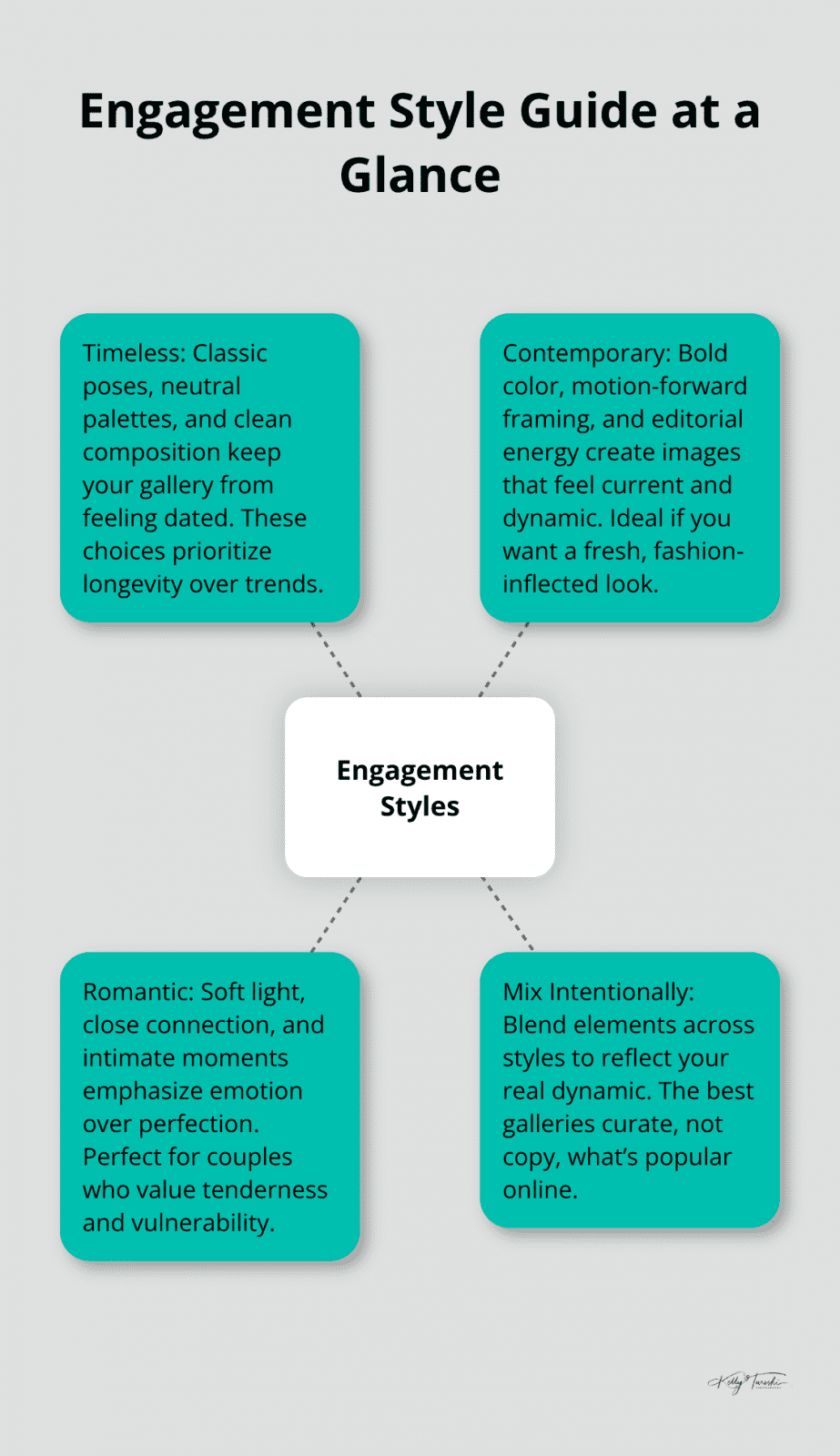
Start by deciding how you want the photographs to look rather than trying to label one style as more authentic. A session can lean classic, contemporary, romantic, editorial, playful, documentary-influenced, or combine several approaches. The useful choice is the one that fits the couple and the intended use of the images.
Timeless, Contemporary, and Romantic Approaches
Classic approaches may use simpler compositions, restrained styling, or more formal posing. Contemporary approaches may use stronger color, current fashion, movement, or editorial framing. Romantic approaches can use closer posing, softer styling, or more intimate visual cues. None is guaranteed to age better or feel more meaningful; use the mix that supports the gallery you want.
Build Your Feelings Board First
Create a reference board with colors, textures, clothing, locations, film stills, artwork, photography, or other visuals that show the direction you like. The examples do not have to be engagement photographs. Use the board to communicate lighting, mood, composition, styling, and overall visual preferences rather than expecting the photographer to reproduce individual images.
Ask Each Other the Right Questions
Discuss which settings, activities, levels of formality, and types of interaction you actually want photographed. Personal history can influence those choices, but it is optional. The goal is simply to give the photographer enough information to plan images that fit your priorities.
Plan Outfits That Move With You
Plan clothing around the visual direction, location, weather, and amount of movement in the session. Current fashion, patterns, structured clothing, flowing fabrics, casual looks, and formal looks can all work. Choose pieces that fit the couple and the photographs rather than trying to eliminate every trend or force movement into the wardrobe plan.
Planning Your Spokane Engagement Session
Spokane and the surrounding area offer gardens, riverfront settings, urban architecture, wooded areas, open landscapes, and indoor options. Travel time varies considerably by traffic, season, and location, so choose one or more settings that fit the booked session length instead of trying to cover a long list in one shoot. See Spokane engagement photo locations for location-specific ideas.
Choose locations that connect to your relationship
Choose a location for the amount of context, architecture, landscape, privacy, walking, access, and visual variety it provides. A place connected to the relationship can be useful, but a location with no prior personal meaning can also work well. For specific Spokane-area options and current planning considerations, use the Spokane engagement photo locations guide and confirm access or permission for the actual session date.
Time Your Session Around Seasons and Light
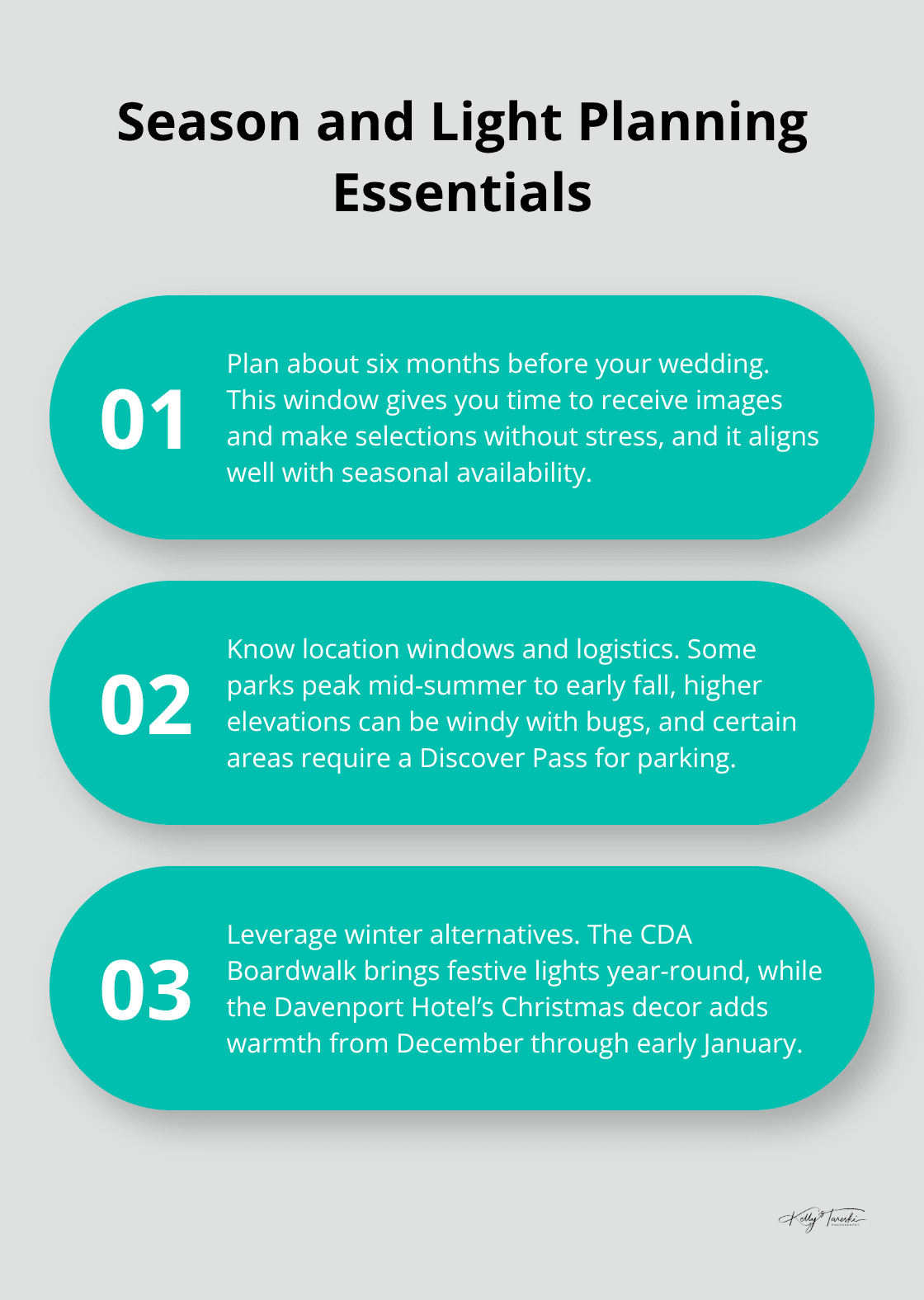
Seasonal timing affects both aesthetics and logistics. Plan early enough for photographer availability, editing turnaround, and any wedding-material deadlines, but there is no universal month or season that works best. Vegetation, weather, daylight, crowds, road conditions, permissions, and venue operations can all change, so confirm current conditions for the location you select.
Coordinate Outfits With Your Location and Season
Coordinate wardrobe with the location, weather, background colors, and movement planned for the session. Texture is one visual option, not automatically better than a smoother fabric. Choose footwear and layers that work for the terrain and conditions. Discuss wardrobe during planning early enough to make practical adjustments before the shoot.
Creating Visual Variety During Your Session
Movement Is One Way to Create Variety
Walking, turning, sitting, camera-aware posing, conversation, and other forms of interaction can all create different types of engagement photographs. Movement is useful when it fits the couple and location, but it is not inherently more genuine or relaxing than a still portrait.
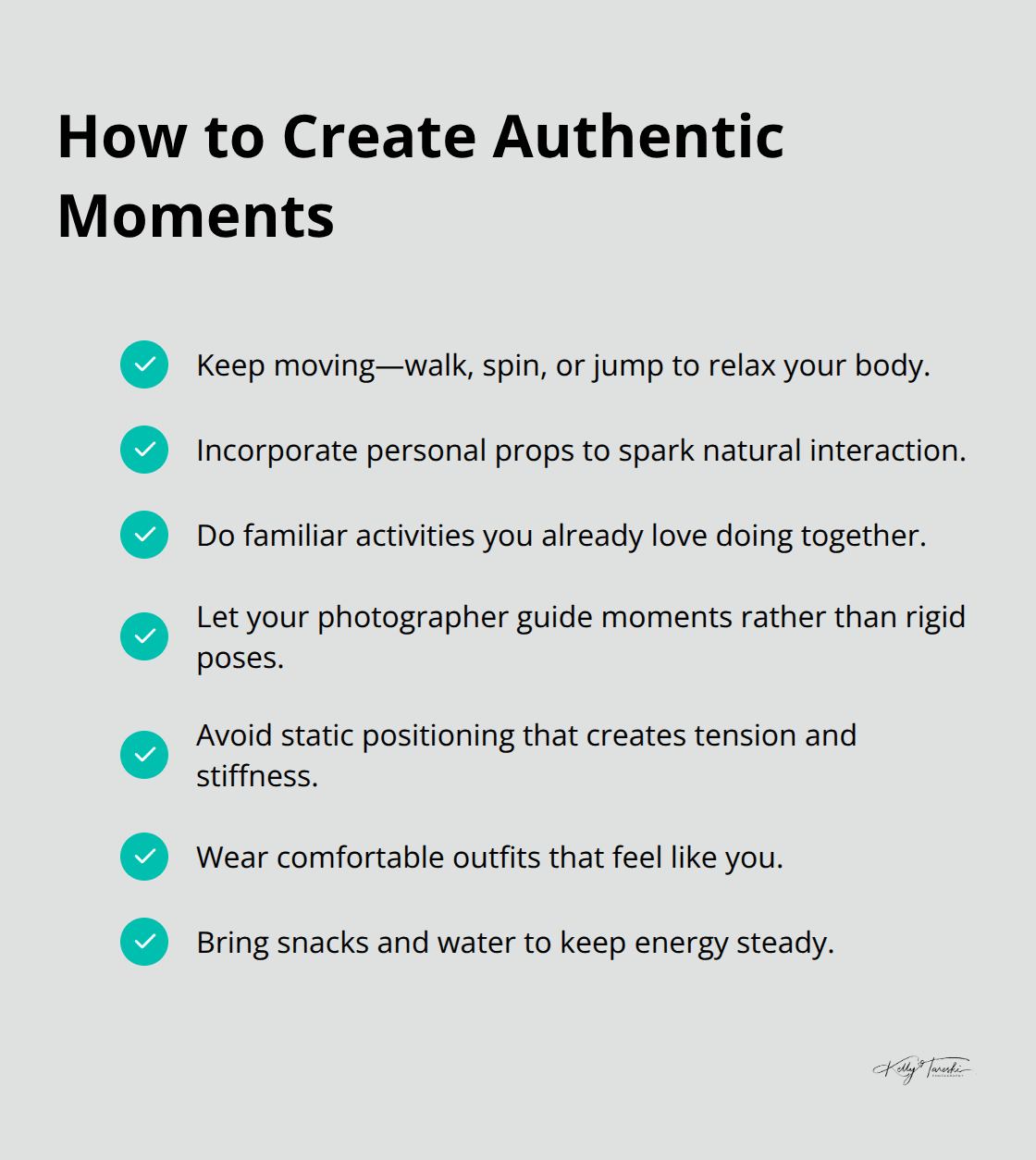
Some couples prefer movement while others respond well to quiet, structured posing. The photographer can vary the approach and review what fits the desired gallery. Movement and personal props are options, not requirements for authenticity.
Before the session, tell the photographer whether you prefer movement, direct posing, conversation, quieter portraits, activities, or a mix. Familiar activities can be included when they fit the session, but they are not required to make the photographs feel personal.
Preparation and Communication Clarify the Plan
Discuss your preferred style, any nervousness about being photographed, and how much direction you prefer before the session. Bring the practical items you personally need for the location and session length, such as water, layers, comfortable walking shoes, or snacks when appropriate, without using food or hydration as a treatment for self-consciousness.
Discuss clothing, location, access, timing, and posing preferences early enough to make changes before the session. The photographer can guide the technical and posing decisions without requiring you to forget the camera or reach a particular emotional state.
Choose the Amount of Camera Awareness You Want
An engagement gallery can include direct eye contact, formal posing, movement, conversation, and quieter interaction. There is no requirement to ignore the camera or perform a specific version of authenticity. Tell the photographer which kinds of images you want represented.
Final Thoughts
Engagement-photo inspiration is most useful when it helps you identify the kinds of settings, clothing, posing, movement, lighting, and expressions you want in the final gallery. The session does not have to follow a generic Pinterest formula or produce a particular emotional experience.
At Kelly Tareski Photography, I can plan engagement portraits on the private five-acre property or at other locations when they fit the current package and session plan. Styling services, locations, session length, and other inclusions should be confirmed from the current service information rather than assumed from a blog article.
For current packages, availability, and booking details, visit Couples and Engagement Photography in Spokane.
Education Most Searched Articles
- Kelly Tareski Photography Homepage
- How to Choose Background Colors to Complement Skin Tones
- Choosing the Best Lens for Stunning Senior Portraits
- 5 Tips Using the Nikon Z7ii Camera for Portrait Photography
- Exploring Spokane Through a Lens: Must-Visit Photo Locations
- How to Choose the Best Lenses for Senior Portraits
- When to Use a Neutral Background in Photography
- Top Posing Ideas for Solo Portraits: Looking Confident and Natural
- The Economy and Photography
- How the Economy Impacts Photography
- How to Weather Economic Slumps as a Photographer
- Finding Creative Ways to Promote Your Photography on a Budget
- Free and Low-Cost Resources for Photographers