
Why Capturing Genuine Emotions Makes for Timeless Photos
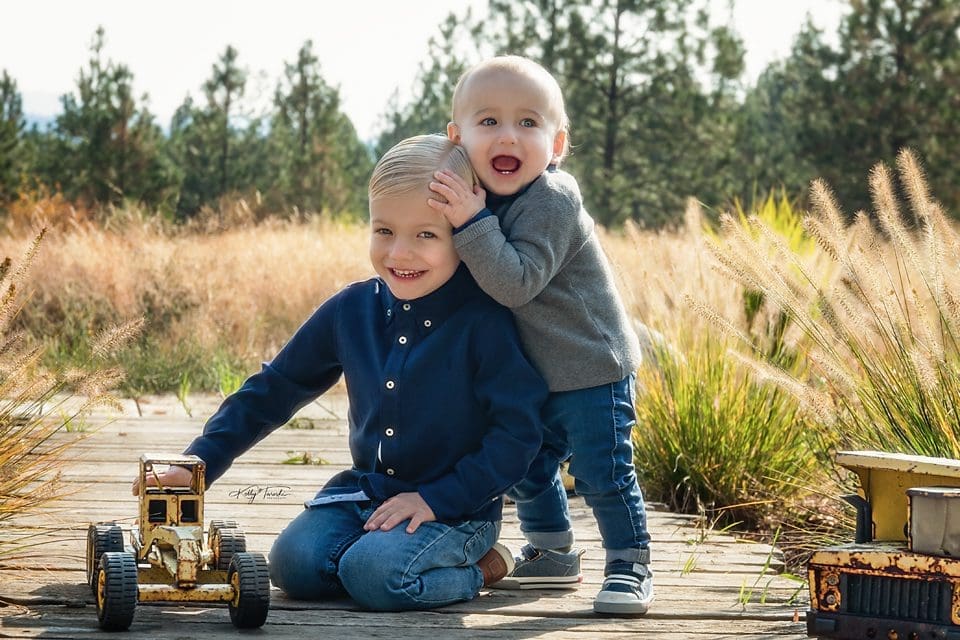
A photograph that captures genuine portrait emotion tells a story that lasts decades. These images connect with viewers on a deeper level than technically perfect but emotionally empty shots.
We at Kelly Tareski Photography have seen how authentic moments create the most treasured photographs. When subjects feel comfortable and natural, their true personalities shine through the lens.
The difference between a good photo and an unforgettable one often comes down to emotional authenticity.
Why Your Brain Responds Differently to Emotional Photos
The Neural Highway to Memory
Emotion can give a portrait context because expression, posture, gesture, and interaction help viewers understand what was happening in the moment. A photograph does not need a neuroscience explanation to be meaningful; it simply needs visual cues that feel believable and relevant to the people in it.
People often respond strongly to portraits that show recognizable relationships or expressions, but memory and emotional response vary from person to person. For family and portrait photography, the practical goal is to create images that feel connected to the people and moment rather than claim a fixed memory advantage.
The Science of Visual Connection
Some viewers prefer expressive, candid-looking photographs while others value composed portraits. A strong gallery can include both. Expression should support the subject and story instead of being treated as a formula for attention or engagement.
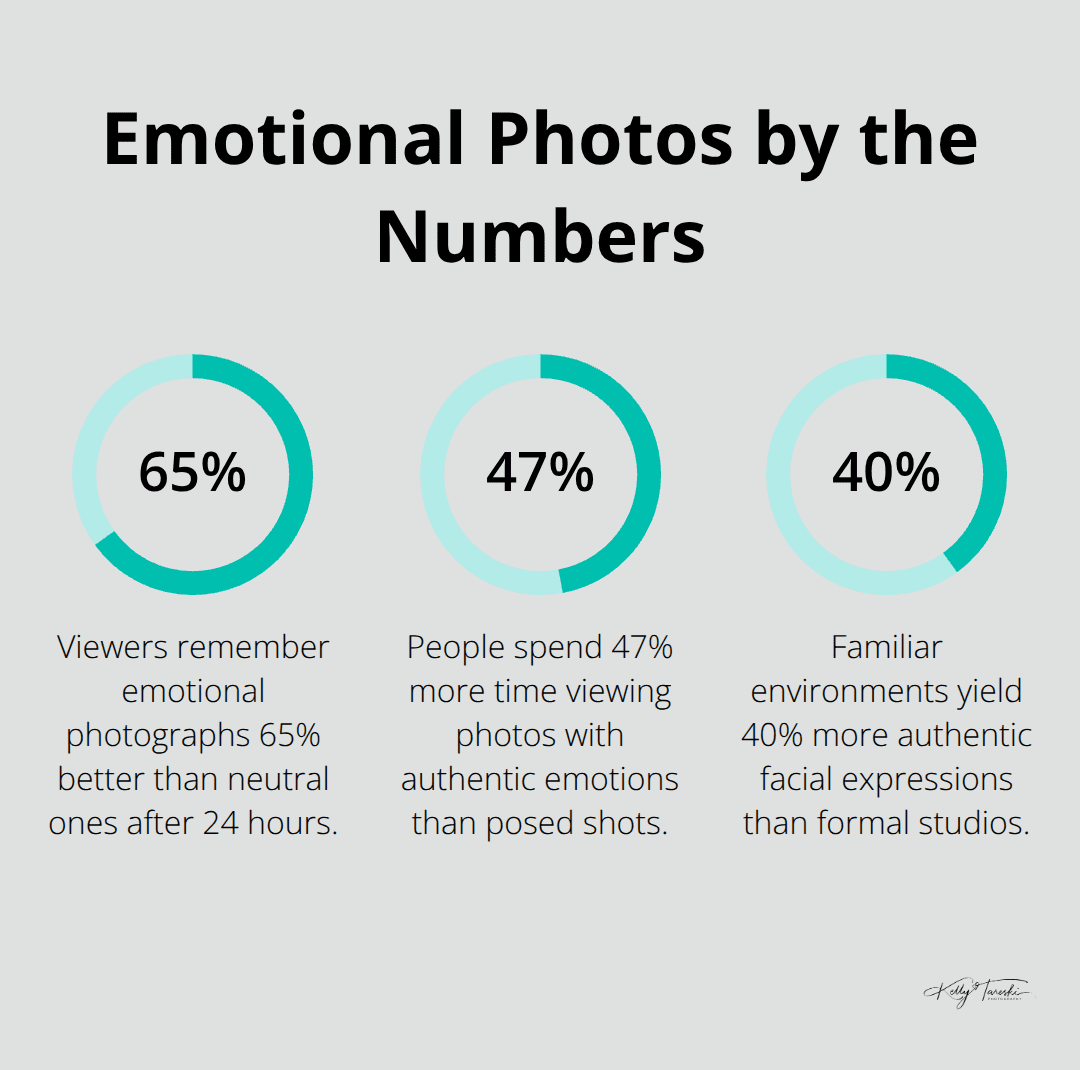
This biological response creates a deeper connection between the viewer and the image. Photos with real smiles activate the brain’s reward centers, release dopamine, and create positive associations. Harvard Medical School research shows that authentic emotional expressions in photographs generate measurable changes in heart rate and skin conductance among viewers.
What This Means for Portrait Photography
These physiological responses explain why some photos feel instantly compelling while others leave us cold. The brain’s automatic response to genuine emotion (rather than forced expressions) creates lasting impact that transcends technical perfection.
Professional photographers who understand this science focus on authentic moments rather than perfect poses. This knowledge becomes the foundation for techniques that capture real emotions and create photographs that viewers treasure for decades.
How Do You Actually Capture Real Emotions
The 10-Minute Rule Changes Everything
Some people settle into a session quickly while others need more time. There is no required warm-up period before a useful portrait can happen. The photographer can begin with simple direction, conversation, movement, or camera-aware portraits and adjust the pace based on the person in front of the lens.
Conversation is one way to create changing expressions, but it is not required for every client.
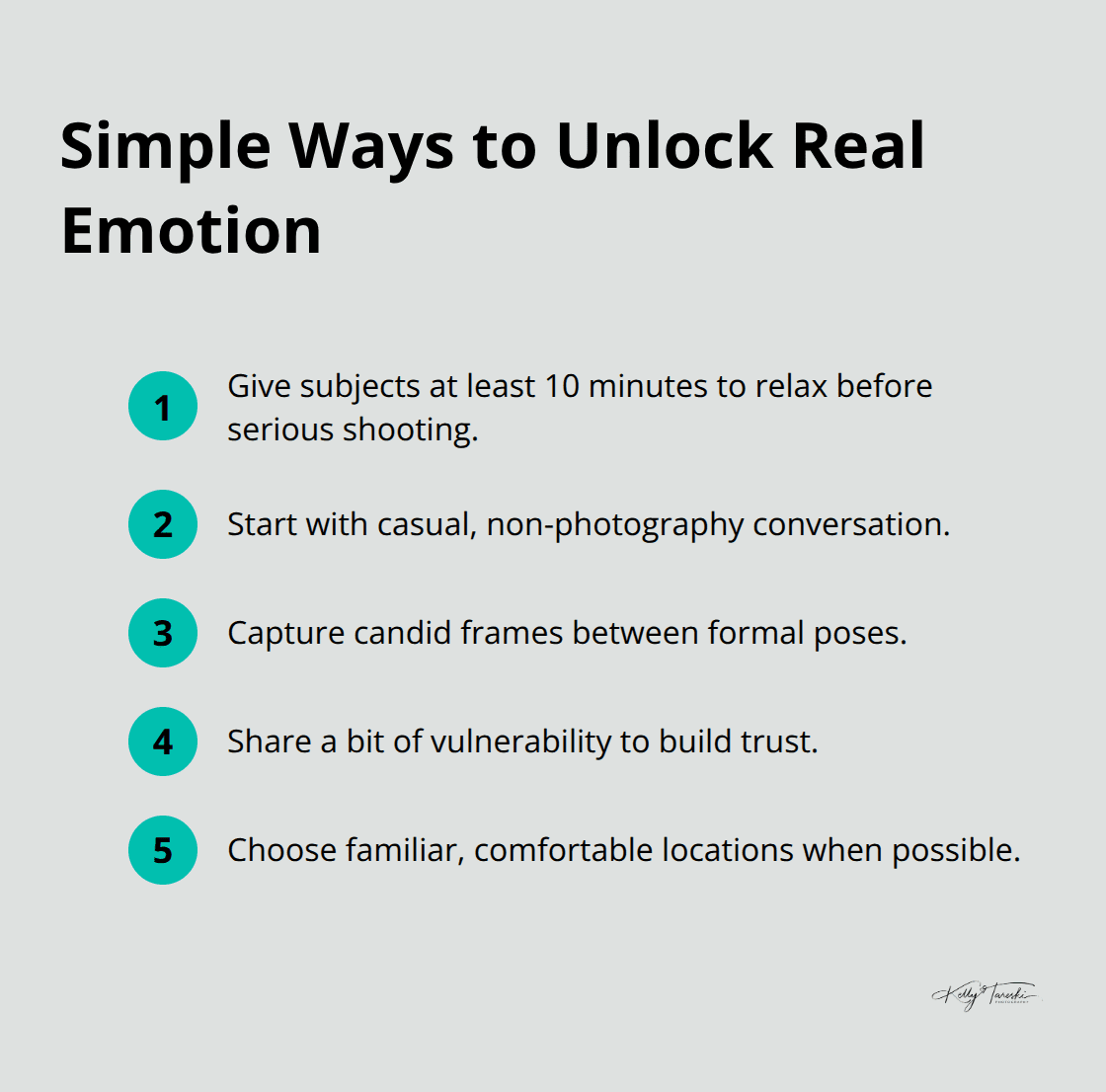
Quiet direction, movement, interaction, and camera-aware posing can also produce useful variety. The goal is not to prove which smile is “real,” but to create expressions that fit the person and portrait.
Shoot Between the Shots
The most powerful emotional photographs happen in the spaces between formal poses. While subjects adjust their hair, share a laugh, or look away from the camera, their authentic selves emerge. These unguarded moments produce images that feel alive and genuine rather than manufactured.
Professional photographers capture multiple candid frames for every posed shot. The technique involves camera readiness while subjects transition between poses or interact naturally with each other. Candid photographs receive higher engagement rates on social media platforms compared to traditional posed portraits.
Build Trust Through Vulnerability
Emotional connection requires the photographer to show genuine interest in the subject as a person, not just as a photographic subject. Share a personal story or admit to nervousness creates mutual vulnerability that opens the door to authentic expression. This approach transforms the dynamic from photographer-subject to human-human interaction.
The most successful emotional portraits come from sessions where subjects feel heard and understood. Professional photographers who consistently capture genuine emotions spend time to learn about their subjects’ personalities, interests, and current life situations before the session starts.
Create Natural Environments
Comfortable settings produce more authentic emotions than sterile studio environments. Familiar locations (like a favorite park or the subject’s home) help people relax and act naturally. Environmental comfort translates directly into emotional authenticity in photographs.
However, even the most comfortable environment won’t save a session if the photographer creates artificial pressure or rushes through the process. The next chapter explores the specific mistakes that destroy emotional connection and turn potentially powerful portraits into forgettable images.
What Kills the Emotion in Your Photos
The Direction Trap That Destroys Authenticity
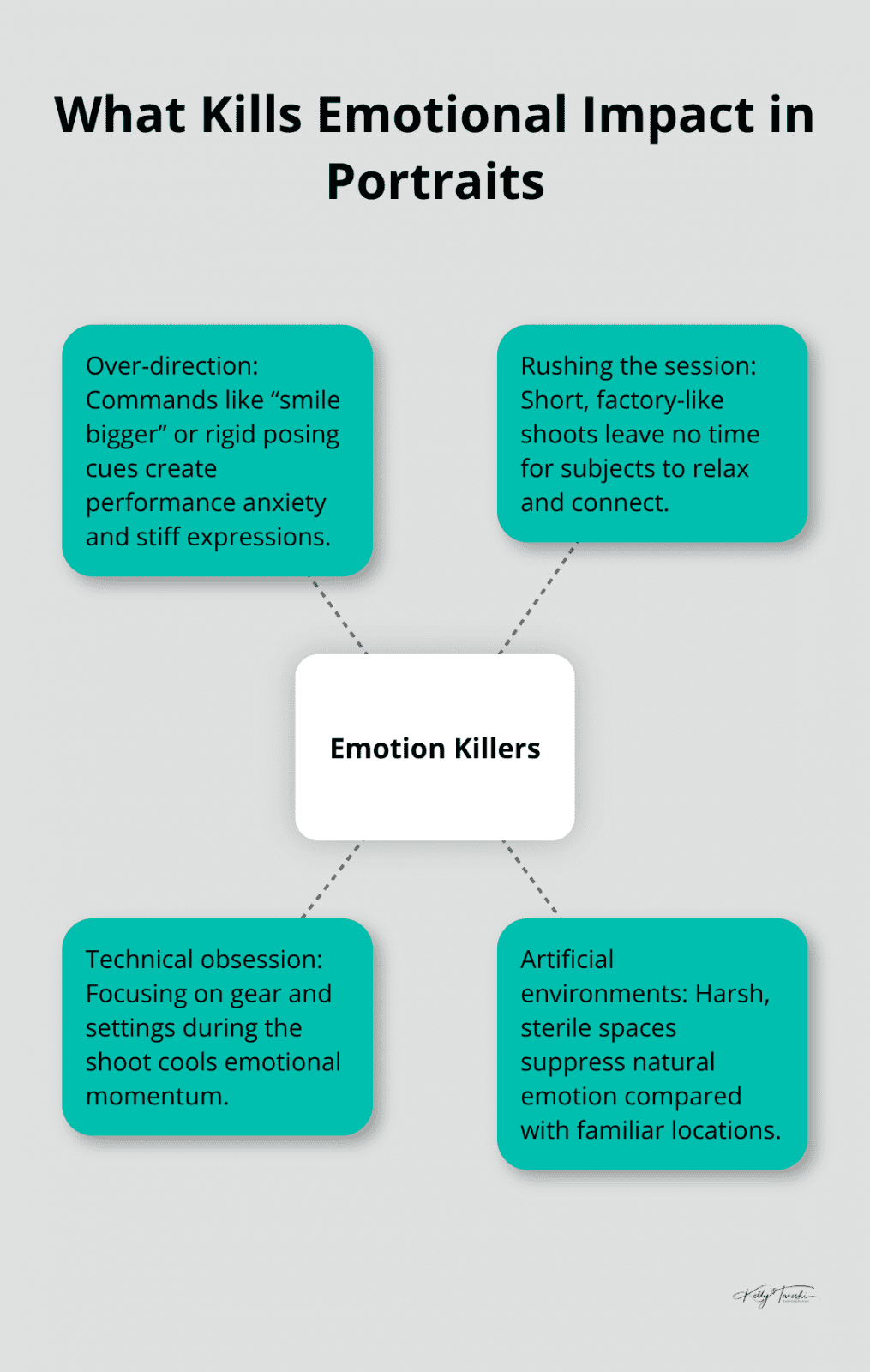
Photographers who bark commands like “pose this way” or “smile bigger” create the exact opposite of genuine emotion. Studies have shown that elderly individuals have significantly worse facial expression recognition scores than young adults. The constant direction creates performance anxiety rather than natural comfort.
Professional photographers who capture the most emotional depth give broad suggestions rather than specific poses. Instead of “tilt your head left,” they might say “think about your favorite memory with this person.” This approach allows natural expressions to emerge organically. Subjects who feel micromanaged become self-conscious and their muscles tense up, which shows immediately in their facial expressions.
The Speed Problem That Prevents Connection
Session length should match the number of people, wardrobe changes, locations, age range, and goals of the session. A short session can work well for a focused need, while a longer session may allow more variety. Duration alone does not determine whether a portrait feels meaningful.
Different people need different amounts of direction and transition time. Children, adults, and groups may all respond differently depending on familiarity, energy, mood, and the setting. Build enough flexibility into the session for those differences instead of assuming a standard warm-up time by age.
Technical Obsession Over Human Connection
Photographers who spend session time adjusting lights, checking camera settings, or discussing technical aspects with assistants lose precious emotional momentum. Subjects cool down emotionally when photographers become distracted by equipment. The most emotionally compelling portraits come from photographers who handle technical preparation before subjects arrive and then focus entirely on human interaction during the session.
Annie Leibovitz famously shoots with minimal technical adjustments during emotional moments (preferring to capture authentic expressions over perfect lighting). This philosophy produces images with genuine feeling rather than sterile perfection. Photographers who prioritize technical excellence over emotional connection consistently produce forgettable images that lack the human spark that makes photographs timeless.
The Artificial Environment Effect
Studio and environmental portraits can both feel natural when the space, lighting, direction, and pacing suit the client. Some people prefer the predictability and privacy of a studio, while others respond better outdoors or in a familiar setting. Neither environment guarantees a particular expression.
Natural settings like parks, homes, or meaningful locations help subjects relax and act authentically. However, even outdoor locations can feel artificial if photographers create too much structure or formality. The key lies in maintaining a casual atmosphere regardless of the physical environment, which allows true personalities to emerge naturally and enables candid photography to flourish.
Final Thoughts
Portraits can become meaningful over time because they preserve people, relationships, expressions, clothing, places, and stages of life. Their value is personal rather than scientific, and both posed and candid-looking photographs can become important parts of a family’s visual history.
These images trigger biological responses that make viewers pause, connect, and remember. Professional photographers who master emotional connection produce work that transcends mere documentation. When photographers prioritize human connection over technical perfection, they create art that stands the test of time and becomes more precious with each year.
We at Kelly Tareski Photography understand that these powerful connections require patience, skill, and genuine care for our subjects. The most treasured photographs in any family collection share one common element: they show real people who experience genuine emotions. These images tell stories that posed portraits simply cannot match (and viewers recognize the difference immediately).
Education Most Searched Articles
- Kelly Tareski Photography Homepage
- How to Choose Background Colors to Complement Skin Tones
- Choosing the Best Lens for Stunning Senior Portraits
- 5 Tips Using the Nikon Z7ii Camera for Portrait Photography
- Exploring Spokane Through a Lens: Must-Visit Photo Locations
- How to Choose the Best Lenses for Senior Portraits
- When to Use a Neutral Background in Photography
- Top Posing Ideas for Solo Portraits: Looking Confident and Natural
- The Economy and Photography
- How the Economy Impacts Photography
- How to Weather Economic Slumps as a Photographer
- Finding Creative Ways to Promote Your Photography on a Budget
- Free and Low-Cost Resources for Photographers