
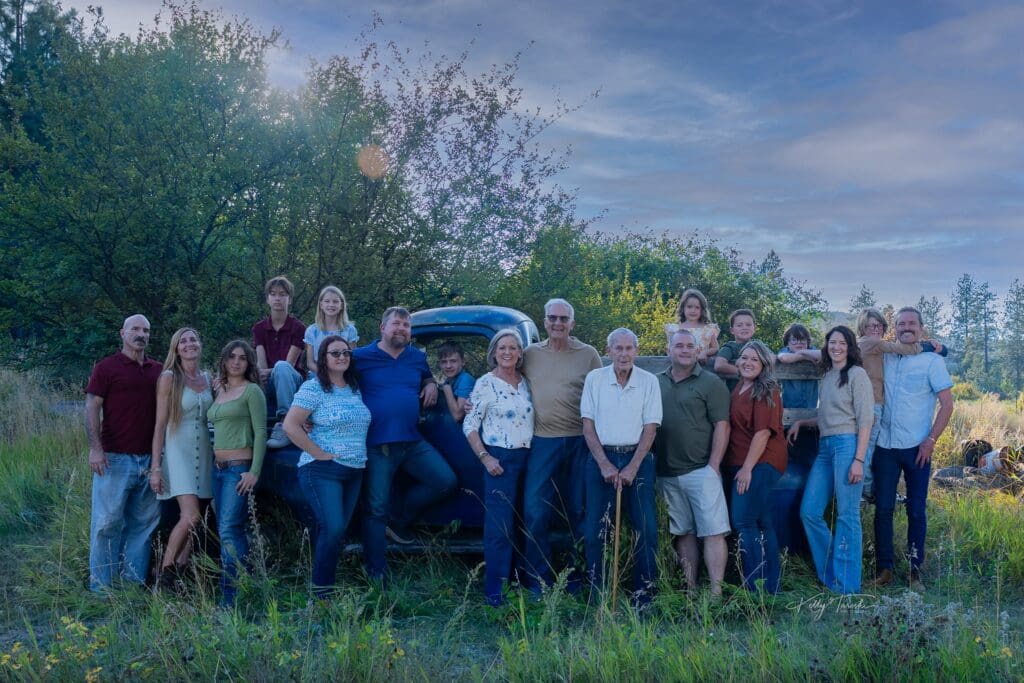
Family Reunion Photos: A Multi-Generation Planning Guide
Successful family reunion photos need a coordinator, a written list of names and groupings, an accessible portrait area, and a schedule that fits the larger event. Plan the photographs before relatives arrive so the reunion can remain the focus rather than becoming a long exercise in finding people.
This guide addresses reunion logistics. For composition and accessibility details specific to very large groups, also review our large family portrait guide. The family photography planning library has additional guidance for wardrobe, groupings, locations, and session preparation.
Who should coordinate family reunion photos?
Choose one person who knows the family and can gather each group. For a very large or blended family, a second coordinator from another branch may help. The photographer directs the portrait, but family coordinators know names, relationships, arrivals, and sensitive dynamics.
- Create one shared list rather than several competing versions.
- Use names, not labels such as “everyone on this side.”
- Mark relatives with limited time or mobility.
- Confirm who must leave early or arrive late.
- Share relationship sensitivities privately.
- Give the final list to the photographer before the reunion.
Which family reunion groupings should be photographed?
| Priority | Grouping | Planning note |
|---|---|---|
| Essential | Everyone attending | Photograph when the largest number of people is present and comfortable. |
| Essential | Oldest generation with descendants | Provide stable seating and the shortest route. |
| Essential | Each household or immediate-family unit | List partners and children by name. |
| Important | Siblings, cousins, or generational groups | Decide which combinations carry family meaning. |
| Optional | Friends, organizers, or chosen family | Include relationships the family wants documented. |
| Optional | Smaller spontaneous combinations | Add only after priority portraits are secure. |
A reunion does not need every mathematical combination of relatives. Prioritize the photographs people would genuinely miss.
When should photographs happen during the reunion?
Choose a window when the essential people are present and before fatigue, meals, speeches, or departures complicate the gathering. The specific time depends on the event schedule, light, location, group size, and family needs. Avoid promising a universal number of minutes per group.
Build a transition around the portrait period so people know where to go next. A clear announcement, printed schedule, or message from the coordinator is more effective than asking the photographer to locate relatives individually.
How do you choose an accessible reunion photo location?
Look for level footing, adequate space, a short walking route, seating, manageable temperature, and an uncluttered background. Confirm permission when the reunion is held at a venue, park, resort, church, or other managed property.
Kelly Tareski Photography offers a private five-acre outdoor property in Nine Mile Falls and five indoor studios. Review the Spokane photography venue options and share the expected group size before assuming a space will fit.
How should multiple households coordinate clothing?
Give families a flexible palette rather than requiring identical outfits. Share several colors and a general level of formality, then let each household choose garments that fit its people. This is easier to manage across generations, budgets, body preferences, and travel.
- Choose two to four main colors with room for related neutrals.
- Ask households to avoid one exact shirt or color for everyone.
- Keep important cultural or ceremonial clothing in the plan.
- Make required weather layers part of the palette.
- Use practical shoes for the confirmed surface.
- Send guidance early without requiring new purchases.
The family photo palette guide provides seasonal and setting-based examples.
How do you plan for children, older adults, and mobility needs?
Arrange the schedule around the people with the greatest access or stamina needs. Offer safe seating, avoid unstable steps or ground, and keep young children beside adults they trust. A wheelchair, walker, cane, hearing aid, or other access item belongs in the person’s life and should not be removed for appearance.
Tell the photographer about these needs in advance so spacing, camera position, and grouping order can be planned respectfully.
What if not everyone can attend?
Document the people who are present without staging unsafe composites or implying that someone attended. A family may bring a meaningful photograph or object with photographer approval, but it should be handled respectfully and should not overshadow living participants unless that is the family’s intention.
Smaller household sessions at another time can complement the reunion photographs without pretending the events occurred together.
Family reunion photo checklist
- Name one or two family coordinators.
- Create a priority grouping list with names.
- Confirm attendance and departure constraints.
- Select a safe, accessible portrait area.
- Share a flexible wardrobe palette.
- Prepare seating and a weather alternative.
- Tell the photographer about sensitive relationships and access needs.
- Communicate the portrait time and meeting point to everyone.
Frequently asked questions about family reunion photos
Should the full group be photographed first?
Often, yes, when everyone is present and comfortable. The best order may change if someone has limited stamina, a late arrival, or an early departure.
Can each household receive its own portrait?
It can be included when the agreed schedule and group size allow. Put those household combinations on the written list rather than deciding during the session.
How far ahead should we contact a photographer?
Availability varies by season and reunion date. Reach out when the date, likely attendance, and location are known instead of relying on a fixed lead time.
Plan the portraits without taking over the reunion
Explore Spokane family photography, review current portrait investment information, and contact Kelly Tareski Photography with the reunion date, group size, and access needs.
Education Most Searched Articles
- Kelly Tareski Photography Homepage
- How to Choose Background Colors to Complement Skin Tones
- Choosing the Best Lens for Stunning Senior Portraits
- 5 Tips Using the Nikon Z7ii Camera for Portrait Photography
- Exploring Spokane Through a Lens: Must-Visit Photo Locations
- How to Choose the Best Lenses for Senior Portraits
- When to Use a Neutral Background in Photography
- Top Posing Ideas for Solo Portraits: Looking Confident and Natural
- The Economy and Photography
- How the Economy Impacts Photography
- How to Weather Economic Slumps as a Photographer
- Finding Creative Ways to Promote Your Photography on a Budget
- Free and Low-Cost Resources for Photographers