

Building Confidence: How to Feel Comfortable on Camera
Feeling awkward in front of a camera is common, especially when you are unsure what to do with your hands, how to stand, or what expression looks natural. Comfort usually improves when the session feels collaborative, expectations are clear, and the photographer gives simple direction instead of asking you to “just relax.”
This guide offers practical ways to feel more comfortable on camera, including preparation, breathing and pacing, movement-based posing, communication, and choosing a photographer whose approach helps you feel at ease.
Why Can Being on Camera Feel Uncomfortable?
Feeling nervous or self-conscious in front of a camera is common. You do not need to diagnose the reason to make a portrait session easier. Uncertainty about posing, appearance, privacy, or what will happen next can often be addressed through clear information and communication.
Feeling Watched or Self-Conscious
A camera directs attention toward the person being photographed, which can make ordinary expressions or movements feel more noticeable. If that is uncomfortable for you, tell the photographer. A slower pace, clearer direction, movement, conversation, or a mix of camera-aware and candid-looking portraits may fit you better.
Fear of Judgment
Fear of being judged is another common source of camera anxiety. In our digital age, where images spread instantly and widely, this fear has intensified. Being photographed can feel more vulnerable than everyday interaction because attention is focused on you and the result is being recorded. Clear direction and a slower pace can make that experience easier. This concern often translates to discomfort during photo shoots, as people fret about their appearance in final images.
Lack of Control
Losing control contributes significantly to camera anxiety. Unlike everyday life, where we control our self-presentation, being photographed means surrendering some control to the photographer and camera. This loss of autonomy unsettles many people.
Different Sessions Create Different Comfort Considerations
A family session, individual portrait, headshot, senior session, or boudoir session can involve different amounts of posing, privacy, interaction, wardrobe changes, and attention on one person. There is no rule that one type is automatically easier. Ask how the session is structured and choose the amount of direction, privacy, and support that fits you.
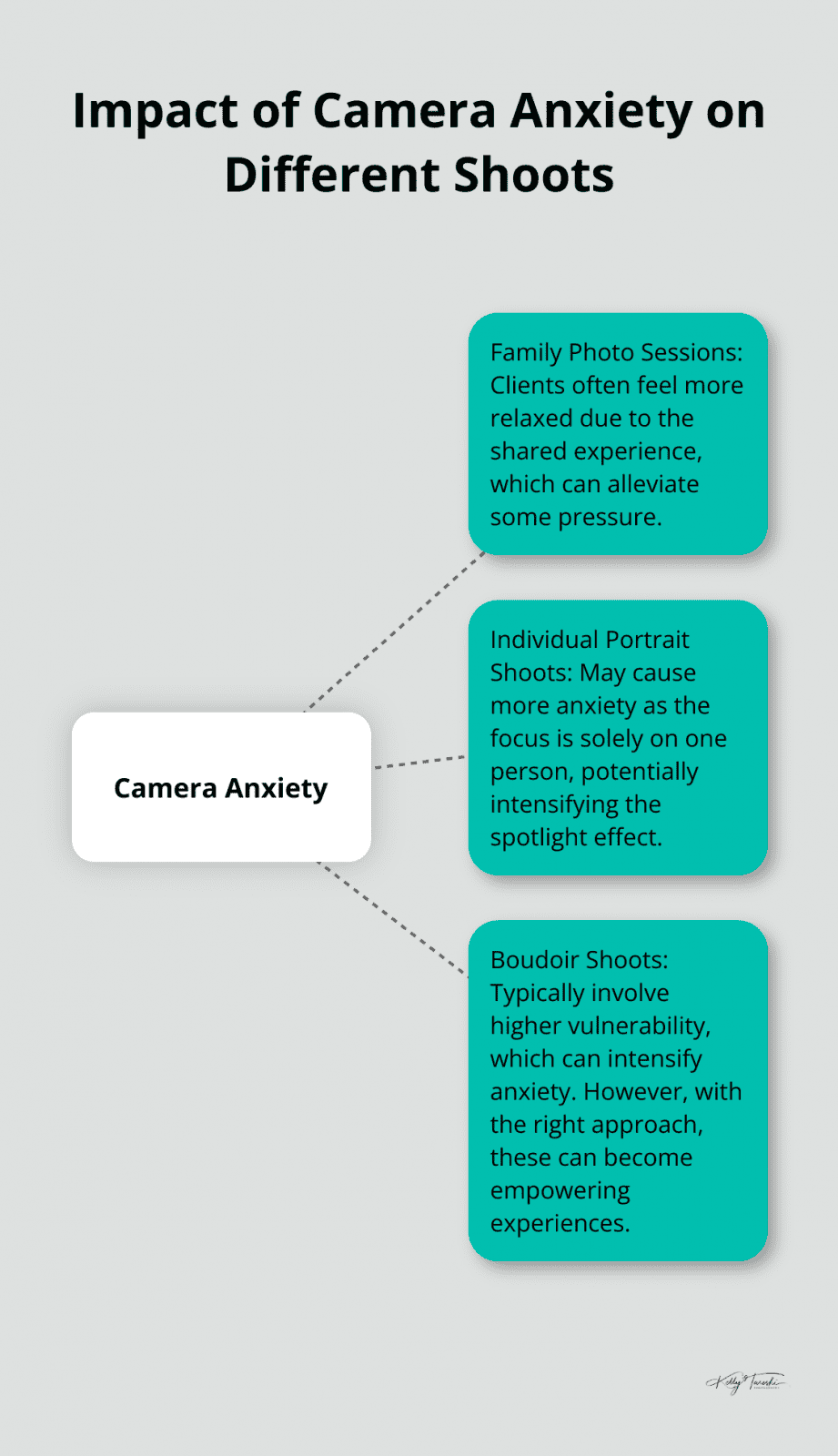
Understanding these underlying causes of camera anxiety helps develop strategies to overcome them. Let’s explore practical techniques to boost your confidence and help you feel more comfortable in front of the camera.
How to Boost Your Camera Confidence
Prepare the Practical Details
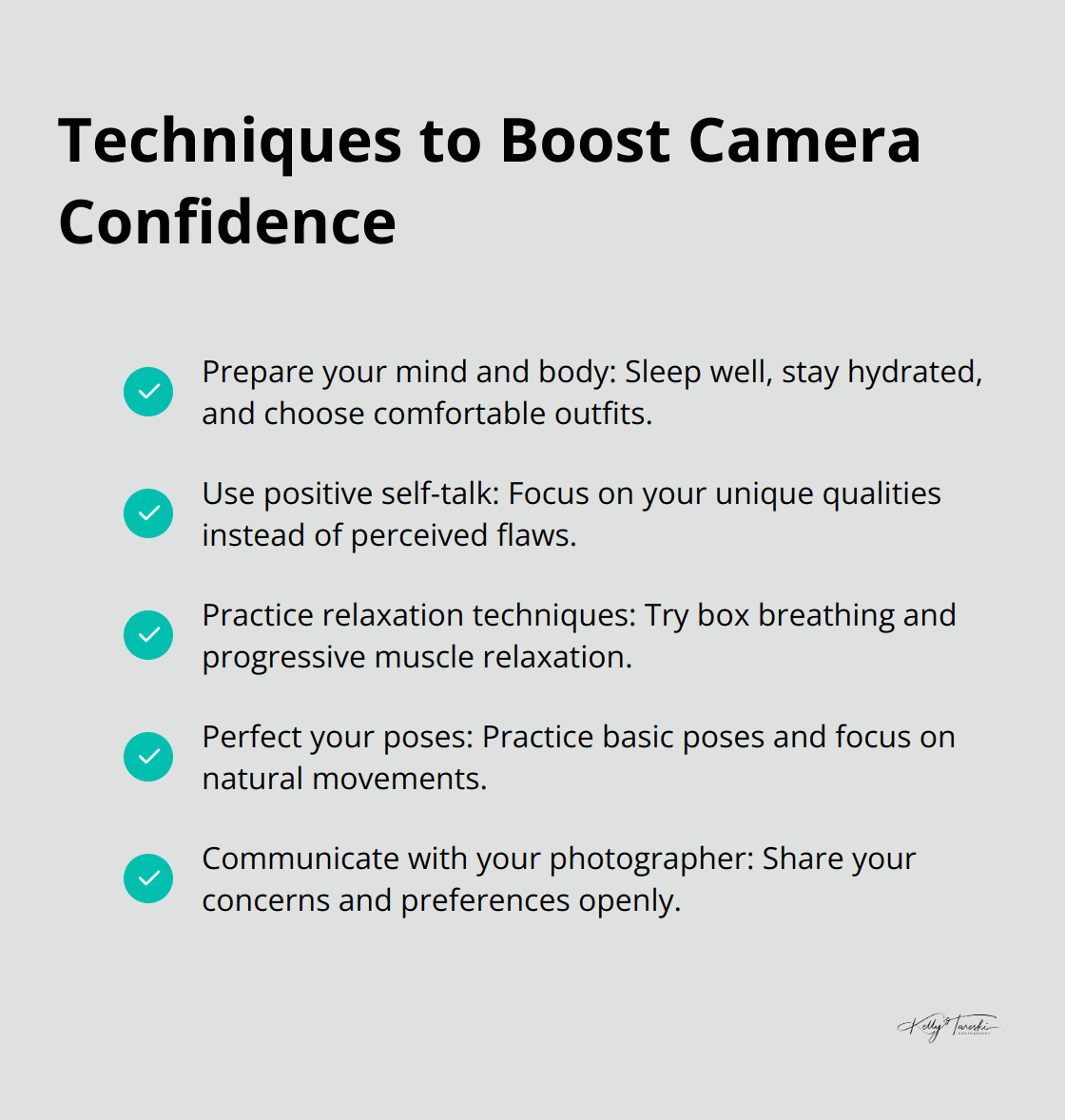
Plan clothing, timing, travel, and anything you need to bring before the day of the shoot. Choose outfits you can move in comfortably and that fit the style you want photographed. If you are uncertain about wardrobe, ask the photographer what guidance is available. Reducing last-minute decisions can make the session easier to navigate without requiring a particular mindset or confidence level.
Use a Simple Reset if You Need One
If you feel uncomfortable during the shoot, tell the photographer. You can pause for water, sit down, walk for a moment, change the setup, or use whatever ordinary breathing or grounding habit is already familiar to you. A photography article does not need to prescribe a relaxation exercise for the session to be manageable.
Let the Photographer Guide Posing
You do not need to memorize a pose or use angles designed to make parts of your body look smaller. If practicing beforehand helps you, use it to notice which movements and expressions feel familiar rather than to perfect one formula.
During the session, the photographer can vary stance, seated positions, hand placement, camera height, expression, and movement. Small changes between frames can create useful variety without requiring you to hold one rigid pose.
Work with Your Photographer
A skilled photographer can guide you through poses that flatter your unique features and personality. Their goal is to make you look and feel your best, capturing genuine moments that reflect your true self. Don’t hesitate to communicate with your photographer about your concerns or preferences. They’re there to help you shine.
With these tips and expert guidance, you’ll be well on your way to feeling confident and comfortable in front of the camera. Now, let’s explore how to build a strong rapport with your photographer to further enhance your photo session experience.
Collaborating with Your Photographer for Success
Effective Communication
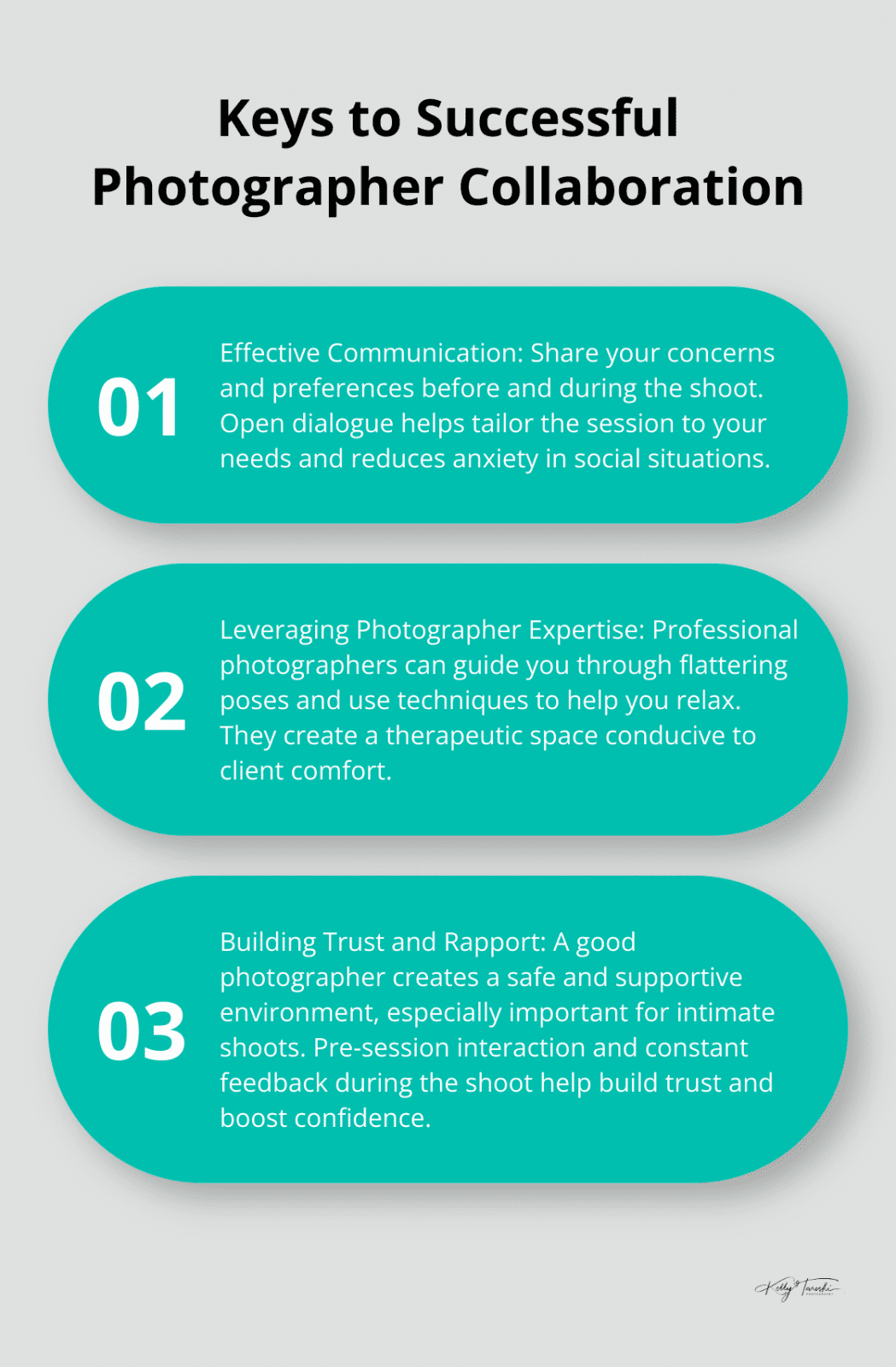
Open communication with your photographer is essential to overcome camera anxiety and achieve stunning results. Before your shoot, share your concerns and preferences. Discuss specific poses or angles you’re comfortable with, and any areas you’d like to highlight or minimize. This information helps your photographer tailor the session to your needs.
During the shoot, speak up if you feel uncomfortable or have ideas. Clear communication helps reduce uncertainty during a photo session. Knowing what the photographer is trying to create, what to expect next, and when something is working can make the process feel more manageable.
Use the Photographer’s Direction
A professional photographer should be able to explain posing and make adjustments based on the person, wardrobe, light, and intended portrait. Conversation or humor may help some clients, while others prefer quieter direction. The photographer’s role is to guide the photography process, not to create a therapeutic environment.
Build Enough Trust to Communicate Clearly
A photographer should explain privacy, posing, wardrobe, boundaries, and the session process clearly, especially for more private sessions such as boudoir photography.
A pre-session conversation can help establish preferences before the shoot. During the session, useful feedback tells you what the photographer is seeing and what adjustment comes next without promising to create confidence or eliminate nervousness.
Choosing the Right Photographer
Selecting a photographer who aligns with your style and makes you feel comfortable is vital. Research different photographers in your area (including Kelly Tareski Photography if you’re in Spokane, Washington). Look at their portfolios and read client testimonials to get a sense of their work and approach.
Some photographers offer a pre-shoot consultation or a short test shoot. This can be an excellent opportunity to gauge your comfort level with the photographer and discuss your vision for the session.
Final Thoughts
You do not need to arrive at a portrait session feeling confident or completely comfortable. Preparation, clear information, guided posing, honest communication, and a pause when needed can make the process easier to understand.
Choose a photographer whose communication, privacy practices, portfolio, and amount of direction fit what you want. At Kelly Tareski Photography, I guide the posing and technical decisions while clients communicate the preferences and boundaries that matter to them.
A successful session can include polished poses, quieter expressions, movement, laughter, or more serious portraits. The goal is useful variety and a collaborative process, not proving that you overcame nervousness or achieved a particular emotional outcome.
Boudoir Photography Most Searched Articles
- Kelly Tareski Photography Home
- Kelly Tareski Photography Boudoir Gallery
- Boudoir Portrait Photography Spokane
- 20 Styles of Boudoir Photography
- The Couples Boudoir Photography Style
- What are Sexy Pictures? - Boudoir Photography
- Behind the Scenes of a Boudoir Photography Session
- The Outdoor Boudoir Photography Style
- The Classic Boudoir Photography Style
- What is a Boudoir Portrait
- The Black and White Boudoir Photography Style
- Why Boudoir Photography is the Ultimate Self-Love Experience