
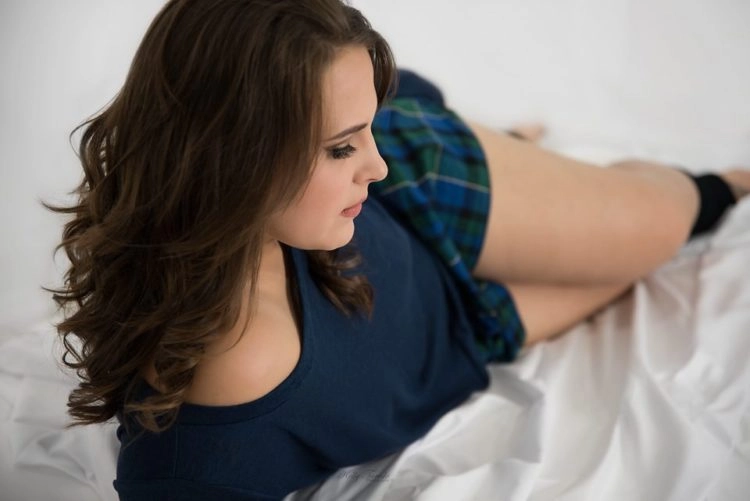
Photography Session Anxiety How to Overcome Nervousness
Standing in front of a camera can feel overwhelming. Your mind races with worries about how you’ll look, whether you’ll know what to do, and if the photographer will judge you.
Many clients tell me they feel unsure about posing, expression, or what will happen during a professional portrait session. Clear preparation and communication can make the process feel more predictable and easier to navigate.
Why Your Brain Resists Being Photographed
The Psychology Behind Photography Anxiety
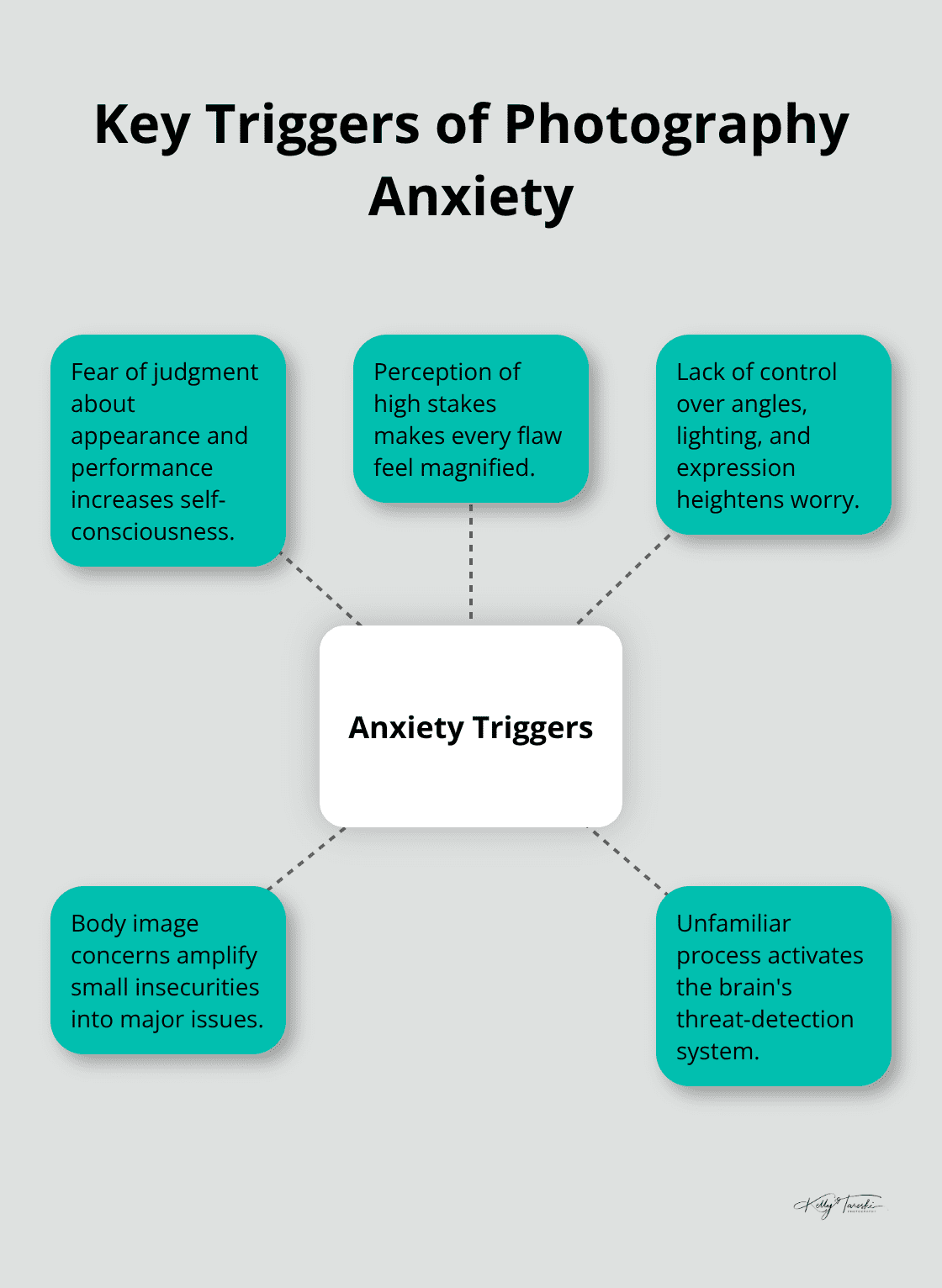
Feeling nervous before a photography session is common, and the reasons vary. You may be unsure how posing works, dislike being the center of attention, worry about how the photographs will look, or simply feel unfamiliar with professional photography. You do not need to diagnose the feeling to make the session easier; clear information and flexible direction can address many practical concerns.
Fear of Judgment and Appearance
Some people worry that they will not know how to pose, that they will dislike certain angles, or that they will feel watched. Those concerns can be discussed directly with the photographer. Ask how direction works, whether you can review preferences before the session, and how the photographer handles poses or angles you do not like.
The Unfamiliarity Factor
Not knowing what will happen during a shoot can add uncertainty. A professional session may involve unfamiliar equipment, directed poses, wardrobe changes, or periods of looking toward the camera. Asking about the process beforehand can replace some of that uncertainty with practical information. The remainder of this guide focuses on preparation, communication, and session choices that can make the experience easier to understand.
How to Prepare Your Mind and Body for the Camera
Talk to Your Photographer About Your Concerns
Preparation can reduce uncertainty before a session. Tell the photographer what feels unfamiliar or uncomfortable, and ask what the session will include: approximate length, locations, wardrobe changes, posing guidance, breaks, and whether the approach mixes camera-aware and candid-looking portraits. Knowing the practical plan can make the experience feel more predictable.
Master Basic Posing Techniques at Home
Focus on what you can control in the days leading up to your session. Practice posing at home using your phone camera or a mirror, paying attention to small adjustments that make a real difference.
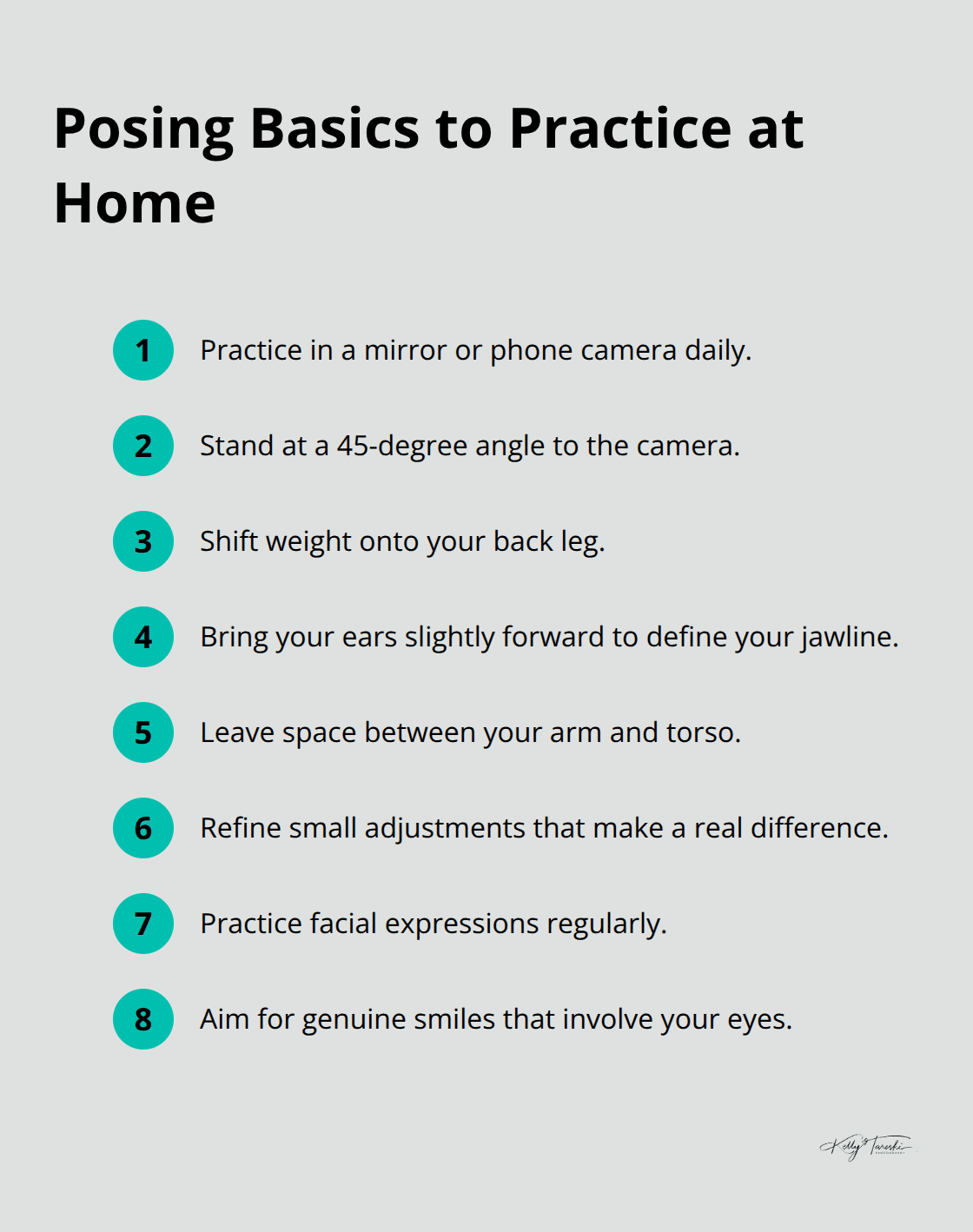
Posing does not require one 45-degree formula or techniques designed to make parts of the body look smaller. The photographer can vary stance, seated positions, hand placement, camera height, expression, and movement based on the person and the portrait. If practicing beforehand makes you more comfortable, focus on noticing what feels natural rather than memorizing a fixed pose.
Plan Your Outfit and Styling Early
Plan your outfit and styling at least a week in advance so you’re not stressed the night before. Choose clothes that fit well and make you feel confident, avoiding anything too tight or restrictive that will make you feel self-conscious during the shoot. If hair and makeup services are available through your photographer, take advantage of them. This removes one more variable from your worry list and helps you feel polished and put-together when the session starts.
Use Calming Techniques Before and During Your Session
If you start feeling uncomfortable during the session, tell the photographer. You can pause, get water, sit down, walk for a moment, change the setup, or move to a different type of portrait. Use whatever ordinary grounding or breathing habits are already comfortable for you rather than treating a photography article as mental-health guidance.
The strategies you’ve put in place before the shoot matter tremendously, but they work best when paired with a photographer who actively supports your comfort throughout the session.
Working with a Photographer Who Prioritizes Your Comfort
Ask About Their Experience with Anxious Clients
A photographer’s communication style can affect how manageable the session feels. When you research photographers, ask how they work with clients who are new to professional portraits or uncomfortable with posing. Useful answers might include a pre-session conversation, clear posing guidance, flexible pacing, opportunities to ask questions, and a mix of structured and more spontaneous portraits. Choose an approach that matches the amount of direction and interaction you prefer.
Evaluate the Physical Environment
Ask about the studio or session location if the environment matters to you. You may want to know whether the space is private, how changing areas work, whether a support person is permitted, what seating is available, and whether quieter indoor or outdoor options exist.
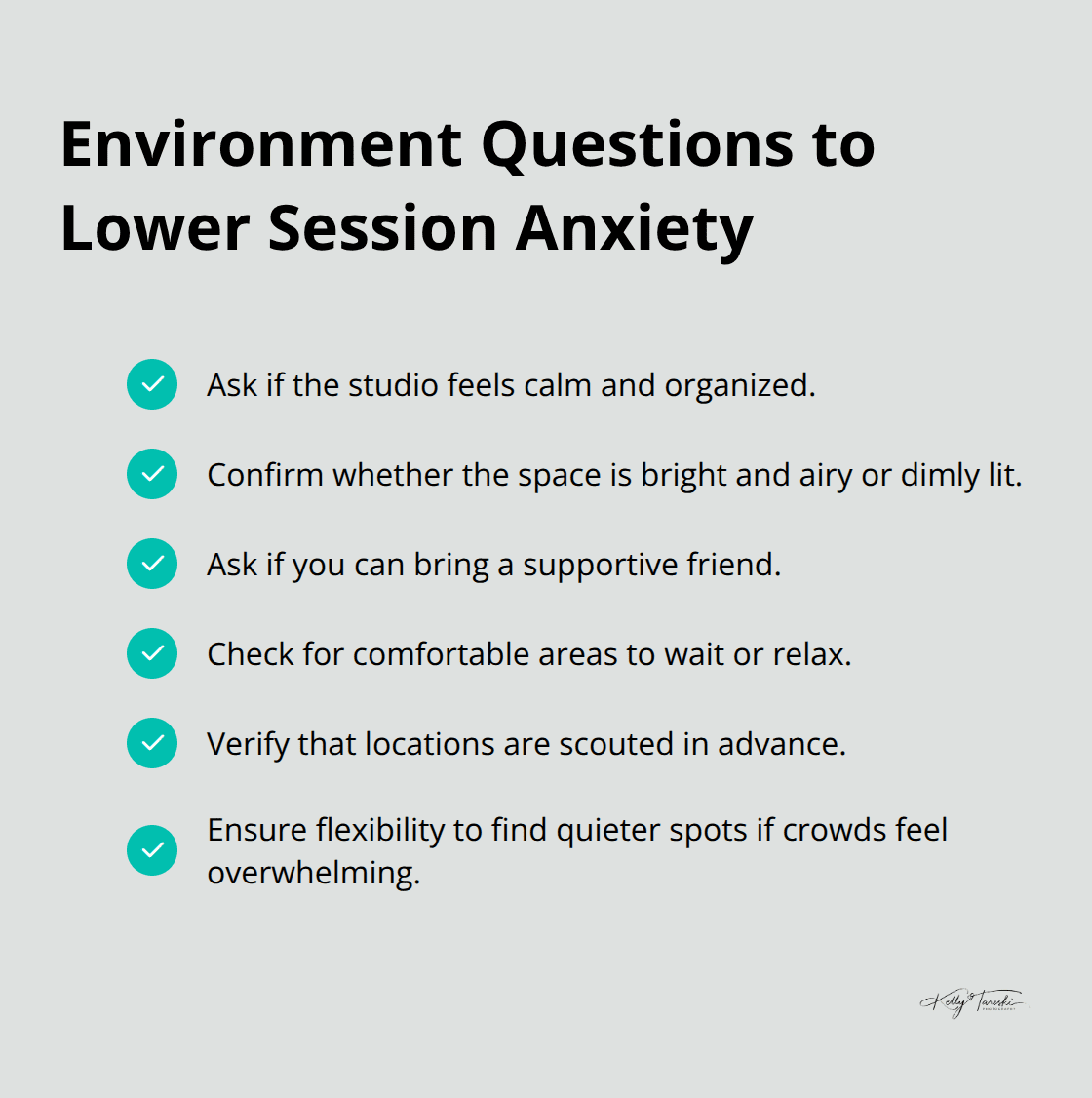
For on-location sessions, ask how busy the location is likely to be and whether quieter alternatives are available if crowds or foot traffic would distract you. Some people prefer a private or quieter setting, while others are comfortable in active public locations. The useful choice is the environment that fits the session and your preferences.
Prioritize Hair and Makeup Services
Professional hair and makeup are optional styling services, not anxiety treatment. Some clients enjoy the experience, while others prefer their own familiar routine or little to no makeup. Ask what is available and choose the approach that feels most recognizable and comfortable to you.
Schedule a Pre-Session Consultation
A pre-session consultation can be useful if you have questions about the timeline, locations, posing, wardrobe, privacy, or the types of images you want. Not every photographer or client uses the same planning process, so ask what communication is included before booking and choose a process that gives you the information you need.
Final Thoughts
You do not need to label or explain your nervousness to prepare for a portrait session. Focus on the practical parts you can control: knowing what to expect, communicating preferences, wearing clothing you can move in, asking for direction, and taking a break when you need one.
The photographer you choose matters more than anything else. A skilled photographer with experience managing anxious clients reads your body language, adjusts their approach, and creates an environment where you feel supported rather than scrutinized. They understand that stress-free photography tips only work when paired with genuine collaboration and clear communication, and they listen to your concerns during a pre-session consultation, explain exactly what to expect, and check in with you throughout the shoot.
You do not have to become completely relaxed or confident for a portrait session to work. Clear direction, communication, breaks when needed, and a session plan that fits you can support a wider range of expressions and portraits. At Kelly Tareski Photography, I guide the posing and technical decisions so clients do not have to arrive knowing how to perform for the camera.
Key Takeaways
- Photography anxiety is common due to concerns about appearance and fear of judgment.
- Preparation is key; talk to your photographer about your concerns and practice basic posing techniques before the shoot.
- Hair and makeup are optional styling services; choose them when they fit your preferences rather than as a treatment for nervousness.
- Choose a photographer who understands anxiety, offers pre-session consultations, and creates a supportive environment.
- Use calming techniques on the day of the shoot to manage nervousness and enhance your experience.
Boudoir Photography Most Searched Articles
- Kelly Tareski Photography Home
- Kelly Tareski Photography Boudoir Gallery
- Boudoir Portrait Photography Spokane
- 20 Styles of Boudoir Photography
- The Couples Boudoir Photography Style
- What are Sexy Pictures? - Boudoir Photography
- Behind the Scenes of a Boudoir Photography Session
- The Outdoor Boudoir Photography Style
- The Classic Boudoir Photography Style
- What is a Boudoir Portrait
- The Black and White Boudoir Photography Style
- Why Boudoir Photography is the Ultimate Self-Love Experience