What to Wear for Engagement Photos [Style Guide]
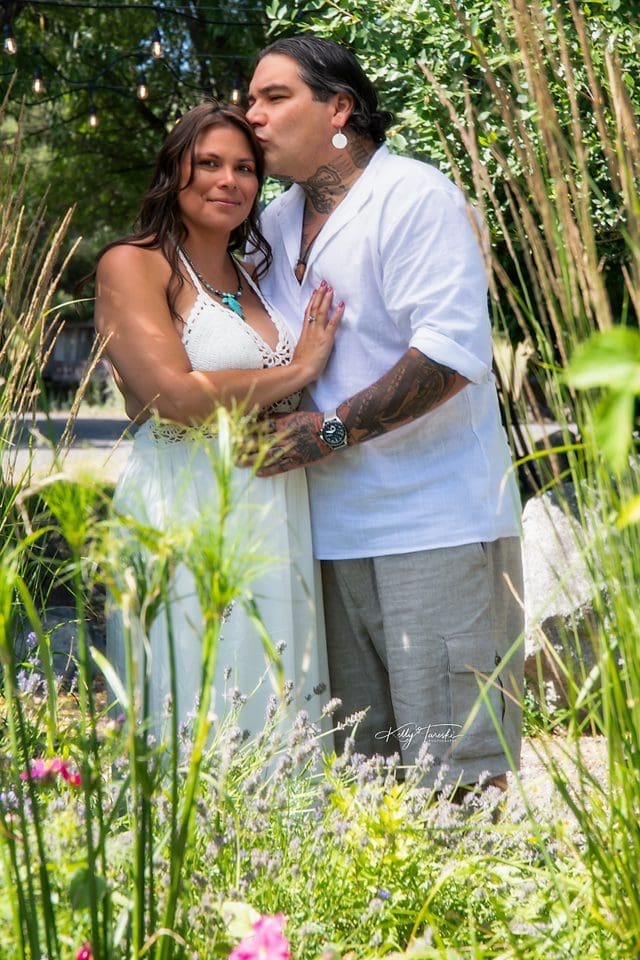
What should you wear for engagement photos? Choose clothing that feels like you, fits comfortably, works with the location and weather, and lets you walk, sit, and interact naturally. Coordinate the overall level of formality and color direction without requiring matching outfits or a prescribed palette.
This guide explains practical wardrobe choices without treating one color, fabric, gendered outfit formula, or trend as universally best. For more planning ideas, visit couples and engagement photography and Spokane engagement photo locations.
What Style Matches Your Engagement Vision
Start by deciding how you want the engagement photographs to look and where you expect to use them. The intended style can guide fabric, color, formality, layering, and accessories without requiring you to reject current fashion or follow it. Choose clothing that fits the couple, the setting, and the visual direction of the session.
Romantic and Classic Engagement Sessions
A romantic or classic session can use formal, semi-formal, or casual clothing. Dresses, trousers, suits, skirts, jumpsuits, denim, sweaters, button-front shirts, and other pieces can all work. Choose a level of formality that feels natural for the couple and the setting rather than assigning clothing by gender or relying on a narrow neutral palette.
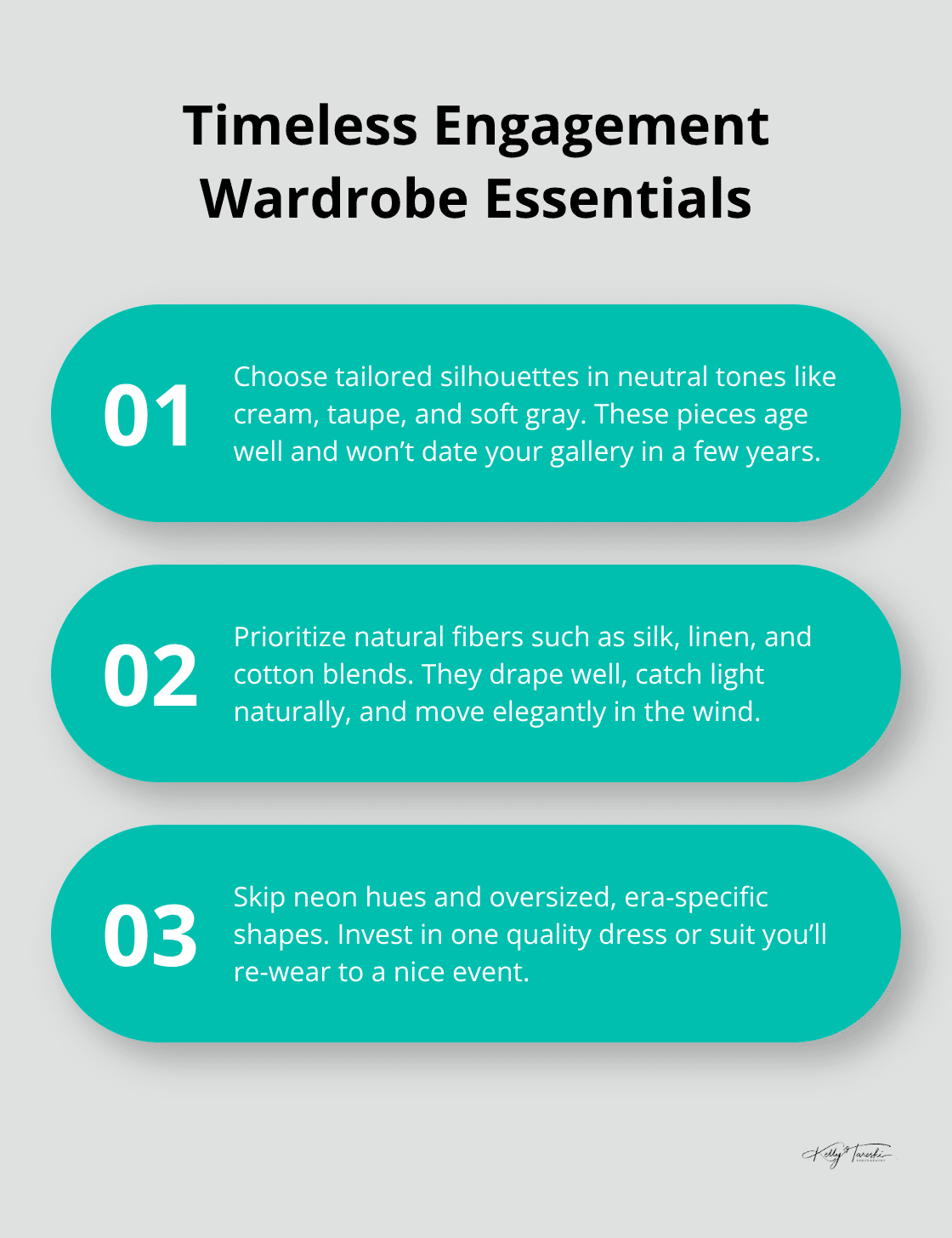
Natural and synthetic fabrics can both photograph well. What matters more is fit, texture, movement, transparency, wrinkling, and how the garment behaves in the actual setting. Bright colors, oversized silhouettes, vintage pieces, and current trends are all valid choices when they reflect the couple and are used intentionally.
Modern and Trendy Aesthetic Choices
If your style leans modern and contemporary, color, texture, tailoring, pattern, and accessories can all help establish the look. Jewel tones are one option, but no color family universally complements every skin tone or location. Compare complete outfits in the planned setting and choose the combinations you actually like.
Partners do not have to follow gender-specific wardrobe formulas, use the same color temperature, or avoid matching by rule. Coordinate the overall level of formality and visual relationship between the outfits in whatever way supports the couple and the intended photographs.
Outdoor and Natural Setting Considerations
Location is one factor in wardrobe planning because color, texture, footwear, weather, and movement interact with the setting. White, dark colors, strong colors, neutrals, and patterns can all work at beaches, forests, mountains, gardens, and urban locations when the contrast is intentional.
Plan layers or backup pieces when weather may change, and choose shoes and clothing that work with the terrain and activity. The location does not dictate whether an outfit must be casual, formal, neutral, or bold.
Whatever your location, visit the actual shoot spot beforehand if possible and take a photo of yourself in your outfit against that background to confirm the colors work together. This simple step prevents surprises on session day and lets you adjust your wardrobe choices before you arrive at your photographer’s studio or location.
Clothing Choices That Photograph Well
Fabric and Texture Considerations
Natural and synthetic fabrics can both photograph well. What matters is how the actual garment fits, moves, wrinkles, reflects light, becomes transparent, or reacts to weather and movement. Satin, polyester, cotton, linen, wool, knits, denim, and blended fabrics can all be useful choices.
Try the complete outfit on before the session and look at it in ordinary photographs or a mirror under similar lighting when practical. If a fabric is highly reflective, sheer, stiff, or prone to wrinkling, decide whether that behavior supports the look you want rather than assuming one fiber category is automatically better.
Color Palettes That Work on Camera
Color changes relative to lighting, background, exposure, editing, and neighboring colors. Jewel tones, pastels, neutrals, black, white, bright colors, and even neon can all be intentional choices. Strong colors may reflect onto nearby skin or clothing, so test them with the planned location and lighting instead of treating one palette as universally flattering.
Neutrals, pastels, dark tones, saturated colors, and patterns can all work in engagement photographs. Compare the clothing with the planned background and lighting, then decide whether you want separation, harmony, or intentional similarity between the outfits and setting. No season or location requires one color family.
Skin tone can influence how colors appear, but there is no fixed warm-versus-cool formula that works for everyone. Compare complete outfits in the planned lighting and setting, then choose the colors you actually like.
Fit and Comfort for Movement
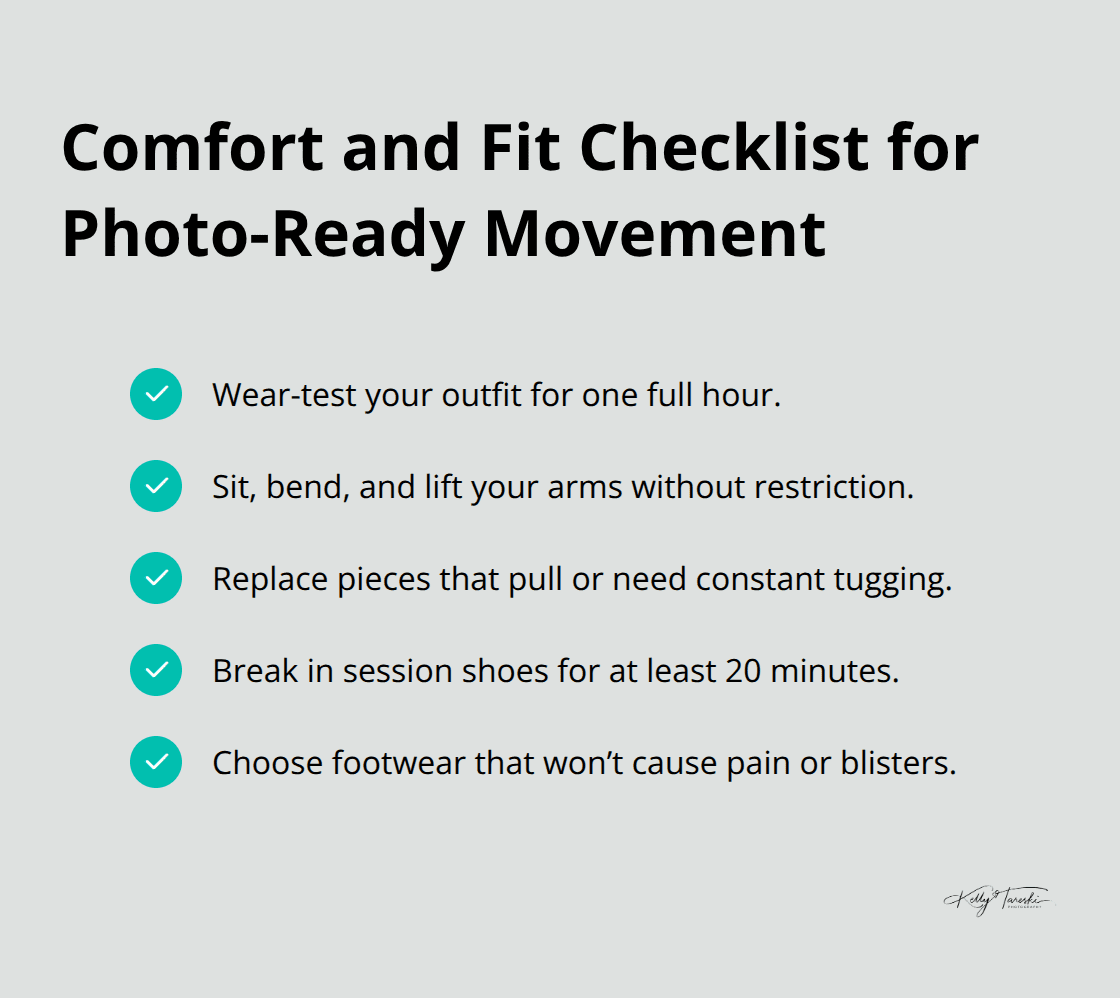
Choose clothing that allows the movement planned for the session. If you expect to walk, sit, lean, climb stairs, or move between locations, test those motions before the session and decide whether the fit still feels practical.
Test this by wearing your outfit before session day. Walk around your house, sit on furniture, bend down, and move your arms in ways you’ll move during photos. If anything pulls, pinches, or requires tugging, replace it. Shoes deserve special attention because uncomfortable footwear shows in your posture and facial expressions. Test your session shoes before your appointment to confirm they won’t cause pain or blisters.
Once you’ve locked in fabrics, colors, and comfortable pieces that fit your body and location, the next step involves selecting accessories and grooming details that complete your look without overwhelming the frame.
Accessorizing and Grooming Tips
Jewelry and Watches
Jewelry can be minimal, bold, sentimental, vintage, modern, or absent entirely. Consider how its scale, reflectivity, color, and movement interact with the neckline and other accessories. A statement piece is not automatically distracting if it is part of the intended styling.
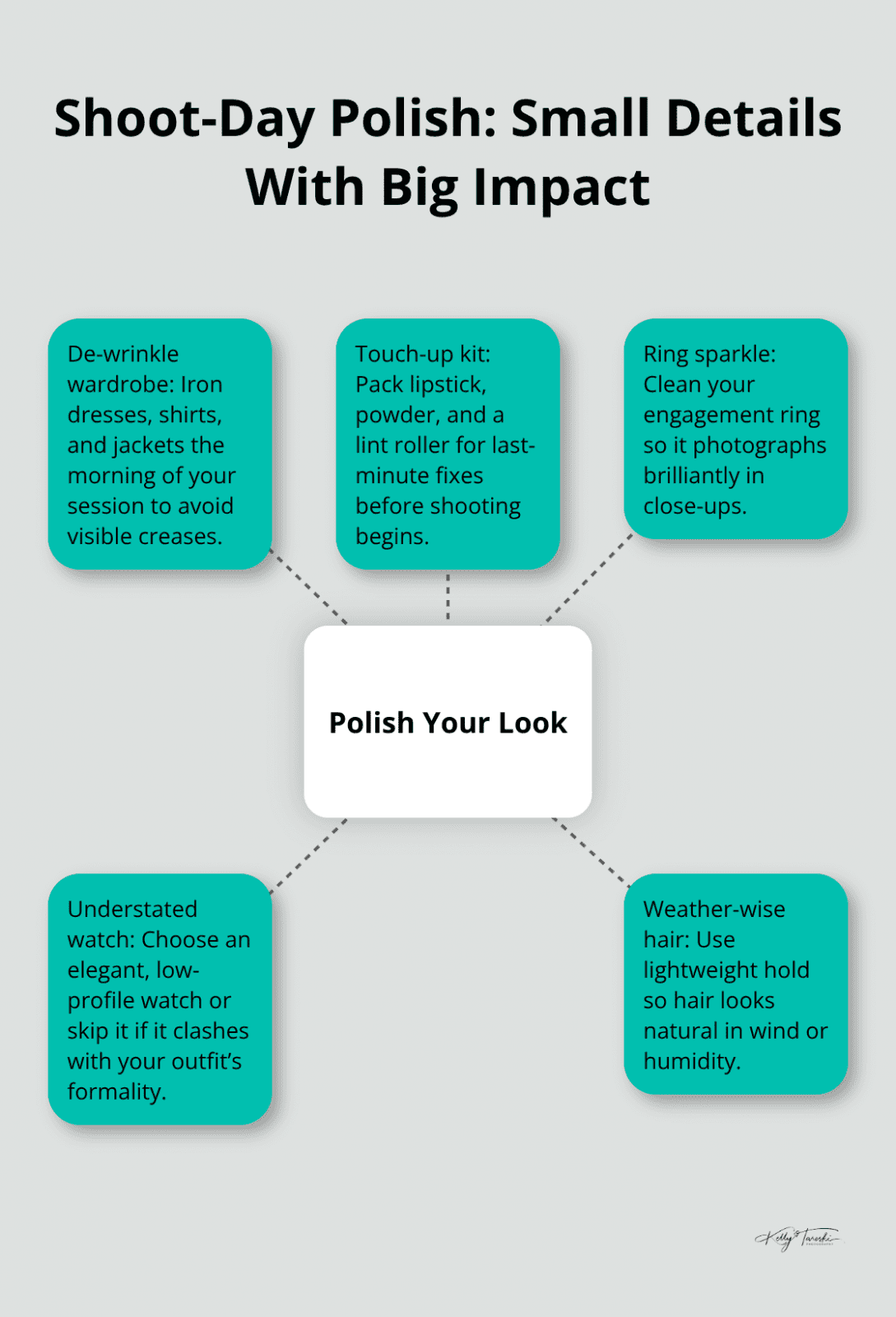
If you want the engagement ring photographed closely, clean it according to the care instructions for its specific metal and stones or ask a jeweler when you are unsure. Not every gemstone or setting should be treated with the same cleaning method.
Watches and other accessories can be included when they fit the intended look. Consider their scale, color, reflectivity, and how they work with the rest of the outfit rather than following a gender-specific accessory rule.
Hair and Makeup Coordination
Hair and makeup can be natural, polished, dramatic, minimal, or omitted depending on the look you want. The photographer can light and photograph a wide range of styling choices, so there is no required lip color, contour level, or finish for an engagement session.
If you are hiring a stylist, schedule a trial only when it is useful to you and the service. For outdoor sessions, discuss weather and movement so the hairstyle and makeup plan fit the conditions rather than following one fixed product rule.
Shoes and Final Details
Choose footwear for the terrain, weather, and amount of walking involved. Bare feet, dress shoes, boots, sneakers, loafers, or a second pair for walking can all be practical depending on the setting and visual plan.
Anyone wearing unfamiliar shoes should test whether they can comfortably stand and move in them for the planned terrain. You can also bring practical walking shoes and change for individual setups when that makes the session easier.
Prepare clothing early enough to address wrinkles or lint using methods appropriate for the fabric. Bring any touch-up items you personally use, such as lip color, powder, or a lint roller, when they are useful to you.
Final Thoughts
When selecting what to wear for engagement photos, choose clothing that supports the look you want and allows the amount of movement planned for the session. The wardrobe does not need to prove authenticity or produce a particular emotional response.
Fabric, color, fit, accessories, footwear, weather, and location all work together visually. Natural fibers are not inherently better than synthetics, and no color family is universally more flattering. Test complete outfits and make deliberate choices rather than following a one-size-fits-all formula.
Ask your photographer what wardrobe guidance is included and how clothing relates to the planned location, lighting, weather, and movement. At Kelly Tareski Photography, I can discuss those practical choices as part of planning a Spokane-area engagement session. For current service information, visit Couples and Engagement Photography in Spokane.
Key Takeaways
- Choose outfits that fit your personal style, location, weather, and planned movement rather than following one universal formula.
- Romantic, modern, classic, colorful, patterned, formal, and casual wardrobe choices can all work when used intentionally.
- Consider how colors and fabrics relate to the background, whether you want contrast, harmony, or intentional blending.
- Choose clothing that allows the standing, sitting, walking, or other movement planned for the session.
- Fabric, accessories, hair, and makeup can be simple or elaborate depending on the visual style you want.
Education Most Searched Articles
- Kelly Tareski Photography Homepage
- How to Choose Background Colors to Complement Skin Tones
- Choosing the Best Lens for Stunning Senior Portraits
- 5 Tips Using the Nikon Z7ii Camera for Portrait Photography
- Exploring Spokane Through a Lens: Must-Visit Photo Locations
- How to Choose the Best Lenses for Senior Portraits
- When to Use a Neutral Background in Photography
- Top Posing Ideas for Solo Portraits: Looking Confident and Natural
- The Economy and Photography
- How the Economy Impacts Photography
- How to Weather Economic Slumps as a Photographer
- Finding Creative Ways to Promote Your Photography on a Budget
- Free and Low-Cost Resources for Photographers