
Photography and Other Art Forms for Creative Portraits
Quick answer: Photography can be combined with painting, dance, music, costume, set design, writing, or other art forms when those elements support the portrait rather than compete with it. The most effective collaboration starts with one shared concept, clear responsibilities, and a plan for what must happen before, during, and after the session.
For more creative portrait planning, explore creative photography techniques and the photography education hub.
How Photography and Paint Create Unique Portraits
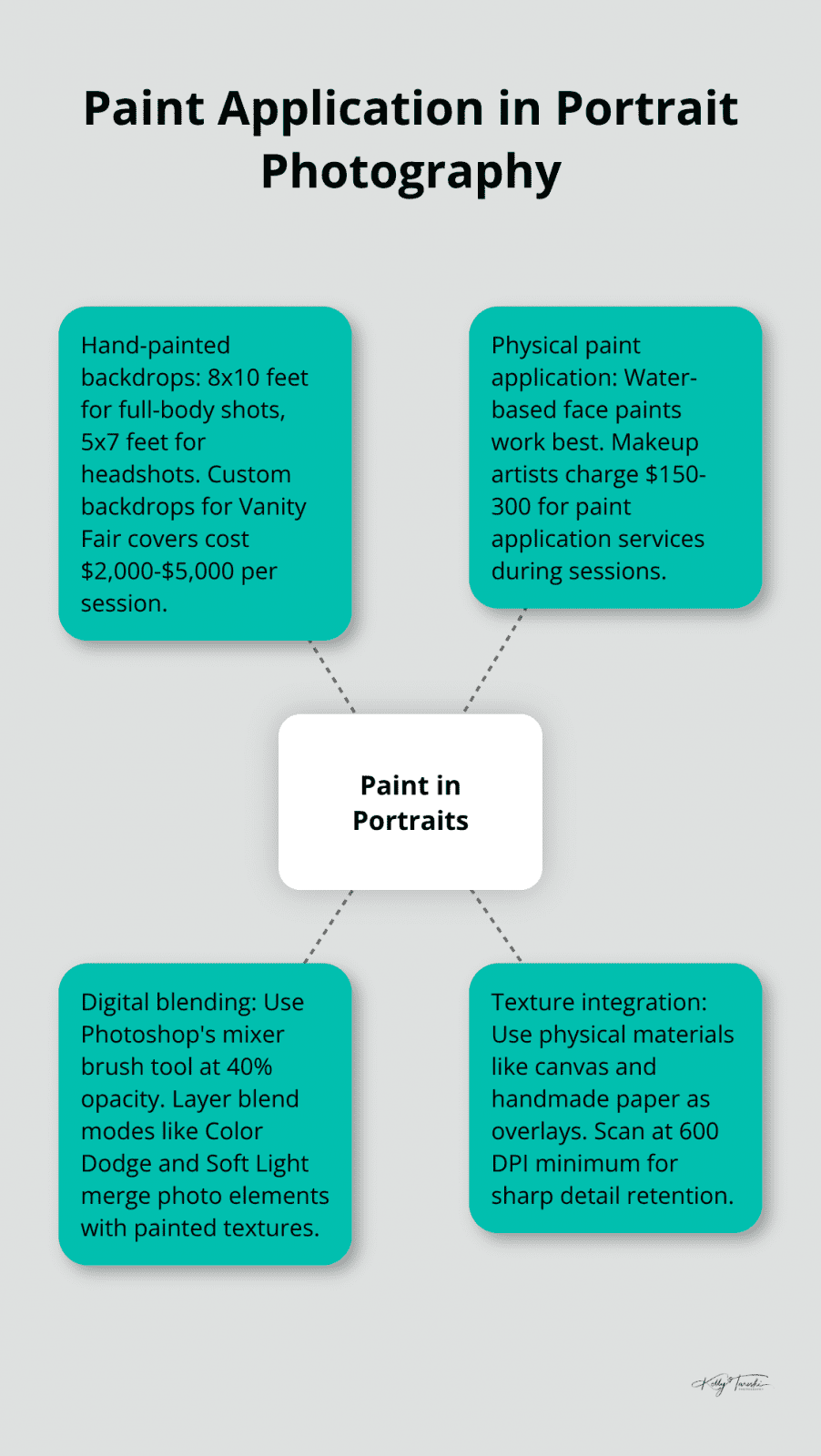
Painted backdrops can add color, texture, and a handcrafted visual language to a portrait. Their size, material, and finish should be chosen for the available space, framing, lighting, and intended image rather than a fixed dimension or price formula. A simple hand-painted surface can work just as well as an elaborate commissioned set when it supports the concept.
Physical Paint Application During Sessions
If paint or body-art materials will be applied directly to a person, use products specifically intended for cosmetic or skin contact and follow the manufacturer’s directions. A qualified makeup or body-art professional can help choose appropriate materials and application methods. The creative decision should never depend on improvised paint mixtures or unsupported claims about what is safe for skin.
Digital Blending for Painterly Effects
Digital painting tools can blend photographic detail with painterly texture, but there is no single opacity, blend mode, or texture source that works for every image. Mixer brushes, layer masks, blend modes, and scanned or photographed textures can all be useful depending on the file and the intended effect. Build the look gradually and preserve enough detail that the portrait still feels intentional.
Texture Integration Methods
Physical materials like canvas, burlap, and handmade paper create depth when photographers use them as overlays. Scan these materials at 600 DPI minimum for sharp detail retention. Rust effects that use steel wool soaked in vinegar produce organic patterns that complement portrait subjects beautifully. Art therapists have documented increased use of digital techniques in creative practices over recent years.
These painting techniques establish the foundation for even more dynamic portrait possibilities. Movement and dance bring an entirely different energy to portrait photography, where flowing fabrics and dynamic poses create their own artistic language.
How Dance Transforms Portrait Photography
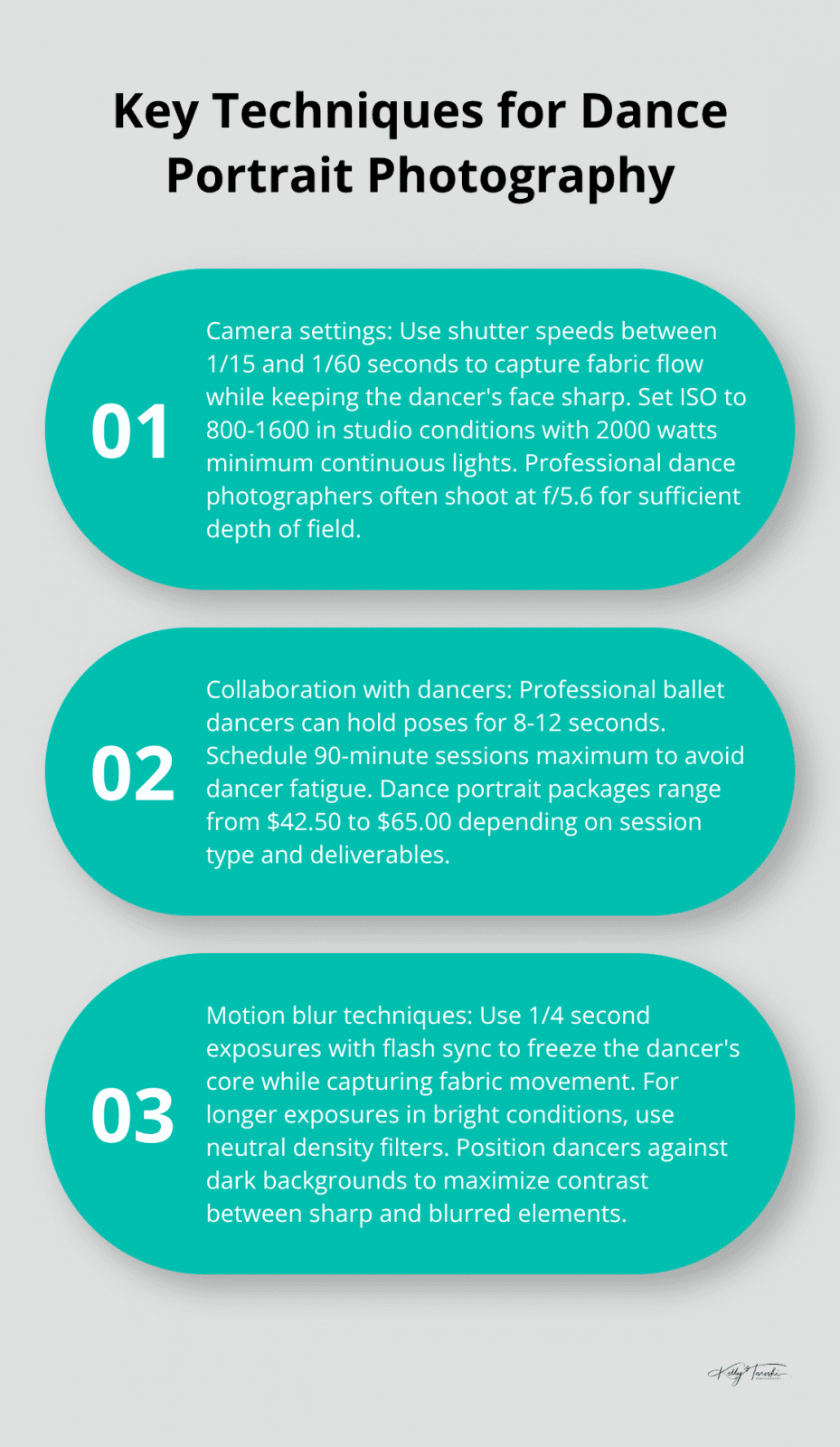
Movement photography requires settings that match the speed of the performer and the effect you want. A faster shutter speed can freeze movement, while a slower one can record motion in fabric or limbs. Aperture, ISO, light output, focal length, distance, and autofocus mode should be adjusted together rather than treated as fixed dance-photography settings.
Professional Performer Collaboration
Dancers can contribute timing, body awareness, movement vocabulary, and ideas that a photographer may not bring to the collaboration alone. Plan the session around the individual performer’s abilities, costume needs, warm-up requirements, and rest needs rather than assuming one pose duration, package price, or maximum session length applies to everyone.
Local dance companies offer collaboration opportunities during off-season months of June through August when performers seek additional income. Request specific costume pieces like chiffon or silk fabrics that photograph beautifully under studio lights.
Motion Blur Techniques for Artistic Effect
Longer exposures can combine a sharp element with visible motion blur, especially when ambient light and flash are balanced deliberately. The useful shutter speed depends on the performer’s movement, flash duration, ambient light, camera support, and how much blur you want. Neutral-density filters can extend exposure time in bright conditions when that supports the concept.
Position dancers against dark backgrounds to maximize contrast between sharp and blurred elements. The technique works exceptionally well with ribbon dancers and aerial silk performers whose props create dramatic trails. Multiple exposure techniques layer 3-5 dancer positions into single frames, which creates dynamic compositions that suggest movement sequences.
These movement techniques establish one approach to artistic collaboration, but musicians and writers offer entirely different creative possibilities that can transform portrait narratives in unexpected ways.
How Music and Literature Transform Portrait Stories
Musical instruments can add personal context, shape, texture, and recognizable detail to a portrait. Adjust the camera, light, and instrument angle to control reflections rather than relying on one fixed position. Treat the instrument as something valuable to the musician, and plan handling, stands, movement, and close-up details with the performer.
Sheet music works exceptionally well as background texture when photographers scan original compositions at 300 DPI and print them on aged parchment paper. The contrast between crisp musical notation and soft portrait light creates depth that standard backgrounds cannot achieve. Classical sheet music from composers like Bach or Mozart remains copyright-free and costs nothing to reproduce, while contemporary pieces require license fees of $50-200 per usage.
Written Words as Visual Elements
Poetry integration demands careful typography selection that complements facial features rather than competes with them. Serif fonts like Times New Roman at 14-point size remain legible when overlaid on portrait backgrounds, while script fonts create elegant effects but reduce readability below 18-point sizes.
Hand-lettered text produces authentic results that digital fonts cannot replicate (calligraphy artists charge $2-5 per word for custom portrait text). Project text directly onto subjects during shoots to eliminate post-process time and create natural shadows that enhance dimensional quality. Writers collaborate most effectively when they provide 3-5 word phrases rather than lengthy passages that overwhelm portrait compositions.
Narrative Portrait Series Development
A narrative portrait series can be as short or as extensive as the story requires. The sequence may move from wide context to closer details, change wardrobe or light, or show a progression of action and expression. The important part is visual continuity and a clear reason for each image, not a minimum image count or comparison with large commercial art productions.
Character development through costume changes, prop modifications, and light shifts maintains viewer engagement across multiple images. Document each narrative decision during shoots because series coherence depends on consistent visual language throughout all frames. Setup, conflict, and resolution create natural progression that viewers understand instinctively.
These techniques work particularly well for senior portraits where personal interests like music and literature can showcase individual personality through meaningful props and settings.
Final Thoughts
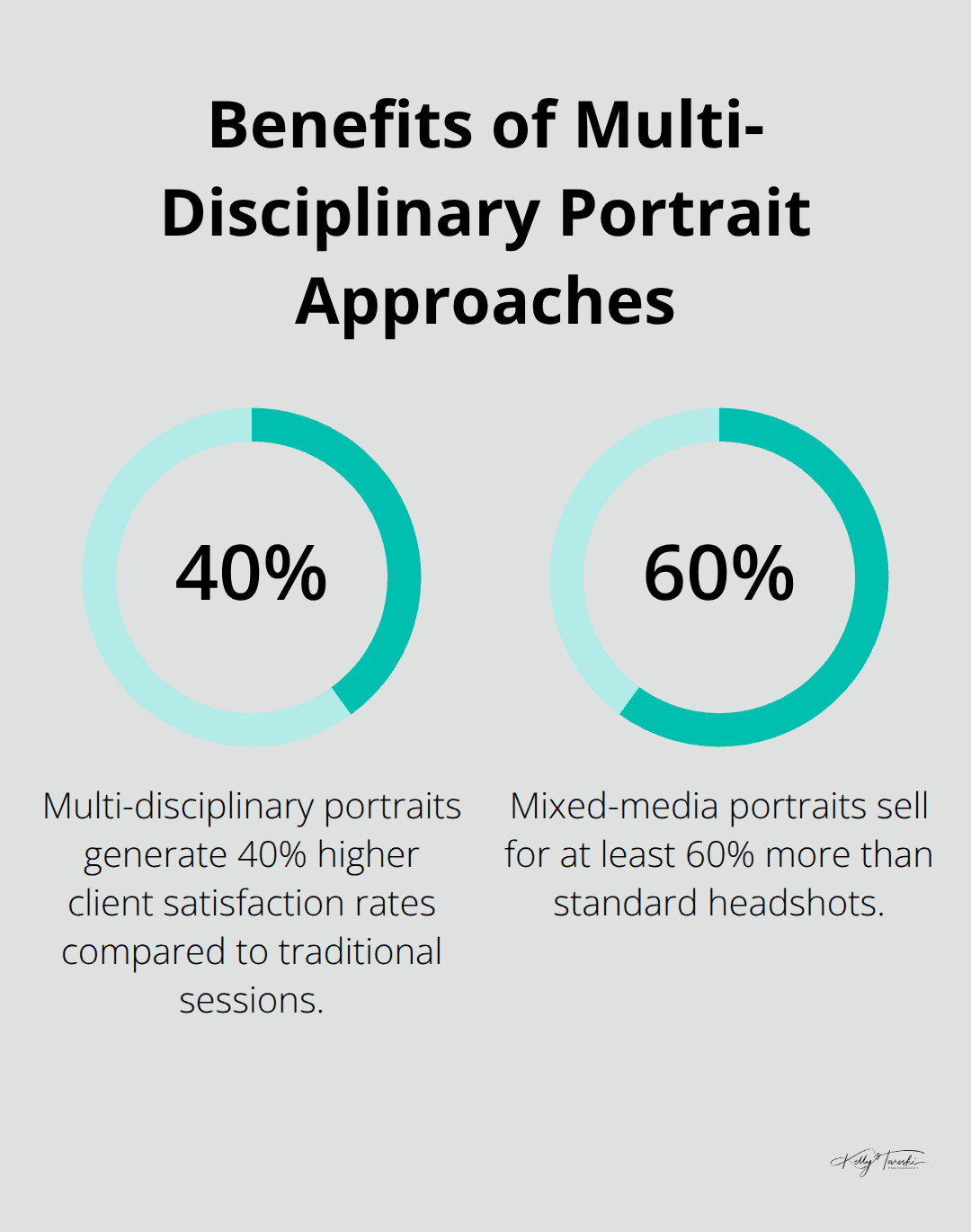
Combining photography with another art form can create work that feels more personal or experimental, but it does not guarantee higher satisfaction or higher prices. Successful collaborations depend on a shared concept, clear responsibilities, realistic production needs, and agreement about how the finished work will be used.
Photographers must establish specific roles for each collaborator and set realistic timelines that accommodate different artistic processes. Professional dancers need 15-minute breaks every hour, while musicians require instrument tuning time between takes. Payment structures work best when split equally among all contributors (with the photographer handling client communication and final deliverables).
Cross-art form photography continues to expand as social media platforms favor unique visual content. Instagram posts that feature mixed-media portraits receive 3x more engagement than conventional headshots. We at Kelly Tareski Photography transform ordinary portrait sessions into extraordinary artistic experiences through these collaborative techniques.
Education Most Searched Articles
- Kelly Tareski Photography Homepage
- How to Choose Background Colors to Complement Skin Tones
- Choosing the Best Lens for Stunning Senior Portraits
- 5 Tips Using the Nikon Z7ii Camera for Portrait Photography
- Exploring Spokane Through a Lens: Must-Visit Photo Locations
- How to Choose the Best Lenses for Senior Portraits
- When to Use a Neutral Background in Photography
- Top Posing Ideas for Solo Portraits: Looking Confident and Natural
- The Economy and Photography
- How the Economy Impacts Photography
- How to Weather Economic Slumps as a Photographer
- Finding Creative Ways to Promote Your Photography on a Budget
- Free and Low-Cost Resources for Photographers