
![Your Complete Guide to Engagement Photo Planning [2025]](https://images.rapidload-cdn.io/spai/ret_blank,q_lossless,to_avif/https://kellytareskiphotography.com/wp-content/uploads/emplibot/engagement-photography-guide-hero-1768677052-1024x585.jpeg "engagement-photography-guide-hero-1768677052")
Your Complete Guide to Engagement Photo Planning [2026]
Planning an engagement session usually involves a few connected decisions: timing, intended use, location, wardrobe, weather, access, and the amount of direction you want during the photographs. At Kelly Tareski Photography, I use those practical details to build a session plan around the couple rather than a fixed formula.
This guide focuses on the planning timeline and logistics so you can organize the decisions that need to be made before the session.
Timeline for Planning Your Engagement Photos
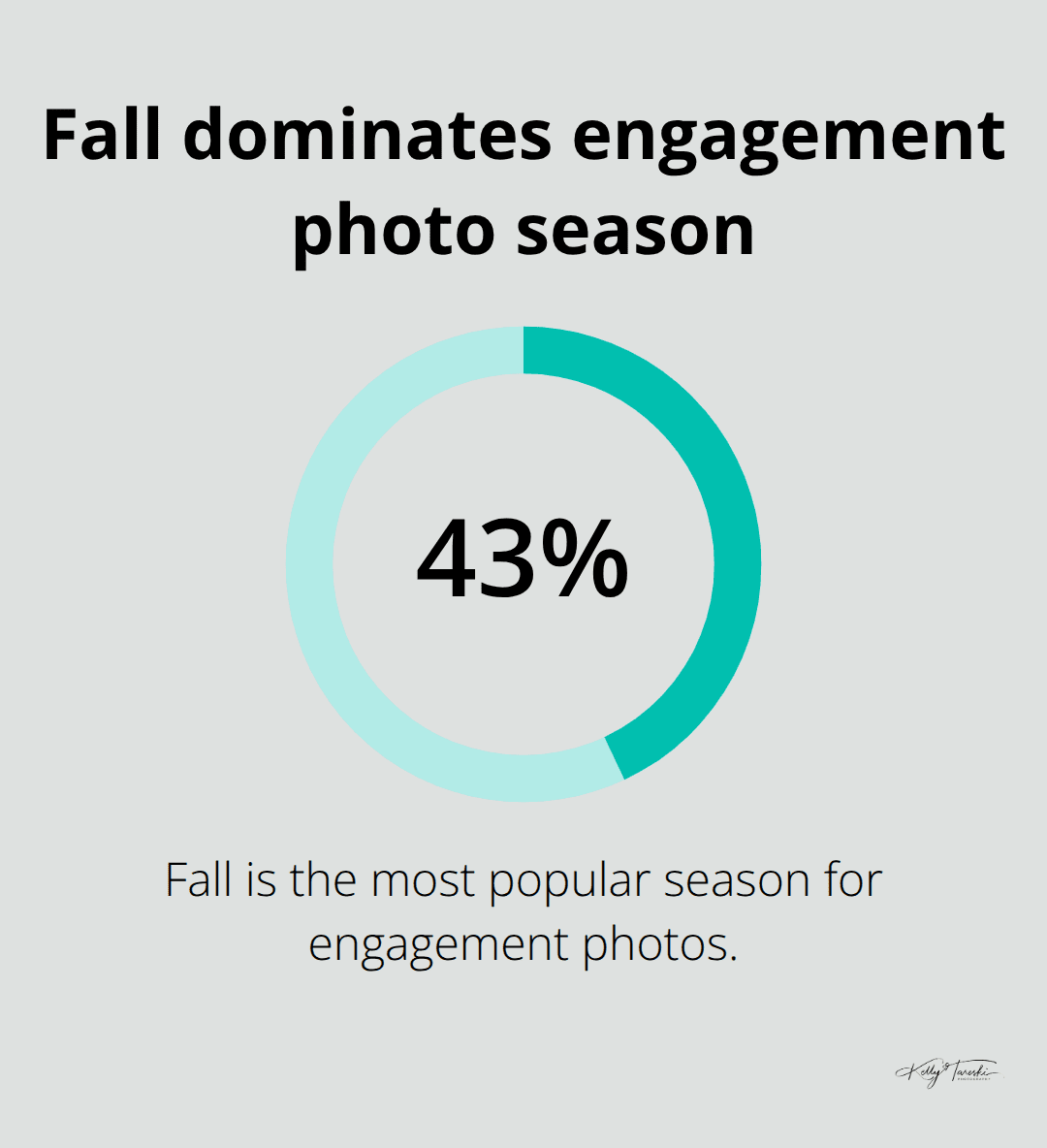
Start engagement-photo planning early enough for the way you intend to use the images. Save-the-dates, printed invitations, or a wedding website may require more lead time than a session intended only for portraits. Photographer availability, location access, permits, wardrobe planning, travel, and editing turnaround all affect the schedule, so there is no universal two-to-three-month planning window or one season that is best for every couple.
Choose and Confirm Your Photographer
Once you choose a photographer, confirm the session date and ask what the booked session actually includes. Session length, number of locations, wardrobe changes, image delivery, and final gallery size vary by photographer and package. Weekdays may be useful at some busy locations, but crowd levels and access should be checked for the specific place and date.
Coordinate Hair, Makeup, and Grooming
If you want professional hair or makeup, schedule it according to the provider’s availability and the look you want. Haircuts, color, grooming, manicures, and other preparation should follow your normal preferences rather than a fixed number of days or weeks before the session.
Plan Your Logistics and Locations
Transportation logistics deserve attention as well. Confirm whether the session uses one location or several, how travel time counts against the booked session, and where you will park or meet. Multiple locations can work when the travel time is reasonable for the schedule, but there is no universal 15-minute rule.
Location and Outfit Strategy for Your Session
Location changes the background, lighting options, access, privacy, weather exposure, and amount of movement in an engagement session. A personally meaningful place can add context, while a visually strong location with no prior connection can work just as well. Choose the setting for the photographs and experience you want rather than assuming one type of place creates more authentic chemistry.
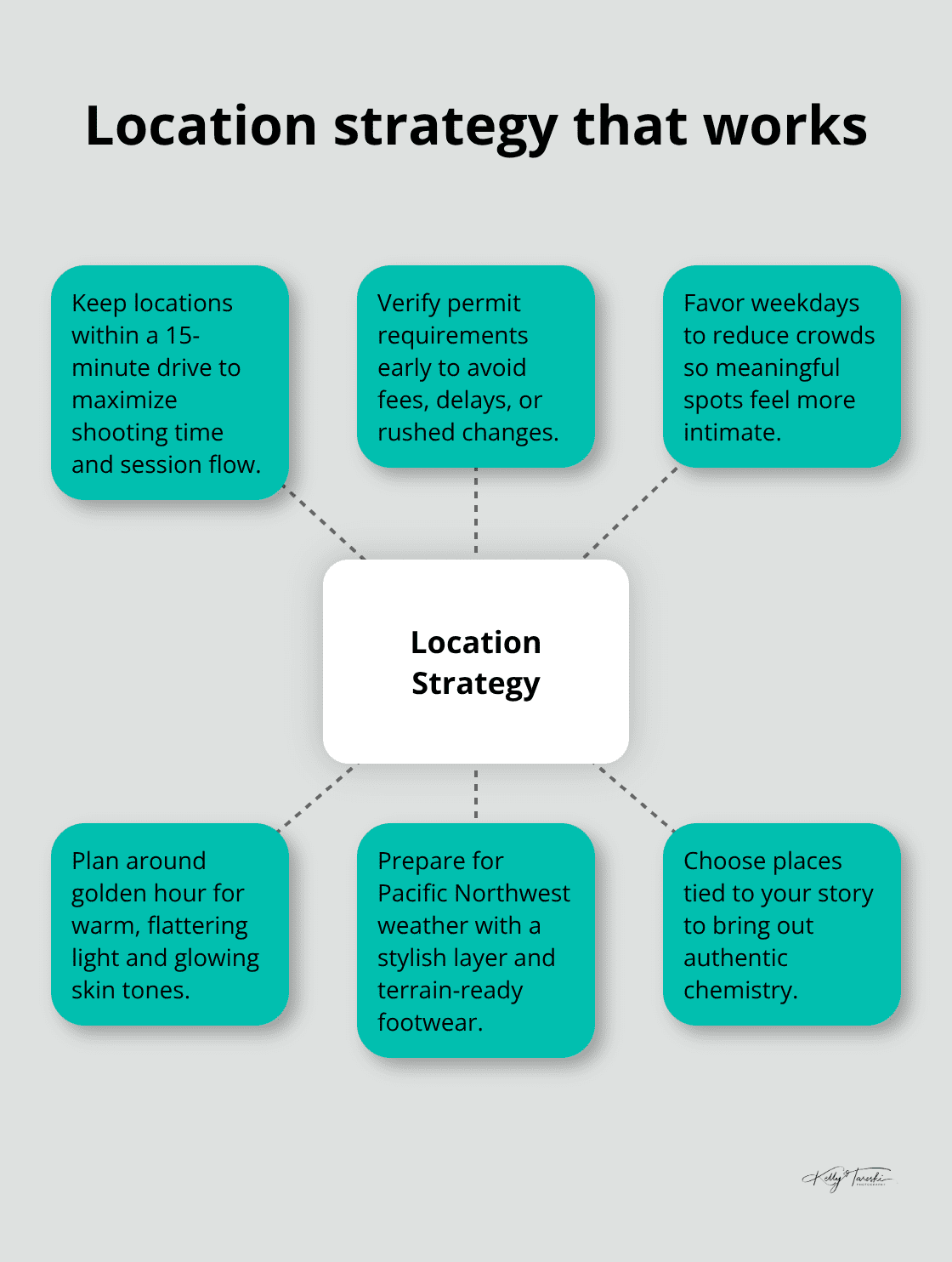
Think practically about travel, access, permissions, and weather when choosing locations. Some places require permits or reservations, so confirm the current rules before the session. Discuss lighting with your photographer, but do not assume golden hour is required. Open shade, overcast light, direct sun used intentionally, flash, indoor settings, morning light, and evening light can all work. Choose footwear and layers for the actual terrain and conditions.
Build Your Outfit Foundation
Wardrobe can be neutral, colorful, patterned, formal, casual, coordinated, or intentionally contrasting. Choose clothing that fits the setting and feels like the two of you. The number of looks should match the session length and how much time you want to spend changing rather than photographing.
Test Everything Before Your Session
Try important outfits before the session so you know how they fit, move, and work with the planned shoes and layers. New clothing and dramatic style changes are fine when they are intentional. There is no required fit-check date, body-flattering formula, or confidence level needed for a successful session.
Add Polish With Details and Color
Color can coordinate with or contrast against the background intentionally. Grooming choices, including nails, are optional; if hands or the engagement ring will be photographed closely, decide how you want them presented. Think about the overall session style early enough that wardrobe, footwear, location, and accessories support the same visual plan.
Making Your Session Run Smooth
Communicate Your Vision With Your Photographer
Discuss posing and direction before the session at whatever point fits the photographer’s planning process. Ask whether the approach includes movement, camera-aware poses, candid-looking moments, or a mix. Some couples prefer detailed direction and others prefer lighter prompting, so clarify what will make the session easier for you.
Share screenshots of engagement photos you love on your phone or in a shared Pinterest board to communicate your style vision. Tell your photographer if you want a relaxed vibe or if you prefer more structured posing.
Confirm Logistics and Arrive Prepared
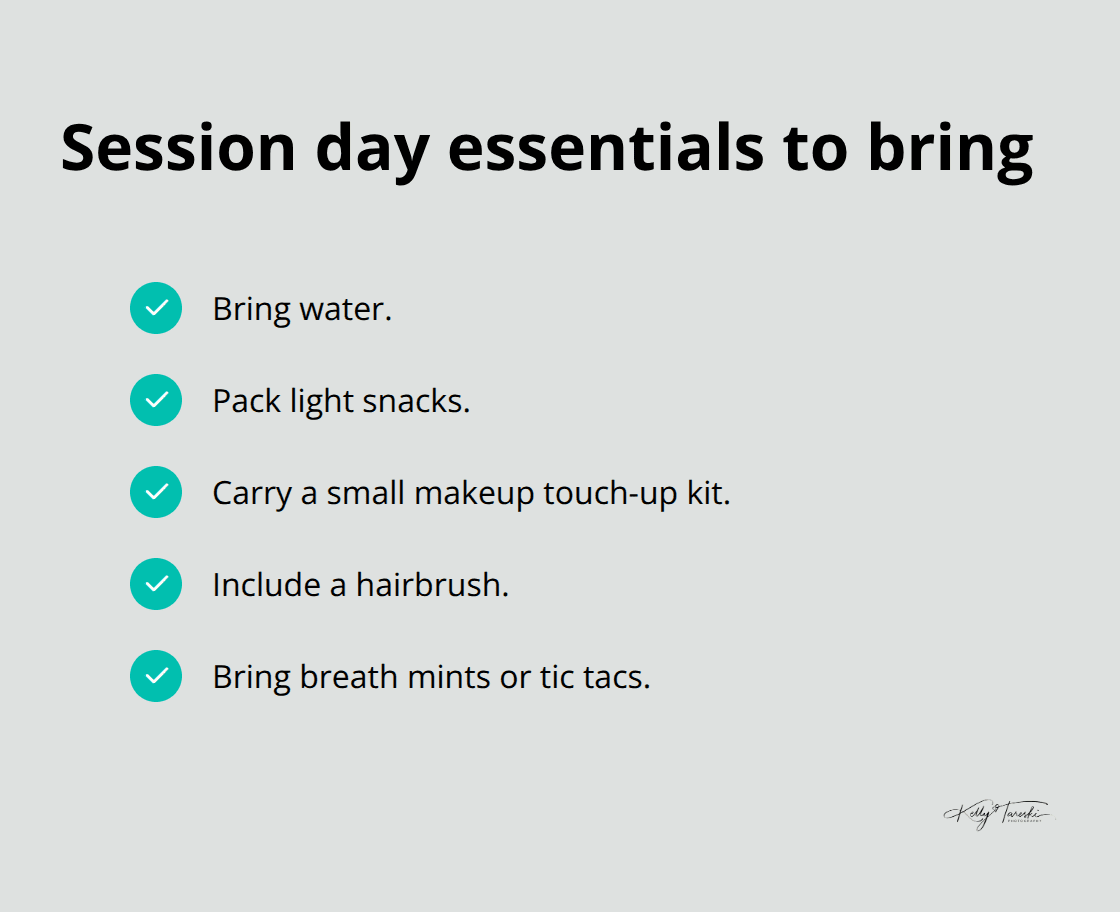
Confirm the meeting location, stated arrival time, parking information, and total session duration including any travel between locations. Bring the practical items you personally need, such as water, comfortable walking shoes, layers, or touch-up items, without assuming every couple needs the same packing list.
Plan for Weather and Backup Locations
Weather in the Pacific Northwest demands practical backup planning. Look for locations that offer indoor and outdoor options, allowing you to adapt to changing weather conditions seamlessly. However, have a secondary indoor location or covered outdoor spot ready as a true backup if conditions become unsafe or your photographer advises against shooting.
Do not shoot in conditions the photographer or location considers unsafe. When weather could affect the session, discuss a covered, indoor, alternate-date, or alternate-location plan early enough for the photographer to prepare. The necessary lead time depends on the booking, venue, forecast, permits, and availability rather than a universal one-week rule.
Final Thoughts
After delivery, engagement photographs can be used for save-the-dates, wedding websites, programs, social media, prints, gifts, or albums when those uses fit the couple and the delivered files. Other couples may simply want a separate portrait gallery before the wedding.
If you are working with the same photographer for the wedding, an engagement session can give you experience with their direction and communication style. That familiarity may be useful, but it does not guarantee confidence, eliminate wedding-day stress, or produce better photographs automatically.
At Kelly Tareski Photography, I use the planning process to organize the engagement session around the locations, wardrobe, timing, and final image uses that matter to the couple. The goal is a clear session plan, not a fixed wedding-day workflow.
Key Takeaways
- Plan your engagement photos early enough for photographer availability, location logistics, permits, editing turnaround, and how you intend to use the images.
- Choose your photographer first to set the timeline and confirm your session date.
- Select locations that fit your relationship and practical needs, and choose wardrobe colors and styles that feel like you.
- Communicate your vision, confirm the stated arrival time and parking details, and bring the practical items you personally need.
- Prepare for weather changes by having backup locations in mind, ensuring a smooth session regardless of conditions.
Education Most Searched Articles
- Kelly Tareski Photography Homepage
- How to Choose Background Colors to Complement Skin Tones
- Choosing the Best Lens for Stunning Senior Portraits
- 5 Tips Using the Nikon Z7ii Camera for Portrait Photography
- Exploring Spokane Through a Lens: Must-Visit Photo Locations
- How to Choose the Best Lenses for Senior Portraits
- When to Use a Neutral Background in Photography
- Top Posing Ideas for Solo Portraits: Looking Confident and Natural
- The Economy and Photography
- How the Economy Impacts Photography
- How to Weather Economic Slumps as a Photographer
- Finding Creative Ways to Promote Your Photography on a Budget
- Free and Low-Cost Resources for Photographers