
Engagement Session Spokane Tips: Posing, Lighting, and Connection
Key Takeaways
- Engagement sessions can combine structured posing, movement, and interaction based on how much direction the couple prefers.
- Lighting changes color, contrast, and mood; golden hour, shade, overcast conditions, direct sun, flash, and indoor light can all be used intentionally.
- Reference images and pre-session communication can help clarify preferences for posing, wardrobe, lighting, and overall style.
- Incorporate movement and personal props to encourage natural interactions and genuine expressions during the session.
- Capture both togetherness and individual moments for a richer representation of the couple’s chemistry.
An engagement session can be shaped through posing, lighting, location, wardrobe, expression, and the amount of interaction or camera awareness you want in the final gallery. At Kelly Tareski Photography, I adjust those choices around the couple and the intended look rather than relying on one formula.
This guide focuses specifically on posing, lighting, and interaction during a Spokane engagement session.
Mastering Posing for Engagement Sessions
Choose the Amount of Movement and Structure You Want
Some couples prefer movement and interaction, while others want more direct, structured portraits. Walking, turning toward one another, standing still, sitting, or looking at the camera can all work. The photographer can vary the amount of direction throughout the session so the posing style fits the couple and the final gallery.
Movement-led prompts are one option for creating variety. Alternating between structured and candid-looking photographs can also give the gallery different levels of camera awareness without requiring one approach for the entire session.
Working with Different Body Types and Heights
Height and body-shape differences do not need to be hidden or corrected. The photographer can vary spacing, camera angle, seated or standing positions, and how the couple turns toward one another to create a balanced composition while keeping both people comfortable.
Sitting poses are underrated. A bench moment where you sit close with foreheads nearly touching, or where one person sits while the other stands behind them, creates intimacy and eliminates the self-consciousness of standing still. Close-up shots that frame you from the waist up work well regardless of body type because the focus stays on your faces and connection. Spokane’s varied settings-from downtown brick walls to garden pathways to park benches-naturally encourage movement and position changes that keep the session dynamic.
Preparation Can Clarify the Session Plan
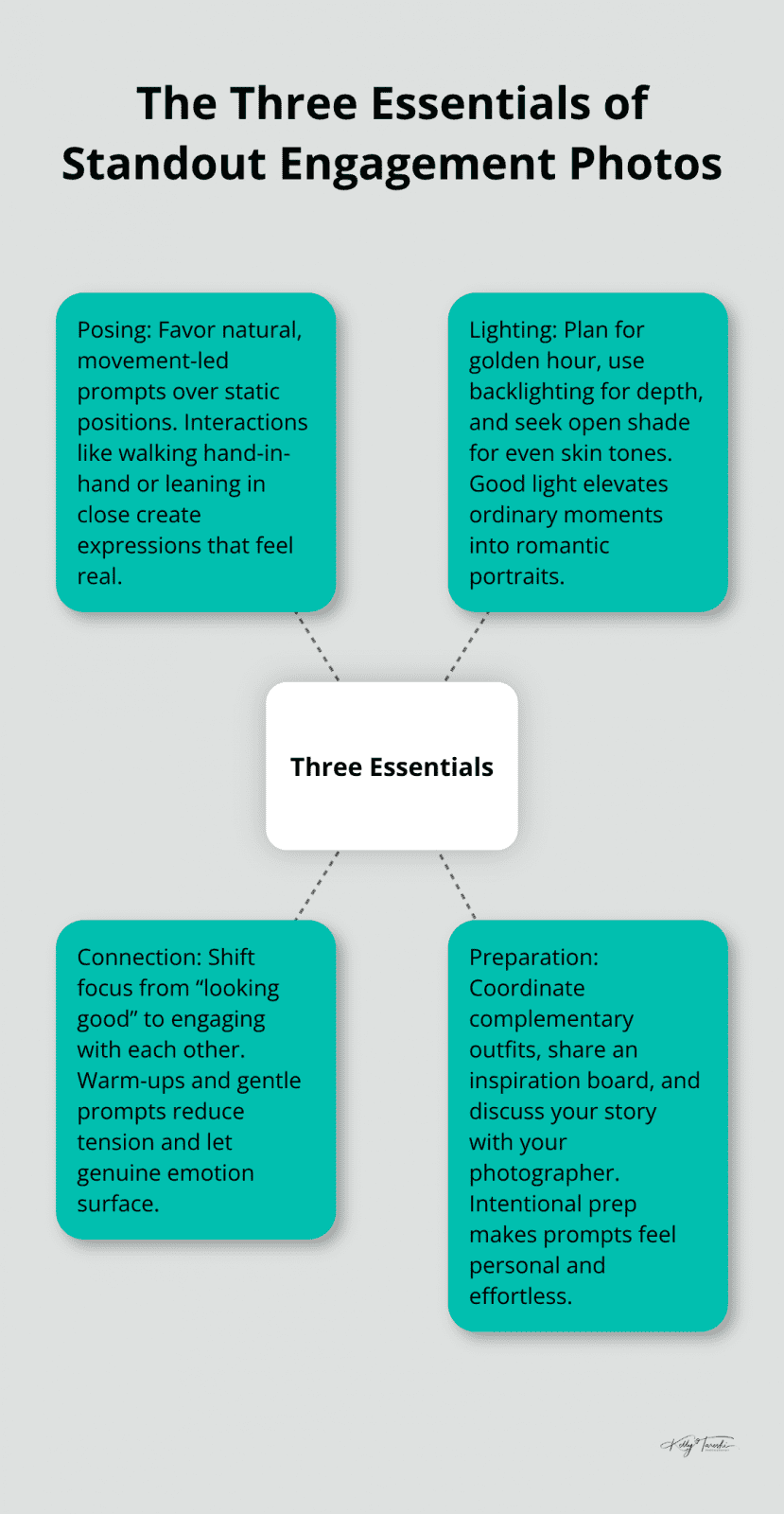
Practice matters more than most couples realize. Create a Pinterest inspiration board of poses and connection moments you actually like, then share it with your photographer before the shoot. This keeps everyone aligned on the creative direction. You’re not copying poses exactly-you’re showing your photographer the vibe and energy you want.
Wearing complementary colors rather than matching outfits signals that you’re a team without looking staged. Spokane’s seasonal wardrobe shifts matter: spring pastels work against fresh foliage, summer fabrics should breathe in warm outdoor light, and fall burgundies and mustards complement garden settings. Bring a detail shot to highlight your ring, nails, and accessories. This adds variety to your gallery without requiring new poses-just different framing.
A photographer who takes time in pre-session conversations to learn where you met, what your weekends look like, and your inside jokes can craft prompts that feel personal rather than generic. This translates directly into more relaxed and genuine expressions in front of the camera. The right preparation and guidance set the stage for authentic moments that shine through in your final images-which brings us to how light itself shapes the mood and impact of every single shot.
Lighting Techniques for Romantic Portraits
Light changes contrast, color, texture, and mood, but no single lighting scenario determines whether an engagement photograph succeeds. Lower-angle evening light, backlight, shade, overcast conditions, direct sun, flash, and indoor light can all work when they support the location and intended look.
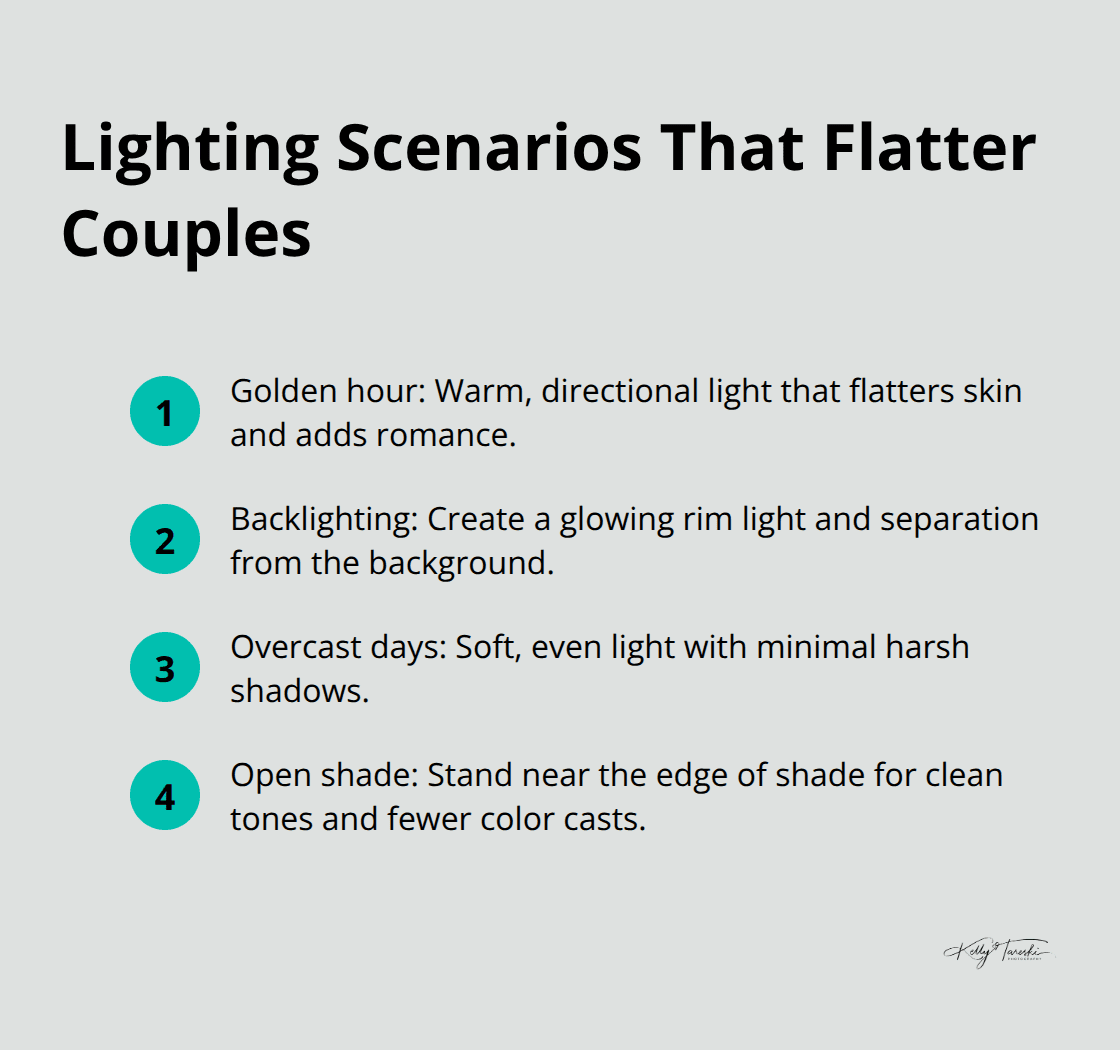
Golden Hour Is One Warm-Light Option
Golden hour can produce warm, lower-angle directional light, but it is not universally the best time for an engagement session. Shade, overcast conditions, direct sun used intentionally, flash, indoor light, and other times of day can all work depending on the location and desired look.
If you want golden-hour light, build the timing around the specific date, location, horizon, weather, and session length rather than assuming every session should end at sunset. The photographer can position the couple and expose the scene according to the lighting approach being used.
Backlighting Adds Depth and Dimension
Backlighting can create a halo effect, separating the couple from the background. This technique works exceptionally well in Spokane’s parks and gardens where trees and structures create natural frames. Position yourself between the couple and the sun, allowing light to wrap around their bodies and create dimension.
The key is exposure control: meter for the couple’s faces while allowing the background to slightly overexpose for that dreamy quality. Backlighting produces a highly effective outdoor portrait technique that can add a glowing effect around the couple without requiring heavy editing afterward.
Overcast Days and Shade Provide Even Skin Tones
Overcast days are underrated in engagement photography. Cloud cover acts as a massive natural diffuser, spreading light evenly across faces and eliminating the harsh shadows that plague midday outdoor shoots. Skin tones appear more even, and you have complete freedom to move around without chasing the sun.
Shade from trees or building overhangs provides similar benefits, though you must position couples near the edge where sunlight meets shadow to avoid green or blue color casts that occur when they sit in deep shade surrounded by reflective surfaces. Spokane’s varied architecture and tree coverage make it simple to find quality shade at locations like Riverfront Park and Duncan Garden.
Adapt Light Direction as You Move Through Locations
Light direction changes constantly as you move through a location. Walk with the couple and adjust your positioning as the sun shifts. Capture the same pose or moment from multiple angles to see how different light directions affect the image. This active approach to light management produces galleries with visual variety and consistent, flattering skin tones throughout the session.
The real magic happens when light and authentic connection work together-which is exactly what the next section explores.
Building Authentic Connection During Your Session
Create a Relaxed Environment to Ease Tension
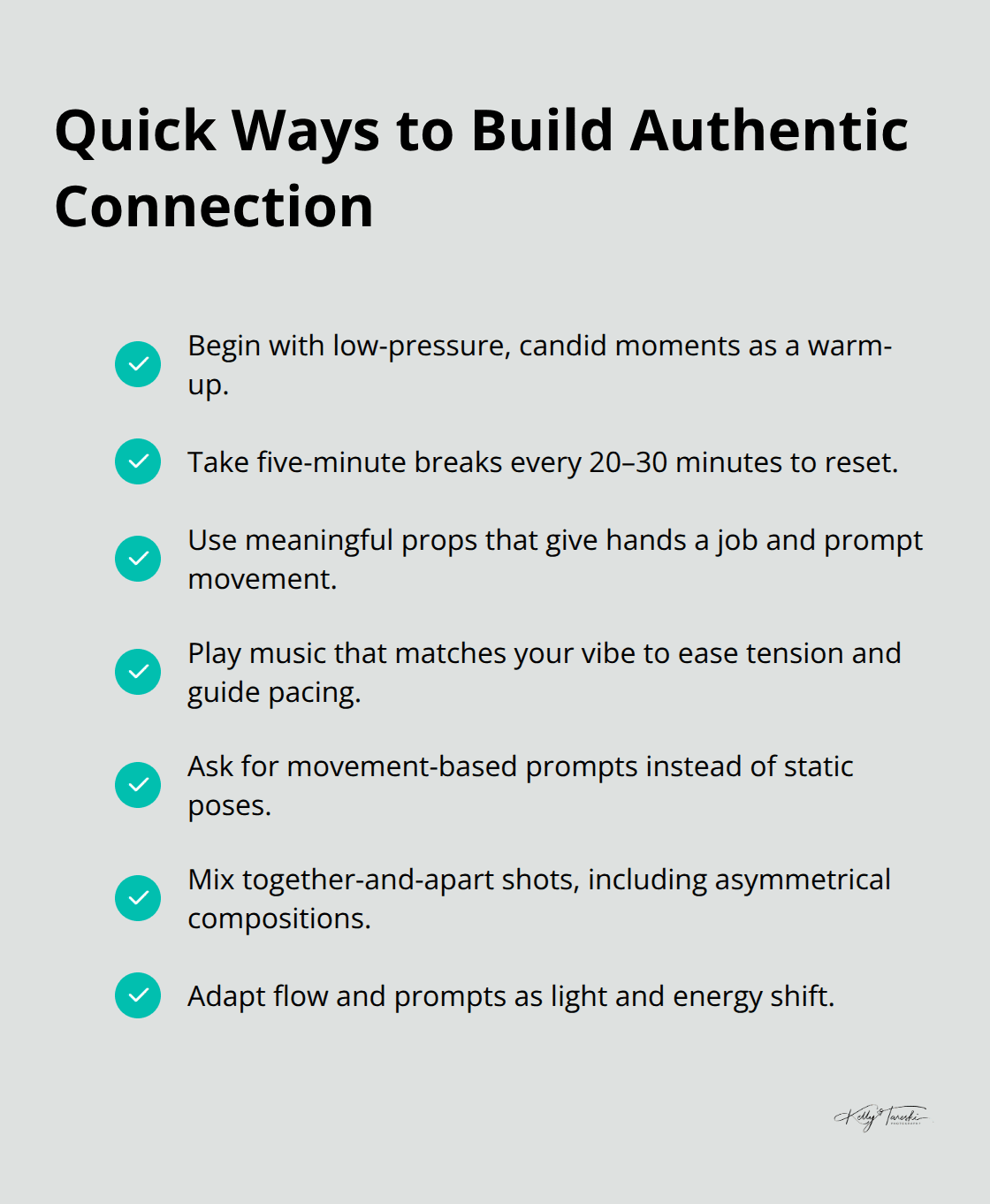
Tension kills engagement photos faster than bad lighting. The moment a couple steps in front of the camera, their shoulders rise, their smiles tighten, and whatever connection they had five seconds earlier vanishes. The solution isn’t complicated: shift the focus away from looking good and toward actually interacting. Start your session with low-pressure moments before moving into posed shots. Walk around the location, chat about your relationship, and let the photographer capture candid frames while you’re not thinking about the camera. This warm-up period costs nothing but yields some of the best images in your gallery because your guard is down.
Breaks can be useful whenever either person needs one. There is no required shooting interval or five-minute reset. Pause for water, wardrobe adjustments, travel between locations, or simply a change of pace when it helps the couple stay comfortable.
Use Props and Music to Encourage Natural Movement
Bring a prop that matters to your story-a guitar, a hiking backpack, a coffee cup from your favorite cafe. Holding something gives your hands a job and prevents the awkward question of what to do with them. The prop becomes a conversation starter and a reason to move naturally through the space. Music during the session works too; many photographers play upbeat songs that match your personality, and the rhythm naturally guides movement and prevents long stretches of silence that breed self-consciousness.
Direct Connection Over Positions
Interaction beats posing every single time, so direct the photographer to prompt connection rather than positions. Instead of saying stand here and look at each other, ask your photographer to request that you walk toward them while holding hands, then turn and laugh at an inside joke mid-stride. Ask them to have you sit on a bench with your foreheads close together while they talk about your first date. These movement-based prompts occupy your brain just enough that you stop monitoring your face, and genuine expressions emerge naturally.
Capture Individual Moments and Asymmetrical Shots
Capture both together and apart throughout the session to showcase your chemistry and individual personalities without forcing constant togetherness. Some of the most powerful engagement images show one person looking at the other while that person gazes away or laughs-this asymmetry feels real because actual couples don’t stare at each other constantly. Spokane’s diverse locations help tremendously here; when you move from the Japanese Garden to Riverfront Park to downtown brick walls, the environment changes often enough that you can’t fall into a stale rhythm.
Adapt Your Approach as Energy Shifts
Your photographer should adjust on the fly as light shifts and your energy changes, keeping momentum high without exhaustion. The goal isn’t perfection-it’s capturing who you are right now, in this moment, before wedding day stress takes over.
Final Thoughts
Your engagement session captures who you are as a couple before wedding planning takes over. Posing that feels natural rather than forced, lighting that flatters and sets mood, and genuine connection that reads authentically in every frame-these three elements work together to transform ordinary moments into images that matter. When all three align, your photos become far more than save-the-date images; they become a visual record of your relationship at this exact moment.
Professional photography preserves your engagement story in ways that casual phone photos simply cannot. We at Kelly Tareski Photography have captured thousands of engagement sessions across Spokane’s most compelling locations, from the Japanese Garden’s fiery fall foliage to Riverfront Park’s dramatic water features to downtown’s industrial brick walls. This experience translates into knowing exactly how to position you, when to shoot, and how to prompt genuine moments that reflect your actual relationship rather than generic couple poses (and these engagement session Spokane tips apply whether you’re shooting in spring pastels or fall burgundies).
Ready to plan your engagement session? Reach out to Kelly Tareski Photography to discuss your style, vision, and availability. The right photographer will make the process enjoyable and stress-free, turning what many couples fear into one of their favorite photo experiences.
Education Most Searched Articles
- Kelly Tareski Photography Homepage
- How to Choose Background Colors to Complement Skin Tones
- Choosing the Best Lens for Stunning Senior Portraits
- 5 Tips Using the Nikon Z7ii Camera for Portrait Photography
- Exploring Spokane Through a Lens: Must-Visit Photo Locations
- How to Choose the Best Lenses for Senior Portraits
- When to Use a Neutral Background in Photography
- Top Posing Ideas for Solo Portraits: Looking Confident and Natural
- The Economy and Photography
- How the Economy Impacts Photography
- How to Weather Economic Slumps as a Photographer
- Finding Creative Ways to Promote Your Photography on a Budget
- Free and Low-Cost Resources for Photographers