
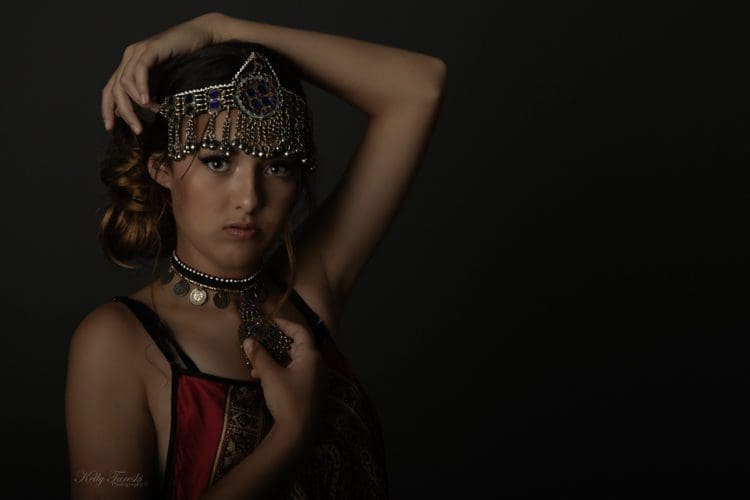
How to Create a Calming Photography Experience
A photography experience can be designed to reduce unnecessary uncertainty without promising that every client will feel calm. Clear information, adaptable pacing, respectful direction, and practical choices about location and privacy can make a session easier to navigate.
This guide focuses on the photographer-side process: how to structure communication and the session environment so clients know what to expect. If you are preparing for your own session, see Photography Session Nervousness: Practical Ways to Prepare.
Why Session Design Matters
Explain Unfamiliar Spaces and Equipment
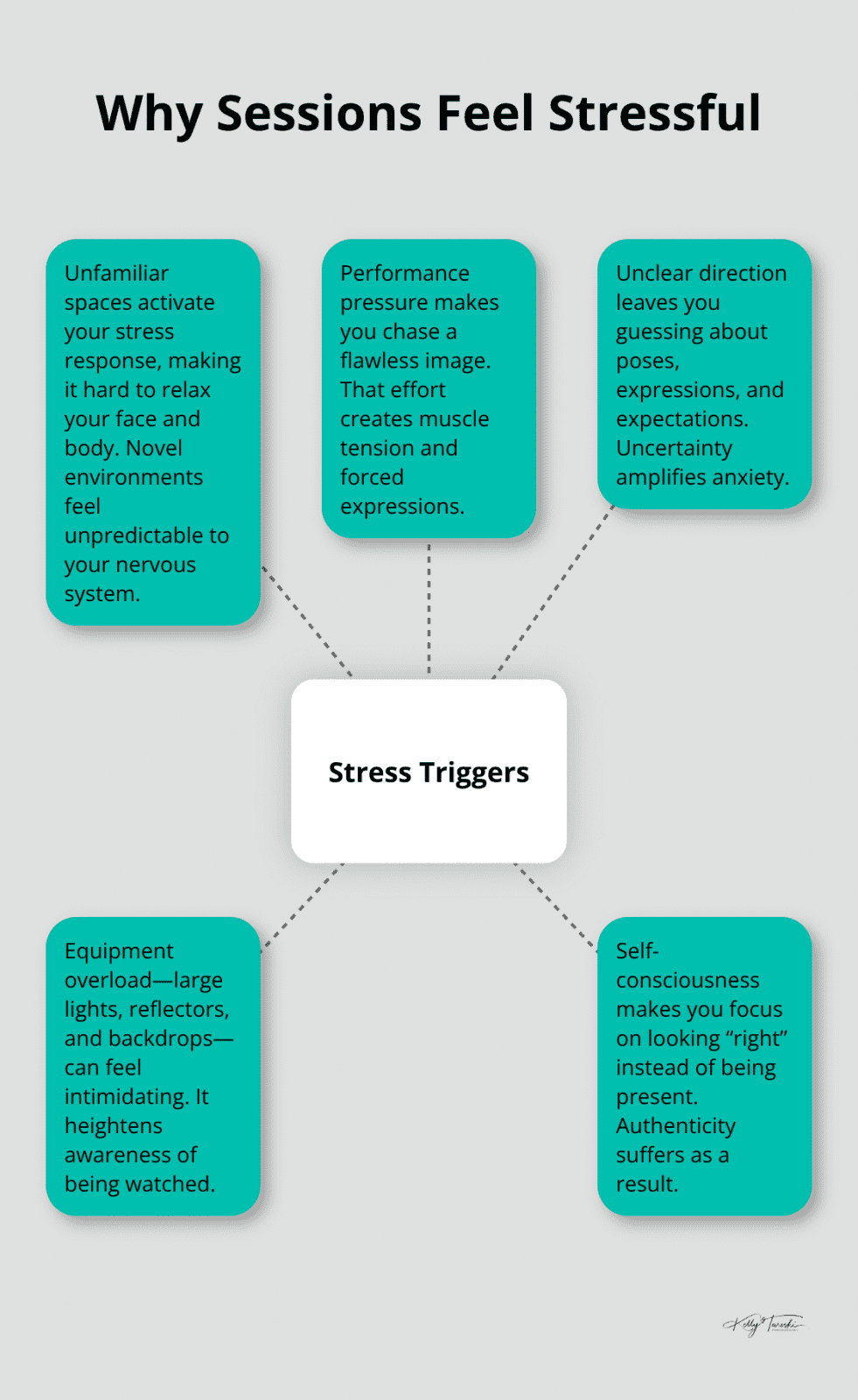
An unfamiliar studio, lighting equipment, backdrops, or a new location can leave a client unsure about what will happen next. A photographer can reduce that uncertainty by explaining the space, showing where belongings and wardrobe changes go, describing what the lights are doing when useful, and giving the client time to settle into the process.
Do Not Require Constant Performance
Clients should not have to invent poses, hold one smile throughout the session, or guess whether a pose is working. Give specific direction when it is needed, allow expressions to change, and create variety through movement, quiet portraits, conversation, and more structured poses. The goal is to make the photographic process understandable rather than to demand a particular emotional state.
Unclear Direction Leaves More Decisions to the Client
When a client does not know what to expect, they may spend more of the session guessing about wardrobe, posing, expression, timing, or whether a setup is working. Clear explanations and useful feedback can reduce that practical uncertainty. The photographer can handle the technical decisions while giving the client enough information to participate without having to invent the process.
Comfort can influence how willing someone is to try different expressions or poses, but it does not directly determine image quality and it is not more important than technical skill. Strong portrait work combines lighting, posing, composition, timing, communication, and a process that respects the person being photographed.
What Can Reduce Unnecessary Uncertainty During a Session
Clear Communication Reduces Guessing
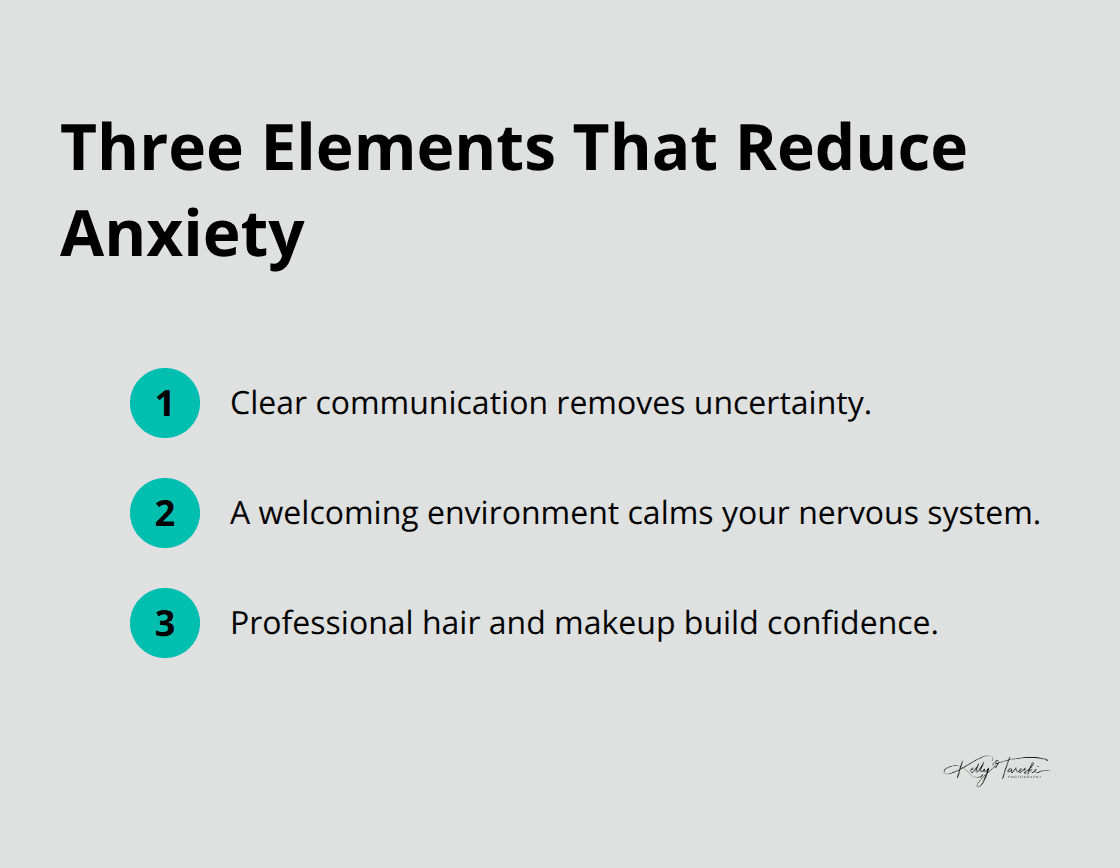
Clear communication before and during a photography session can reduce practical uncertainty. Explain what to wear when wardrobe guidance is part of the service, how long the session is expected to last, what locations or sets will be used, and how posing direction works. During the session, describe adjustments in plain language and give the client opportunities to ask questions or request a change.
Give Clients Useful Setting Choices
The physical environment changes privacy, background, lighting, temperature, accessibility, and the amount of activity around the client. Explain the available studio and outdoor options and let the client choose a setting that fits the photographs and experience they want. A welcoming space can include clear changing areas, seating, reasonable organization, and lighting choices that support the portrait without claiming to control a client’s nervous system.
Offer Styling as an Option, Not a Confidence Treatment
Professional hair and makeup services can be useful for clients who want that styling experience. Other clients may prefer their own routine or little to no makeup. Present styling as an optional service and explain what is included rather than promising that it will reduce anxiety or create confidence.
Clear communication, a well-planned environment, and optional styling support can make the process easier to understand. They do not guarantee a particular emotional state or photographic result. Technical skill and client experience both matter, and the photographer should adapt posing, light, pacing, and communication to the person being photographed.
How I Structure the Client Experience
At Kelly Tareski Photography, I use pre-session planning, clear direction, setting choices, and flexible pacing to reduce unnecessary uncertainty. Those choices cannot eliminate anxiety or guarantee comfort, but they give clients more information and more ways to communicate what they need during the session.
Pre-Session Conversations Set Clear Expectations
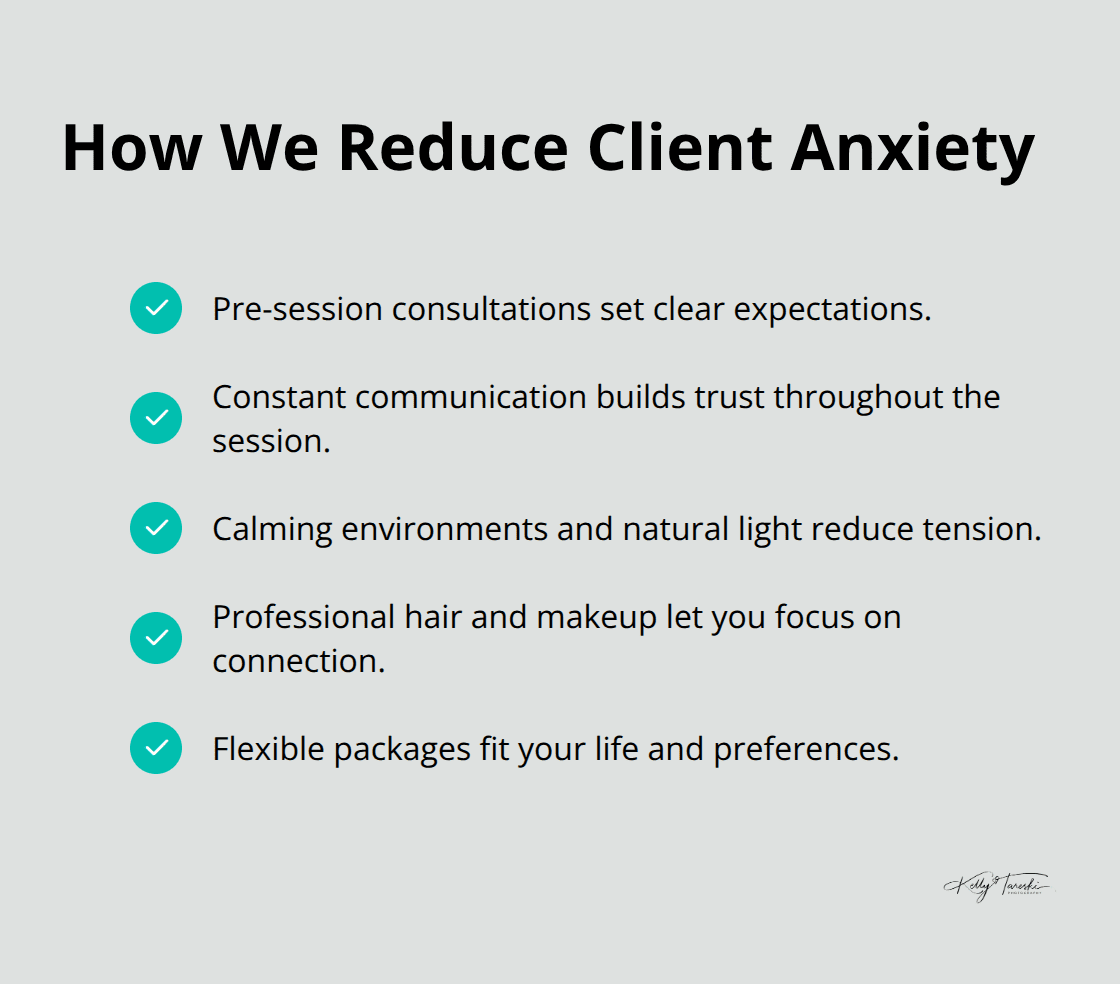
Before the session, I use planning conversations to cover the details that apply to the service booked. That can include wardrobe, approximate timing, studio or outdoor options, posing expectations, privacy, and the kinds of portraits the client wants. The goal is to answer practical questions in advance, not to promise that every uncertainty or nervous feeling will disappear.
Use Clear Communication During the Session
During a session, I describe posing adjustments clearly, explain what I am changing when useful, and give clients opportunities to ask questions or request a pause. Feedback can help a client understand what the camera is seeing without requiring them to guess whether a pose or expression is working.
Offer Indoor and Outdoor Options
My five-acre property in Nine Mile Falls, just outside Spokane, provides both outdoor settings and indoor studios. Those choices differ in privacy, weather exposure, movement, background, and lighting. Some clients prefer gardens and open space, while others prefer the predictability of an indoor studio. I choose the setting with the client based on the look and practical experience they want.
Offer Hair and Makeup When It Fits the Client
I offer professional hair and makeup options for clients who want them. Styling can simplify preparation for some people, while others prefer their own routine or little to no makeup. It is an optional part of the portrait experience, not a treatment for nervousness.
Match the Plan to the Service Booked
Session length, locations, wardrobe changes, and other options depend on the service booked and current offerings. I explain what is included so the client can plan around the actual session rather than assume every portrait package works the same way. When a choice is available, we can use it to support the photographic plan and the client’s preferences.
Final Thoughts
A portrait session does not need to require constant smiling or pretending to feel a particular emotion. A photographer can make the process more understandable through clear direction, pacing, setting choices, and opportunities for feedback. Those choices can support a wider range of expressions and portraits without promising a completely stress-free experience or a specific emotional response.
The practical ideas in this post work together by making the session easier to understand: explain the process, offer useful setting choices, provide clear posing direction, and make optional support available when it fits the client. A client can still feel nervous and have a successful session, so the goal is flexibility rather than a promised emotional transformation.
At Kelly Tareski Photography, I serve Spokane-area clients from my Nine Mile Falls studio property. My session planning includes guided posing, indoor and outdoor options, and styling choices when they fit the service booked. Explore Kelly Tareski Photography and start a conversation about the kind of portrait experience you want.
Key Takeaways
- Photography sessions can feel unfamiliar when clients are unsure about the environment, posing, or what will happen next.
- Kelly Tareski Photography uses planning, clear direction, setting choices, and flexible communication to make the portrait process easier to understand.
- Clear communication before and during the session removes uncertainty and builds trust with clients.
- A clear physical environment and optional hair and makeup services can support the session when they fit the client’s preferences.
- Clients can create strong portraits across different comfort levels when the session includes clear guidance and room for feedback.
Senior Portrait Most Searched Articles
- Kelly Tareski Photography Homepage
- Senior Portraits Portfolio
- Senior Portraits Spokane WA A Rite Of Passage
- The Difference Between Graduation Photos and Senior Pictures
- 10 Senior Portrait and Photography Styles
- Are Senior Portraits Still a Thing?
- Capturing Natural Senior Portraits: Barefoot Edition
- Looking Back – The Last Three Years of Senior Portraits – Spokane
- Fine Art Senior Portrait Photography Style Spokane Washington
- How Much Do Senior Pictures Cost?