
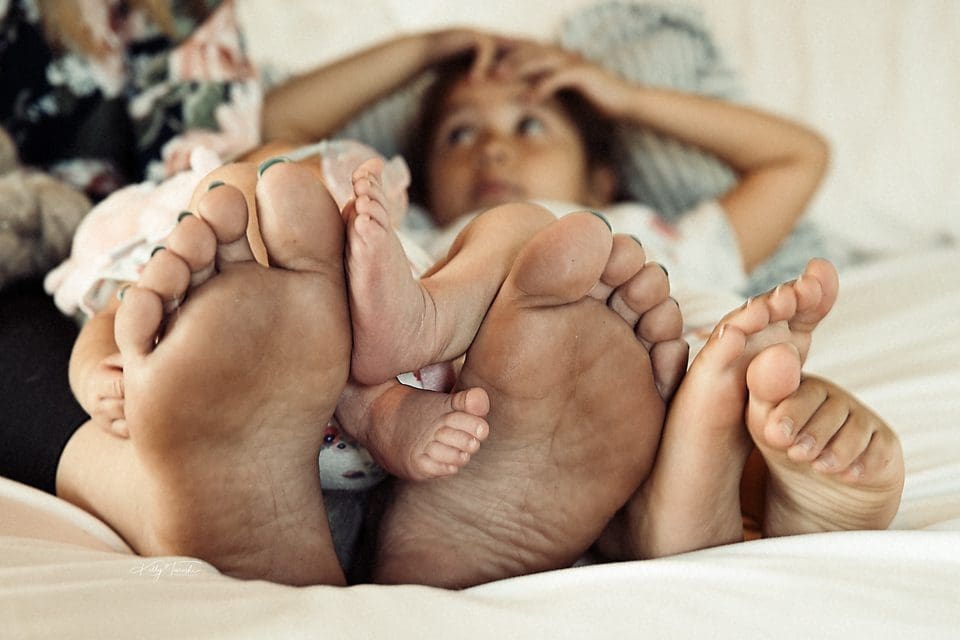
Small Moments in Family Photos: Gestures Worth Remembering
Small moments in family photography are the familiar gestures and interactions that make an image feel recognizable: a child reaching for a parent’s hand, siblings exchanging a look, or someone leaning close during a conversation. These details can complement a full-family portrait without replacing it. Their value comes from what they mean to your family, not from being perfectly spontaneous.
I am Kelly Tareski, a family photographer in Nine Mile Falls near Spokane. During a portrait session, I leave room for interaction as well as gentle direction. A comfortable, guided photograph and an unplanned expression can both be honest parts of your story. Explore my family portrait sessions for the overall experience.
Which small family moments are worth remembering?
Think about what feels familiar now but may change over time. The way a child sits beside a grandparent, a favorite shared joke, or the hand a toddler reaches for can carry meaning without a complicated setup. A quiet expression can be just as recognizable as a big laugh.
- Everyday gestures: Holding hands, leaning together, or adjusting a familiar item of clothing.
- Shared attention: Looking at a book, listening to a story, or noticing something together.
- Individual expressions: A thoughtful look, a particular smile, or a child’s concentration.
- Relationship details: The way siblings stand together or how a grandparent welcomes a child close.
These examples are invitations to notice, not a list of expressions anyone must produce. Your family may show connection in quieter or less physical ways.
How do we make room for natural interaction?
Keep the plan simple enough that you can pay attention to each other. After a guided grouping, I may invite conversation, a small change in position, or an activity that suits the people involved. A familiar book or a question about a shared memory can offer a starting point.
There is no need to keep performing once a moment has passed. Repeating a joke or gesture until it becomes frustrating usually misses the reason it mattered. Let one person give direction rather than having several adults compete for a child’s attention.
The guide to keeping children relaxed during family photos offers more preparation ideas.
Do candid photographs tell a truer story than posed portraits?
Not necessarily. A posed portrait can show a genuine relationship, and an image that looks spontaneous may have begun with a gentle prompt. Neither approach is automatically more meaningful. The useful question is whether the photograph feels like the people in it.
A collection can include everyone looking toward the camera, smaller relationship portraits, and moments of interaction. Read candid versus posed family photography for a clearer comparison without treating one style as the only authentic choice.
How can parents help without forcing an expression?
Tell me what your children enjoy, how they like to interact, and what they would rather avoid. Give them room to become comfortable. A child does not need to hug, tickle, perform, or laugh on command for a photograph to have value.
Distress is not a creative requirement. When someone needs comfort, privacy, or a break, respond to that need rather than continuing to pursue a photograph. A meaningful family collection can respect boundaries and still contain plenty of personality.
What can we document between professional sessions?
Everyday photographs can preserve details that do not belong in a studio session: a favorite activity, an ordinary family gathering, or a project you worked on together. Take a few images when appropriate, then return to participating rather than turning every routine into a photo opportunity.
Ask before sharing photographs that another family member considers private. Keep names, approximate dates, and a short description with images that need context. An ordinary photograph may be easier to understand later when someone has recorded why it mattered.
How do small moments fit into an album?
Use them as part of a sequence. A full-family portrait introduces the people, while a closer interaction or detail can add context. Not every small moment needs to become a large wall display; some work best beside related images.
The family album selection guide explains how to combine those roles. For planning the overall story before a session, use the family storytelling photography brief.
Questions about small moments in family photos
What if our family is reserved rather than playful?
Connection does not have to be loud. A shared glance, comfortable posture, or quiet conversation can be a better reflection of your family than an energetic activity.
Do we need to bring props?
No. A familiar item is useful only when it supports the people and the story. Discuss anything you would like to include before the session.
Can I ask for traditional portraits as well?
Yes. Tell me which groupings matter most. Planned portraits and quieter interactions can be part of the same session without a fixed ratio.
Photograph what feels familiar to your family
Tell me about the people, gestures, and relationships you hope to remember. Review current portrait investment information or contact Kelly Tareski Photography to plan your session.
Education Most Searched Articles
- Kelly Tareski Photography Homepage
- How to Choose Background Colors to Complement Skin Tones
- Choosing the Best Lens for Stunning Senior Portraits
- 5 Tips Using the Nikon Z7ii Camera for Portrait Photography
- Exploring Spokane Through a Lens: Must-Visit Photo Locations
- How to Choose the Best Lenses for Senior Portraits
- When to Use a Neutral Background in Photography
- Top Posing Ideas for Solo Portraits: Looking Confident and Natural
- The Economy and Photography
- How the Economy Impacts Photography
- How to Weather Economic Slumps as a Photographer
- Finding Creative Ways to Promote Your Photography on a Budget
- Free and Low-Cost Resources for Photographers